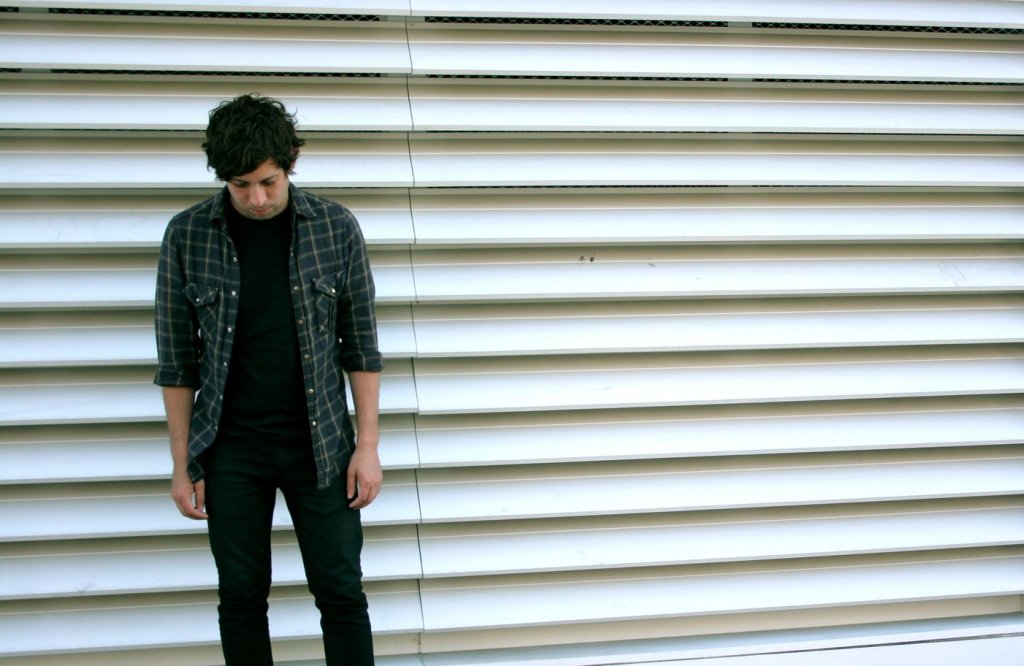
On this day 15 years ago (November 16, 2010), American indie label capture Tracks released the self-titled debut album by the Soft Moon, which was actually a solo project by L.A.-based musician Luis Vazquez. In 2013, I interviewed Vazquez during my stint as the “Sound Check” columnist for Concrete Skateboarding magazine.
Vazquez and I discussed the making of the second Soft Moon album, Zeros, and he also shared that he had been experiencing recurring dreams about the end of the world since his childhood.
This would be my one and only interview with the Soft Moon. Tragically, Vazquez died in 2024 of an accidental overdose of fentanyl, cocaine, ketamine, and ethanol.
Sound Check: The Soft Moon
Needless to say, the Mayan apocalypse didn’t happen back in December like a few wing nuts predicted it would. If it had, however, Luis Vasquez would have been ready for it. You might say the San Francisco-based musician has been preparing for the end times all his life, albeit not consciously.
“Since I was little, I’ve had over a hundred recurring dreams of the world ending,” says the frontman for The Soft Moon. “And they all end differently every time. It’s pretty crazy. I’m kind of fascinated by it, and every time it happens to me in my dream, I accept it. It’s very overwhelming and scary, but necessary, in the way I feel in the dream. I just sit down, and as it’s happening—as the world’s kind of crumbling—I close my eyes and let it happen. I like to interpret that through my music, so it’s kind of like re-creating my dreams sometimes. I like to create what it looks like in my head through music.”
It probably goes without saying that The Soft Moon’s songs aren’t all sunshine and lollipops. On the project’s most recent long-player, Zeros, Vasquez (who records solo but plays with a full band live) paints the world in 10 shades of black. From the churning industrial noise and motorik pulse of “Machines” to the haunted-man atmospherics of “Insides” and the bass-driven tribal minimalism of “Remembering the Future,” the album is an oddly exhilarating descent into the depths of one man’s end-of-all-things anxiety.
There aren’t a lot of hooks to be found, and it’s pretty much impossible to make out anything Vasquez is singing. He admits that he obscures his vocals on purpose. “I like to treat my voice more as an extra instrument, on top of all the other layers of instrumentation,” he says. “But there’s also another reason. My whole life, I’ve always struggled with words to communicate my feelings. So there’s frustration in that. Thankfully I have music to express myself, but that frustration comes out in my music, where you can’t tell if the vocals are another instrument or if I’m actually singing—I’m either screaming, yelping, or I’m burying my vocals in the mix. And that’s just to represent the frustration I have with communicating through words.”
The Soft Moon invariably garners comparisons to first-wave British post-punk groups, and there’s a good reason for that. Listening to Zeros, it’s hard not to be reminded of the fire-dance intensity of Killing Joke, the encircling gloom of Joy Division, or the claustrophobic moping of 1982’s Pornography by The Cure. Ask Vasquez to name his influences, however, and he’s more likely to list Prince, Slayer, and Duran Duran.
“A lot of the comparisons I get with my music are to bands I never really got into as much, so I always kind of sit back and wonder why I happen to sound like these bands, because I don’t disagree,” he notes. “But it’s weird. It’s almost like there’s this kindred-spirit thing, or like I live in the same world as bands like Bauhaus, or the musicians that were in Joy Division, or things like that.”
Those bands also stuck to the dark side of the street, and found themselves labelled “gothic rock” by the music press of the day, much to their horror. Vasquez doesn’t recoil at the sound of “the G word”, but that might be due to the fact that he’s not sure exactly what it means.
“I don’t know if I’ve ever really met a true goth person,” he says, then quickly reconsiders. “I think I met one, this one guy in Leeds. He proudly considered himself a real goth, and he was a lot older. My stereotype on goths is what I know from high school, and I don’t even know if those are real. You know: they dressed in black and kind of looked like Robert Smith a little bit.”
“I am open to whatever people consider my music, because I don’t know what I’m doing. honestly,” Vasquez concludes. “So if people out there know what it’s called, then they can call it whatever it’s called.”
 John Lucas
Leave a comment