
Inspired by the recent release of Something Better Change, Scott Crawford’s documentary about D.O.A.’s Joe Keithley and his evolution from punk rocker to politician, I dug through the Georgia Straight archives and unearthed all the times I have interviewed Keithley over the years.
D.O.A. on a rampage again (2005)
This article originally appeared in The Georgia Straight. Randy Rampage died in 2018.
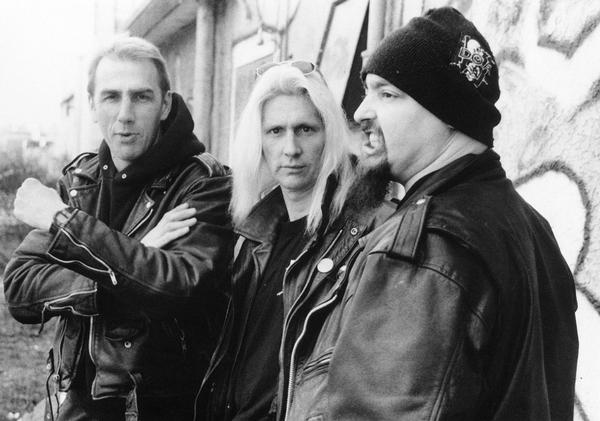
Randy Rampage is back in the D.O.A. fold—again. The long-running punk-rock band’s founding bassist joined D.O.A. on-stage for an eight-song set at the WISE Hall on February 19. The occasion? The long-awaited CD release of 1978’s legendary Vancouver Complication LP, which documents the early days of the city’s punk scene. (Sales of the CD to date, combined with proceeds from the WISE Hall gig, have raised $5,000 for the Vancouver Food Bank.)
“He came out to one practice so we knew what the heck we were doing,” D.O.A.’s Joe Keithley told the Straight. “I just thought we’d do it for old time’s sake, and it went so well that people said, ‘When you guys were playing it was like a bomb went off.’ In a good way. It just went really well. I always knew that Randy had a lot of charisma and is great on-stage and stuff like that. He’s always been one of my best friends, so this is a good thing.”
After he initially left D.O.A. in the early ’80s, Rampage made a name for himself in the heavy-metal world with his band Annihilator. He never lost touch with the D.O.A. camp, though. He performed with the group during its marathon 20th-anniversary gig in 1998, for example (along with almost everyone else who had passed through the D.O.A. ranks up to that point). A few years later, he even rejoined the group.
“He was actually back in the band in 2001,” Keithley said. “We didn’t do a lot of shows around here, but we went to Europe and had a big tour over there, and had a great tour of Japan and recorded an album called Win the Battle. That was the last thing we recorded with him. This time, things are going good. We’re not in any big rush to do a bunch of shows. Probably a lot more next year than this year, we’ll try and do a bunch of festivals. This fall we might do some recording, and we’re working on a couple of live DVDs and some documentary-type stuff.
“So, not a lot of shows, but if something comes along that we like, then we’ll go. We figure we’ve been at this so long that we can pick and choose what we want to do. We don’t have to get out there and play every single dog-and-pony town to let people know who we are. People know who we are, and they either like it or they want to throw tomatoes at us.”
D.O.A.’s punk veterans won’t give up the fight (2007)
This article originally appeared in The Georgia Straight.
For a guy whose long-time slogan is the blunt Talk–Action=O, it’s no surprise that, almost three decades into D.O.A.’s career, the band’s leader, Joe “Shithead” Keithley, shows no signs of slowing down. D.O.A. continues to flip the bird to conformity, and Keithley keeps himself active by running Sudden Death Records and its newly minted subsidiary, JSK Media.
“Everything is kind of clicking along,” he says. “I’ve got to work my ass off at the record company. And when we go out on the road, I double up as the road manager, promo guy, and driver. I do everything. Which is fine. It keeps you busy, and that’s what you’ve got to do. We don’t have anybody with a whole ton of bucks backing us. We’ve just got to get to that town and go and play for people and show them that we’re still one of the best bands in the country.”
D.O.A. will prove that to local fans with a pair of shows on Saturday (February 10). The pioneering hardcore unit is between records at the moment (with plans to have one out next year in time for its 30th anniversary), but when Shithead and company heard that Vancouver’s first punk band was coming out of retirement, it didn’t take much arm-twisting for them to spring into action. “We weren’t really planning on a show, but then Carola [Goetze] from the JEM Gallery said, ”’Hey, do you want to play a show with the Furies?’” Keithley says. “I thought, ”’That’s a great fuckin’ idea.’ This is actually a return to real punk rock.”
If you’re gonna play punk rock, you’ve got to have conviction, and when things are fucked up, you’ve got to call it like it is.
Ah, yes: the ongoing shit-storm over what constitutes the genuine article and what is merely borrowing its symbols with no regard to their significance. As buoyed as he is to see younger acts such as Anti-Flag and Rise Against carry the agit-prop torch, Keithley seems to have little use for the spike-haired pop stars whose faces end up plastered on the locker doors of Warped Tour teens.
“If you’re gonna play punk rock, you’ve got to have conviction, and when things are fucked up, you’ve got to call it like it is,” he asserts. “The thing that I don’t think people understand about punk rock today is that you may have a loud, obnoxious band with a really loud guitar and play really fast, but if it says nothing, and you’re still only singing about cars and girls, then it’s really like pop music dressed up in a really loud suit. It doesn’t matter how loud and angst-ridden they seem to be on stage, if it’s really saying nothing or contributing nothing to people thinking, then it’s doing fuck-all. It’s just serving the same needs that pop music always has done forever and always will do for people.”
A desire to see wrongs righted is what has kept D.O.A. in the punk-rock business for so long. Well, that and an undying love for bashing out its anthems for an always-eager cult following. “The thing about D.O.A.—to me, why it still makes sense to do it—is we’ve still remained progressive politically and done new albums and new material,” Keithley says. “While D.O.A. has a certain nostalgic air, to me it’s not like a nostalgia band, because we’ve kept moving forward. And also, we really realize between the three of us that if you’re gonna get up there and play for people, it doesn’t matter how old you are. I mean, we’re not kids anymore. That’s fuckin’ obvious, right? Anyone would guess that. But if you don’t get up there and just totally give ’er shit while you’re playing, then you shouldn’t be up there playing.”
D.O.A.’s on-stage electricity received a fresh jolt recently with the return of original bassist Randy Rampage, who last joined Keithley and drummer the Great Baldini on 2002’s Win the Battle before returning to his day job as a longshoreman. “He’s just nuts,” Keithley says of Rampage. “He’s still a crazy man on stage. He’s got that energy, which I think is really important, that the band can get that across.”
Keithley himself has no lack of energy; in addition to his D.O.A. duties and his label-honcho status, he’s an occasional solo artist, with a new CD, Band of Rebels, in the works for a planned June release. As one of the scene’s elder statesmen, the Burnaby resident has also become a go-to guy for those seeking punk-rock expertise; hence his presence in the documentary American Hardcore, and his participation in a UBC lecture series called Rock’n’Resistance. Such is Keithley’s status that, in honour of the band’s 25th anniversary, then-mayor Larry Campbell declared December 21, 2003, to be D.O.A. Day in Vancouver.
He’s still an unapologetic shit-disturber, but it’s evident that the veteran anti-authoritarian is turning into something akin to (gasp!) a respected authority figure. “I never envisioned anything like that,” a clearly bemused Keithley says. “It’s a little bit bizarre, for sure, and it takes some getting used to, and I don’t know if I’m still totally used to it. I have walked down the streets of Vancouver and had policemen go, ‘Hey, Joe!’ And I kind of turn around like, ‘Okay, should I run for it or not?’ Then they say, ‘How ya doin’? I saw you a long time ago at a show.’ And I’m like, ‘Oh, okay.’ That’s kind of a funny thing. When we started, I couldn’t see that we would last, like, five years.”
Joe Keithley and the rest of D.O.A. still have rebel spirit (2018)
This article originally appeared in The Georgia Straight.
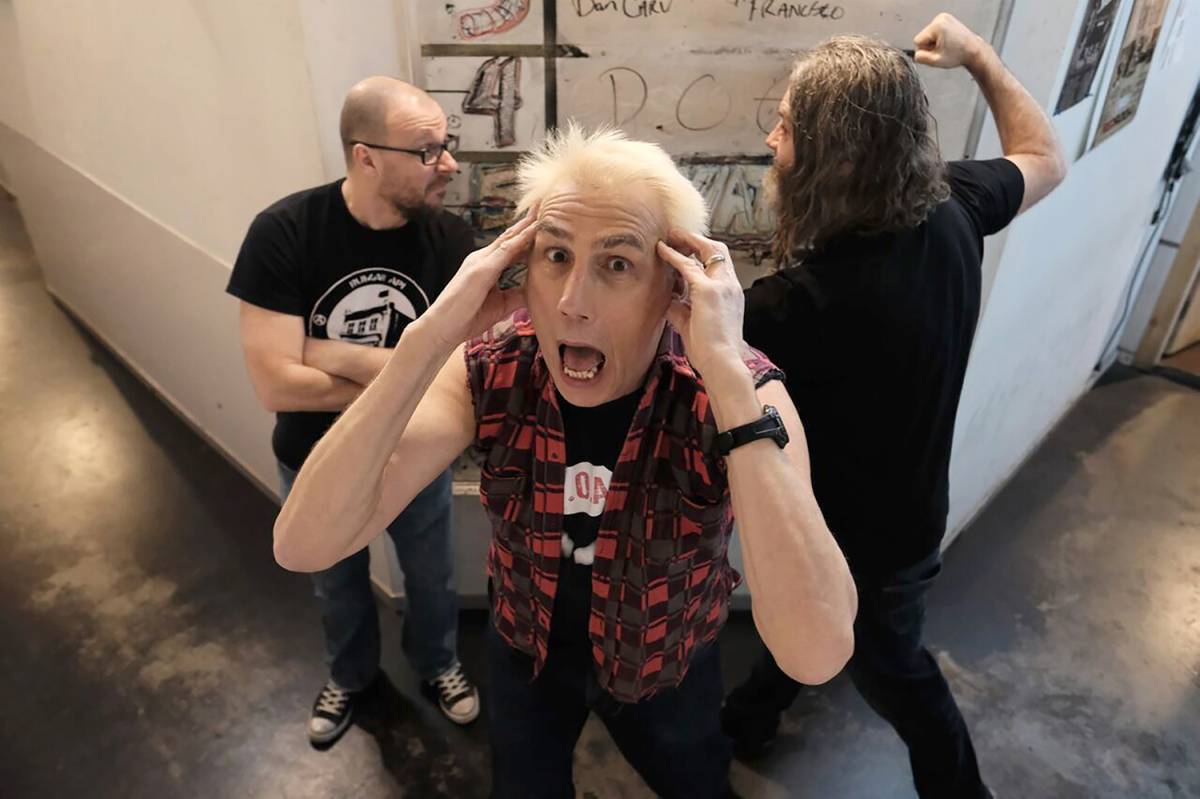
Given that it took place 40 years ago, D.O.A.’s first public performance is remarkably vivid in frontman Joe Keithley’s memory. On February 20, 1978, Keithley stepped on-stage at Vancouver’s Japanese Hall alongside his bandmates Randy Rampage (bass), Chuck Biscuits (drums), and, um, Harry Homo (more about him later) to bash through a set of hard-charging punk-rock tunes on borrowed gear.
Well, part of a set, at any rate.
“We only knew about three songs, plus half of another,” Keithley says, calling the Straight from his Burnaby home. “We played those, to a not really great reception from the audience, who were looking at us like ‘Who the hell are these guys?’ When we finished that, because they were so short, we said, ‘Well, let’s play them again.’ So we started playing again.
“At that point, the guys from the Generators—or whoever’s gear it was, I can’t remember—got up on-stage, and we got into a bit of a wrestling match, with them trying to push us off the stage. So I remember jumping off the stage at the Japanese Hall with my guitar, and I thought it was a triumphant moment.”
For him, maybe. Not so much for Harry. D.O.A.’s first gig ended up being his last, and he has since become a mere footnote, albeit a colorful one, in Vancouver punk history.
“He came along and saw us practicing, and he said, ‘Hey, you guys are pretty good. I’ll be the singer, you be the band. We’ll start a band called D.O.A. and we’ll make a million bucks,’” Keithley recalls. “And Randy, Chuck, and I went, ‘This guy’s pretty smart. He’s got some good ideas. A million dollars? You’re kidding, right?’”
Sadly, what the would-be rock star had in the enthusiasm department, he lacked in rhythm. “Harry was a super guy, but he didn’t have any sense of timing,” Keithley says. “We were showing him ‘This is where you start the verse, this is where you start the chorus.’ He was great on-stage, kind of a wild, crazy persona, but he just had no sense of timing.”
Keithley, of course, stepped into the role of D.O.A. singer-guitarist, and, aside from a couple of short hiatuses, he’s been there ever since. And while it’s not his sole focus—the always politically minded hardcore pioneer is vying to unseat Derek Corrigan and become mayor of Burnaby in October’s civic election—D.O.A. has kept Keithley pretty busy in its 40th year.
It was the freedom of expression and the chance to question authority that I thought was really vital and alive about punk rock, and that’s what drew me to it.
In April, D.O.A. (which currently includes drummer Paddy Duddy and bassist Mike Hodsall) released a new album, the raw and scathing Fight Back. The trio followed that up with the first leg of a North American tour, which will resume this month after a hometown show that also happens to be the inaugural Fight Back Festival.
That event, which takes place at the Rickshaw Theatre, will feature performances by other local music-scene veterans including Roots Roundup, Ford Pier, and David M. of No Fun, as well as an exhibition of photos by Bev Davies, whose camera documented the early days of D.O.A., Subhumans, Pointed Sticks, and other iconic acts. The festival’s message, according to its founder, is that standing up against racism, sexism, and corporate greed is more important than ever in a time when the extreme right seems to have waded into the political mainstream.
In some ways, the current climate is an echo of the era that gave birth to punk and convinced a young Keithley, who had already done some work with Greenpeace and was studying to become a civil-rights lawyer, to get even more involved in progressive causes.
“As the ’80s went along, you had real right-wing zealots like Ronald Reagan, and of course Margaret Thatcher was prominent, and Helmut Kohl in Germany and of course our very own B.S.–ing Brian Mulroney,” he says. “That is punk rock. Those people were probably the biggest influence on punk rock, not Johnny Rotten, not Jello Biafra or Henry Rollins or anybody like that. It was a reaction to the times.”
The rebel spirit that drove D.O.A. in the ’70s and ’80s is still very much alive in Keithley today, and he makes it very clear that he has no regrets about spending the past four decades fighting the good fight in the punk-rock trenches.
“It was the freedom of expression and the chance to question authority that I thought was really vital and alive about punk rock, and that’s what drew me to it,” he says. “I never would have suspected that I would spend my entire adult life involved in punk rock. I would have told you you were crazy if you had suggested that to me at the time—and I think most people would have agreed on the spot!”
 John Lucas
Leave a comment