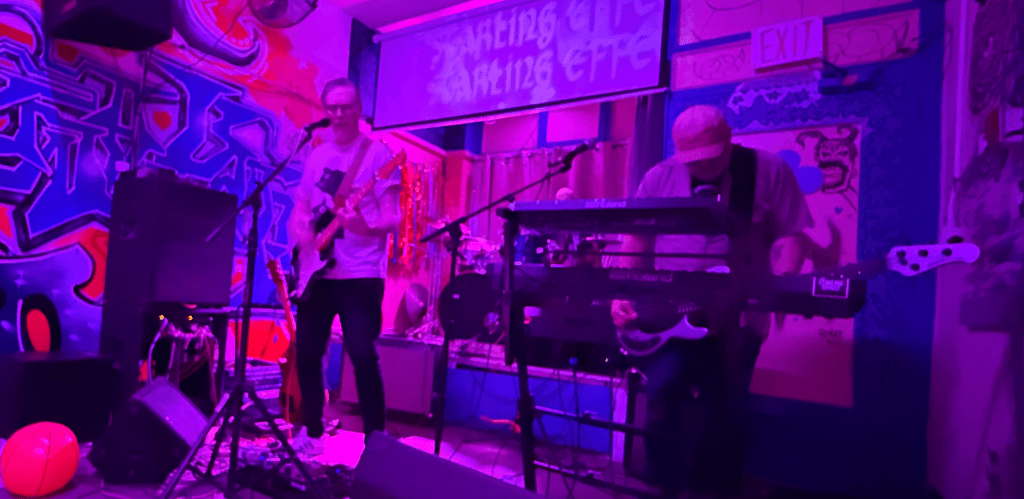
The Starling Effect is planning to take some time off from playing live in order to focus on writing new material. We will make an exception if a noteworthy promoter makes us an offer to play a high-profile show at a great venue. Seriously, we’re looking at you, Timbre Concerts and MRG Live (and we are acutely aware that you are not looking at us).
Ahem. Before we take our gigging hiatus, we’ll be performing at the Princeton Pub on Friday, March 13.
On this day in 2020, the Georgia Straight posted this preview of an upcoming Tall Heights performance in Vancouver. This is a significant one for me, because that show—at the Biltmore Cabaret on Sunday, February 23 of that year—was the last concert my wife and I attended before Vancouver essentially shut down thanks to COVID-19. Coincidentally, the first post-shutdown concert we went to was also Tall Heights at the Biltmore, on February 27, 2022.
Indie-folk duo Tall Heights aims to keep the art of the long-playing album alive
In 2020, it is surely tempting for any artist to eschew the full-length album format altogether. On streaming services, you can arguably gain more traction by releasing playlist-friendly singles than by dropping a batch of songs all at once.
For a while, it seemed as if that was the route Tall Heights was taking. After putting out a pair of LPs on the Sony Masterworks label—2016’s Neptune and 2018’s Pretty Colors for Your Actions—the newly independent Boston-spawned electro-folk duo spent the latter half of 2019 making singles. These include “Keeps Me Light”, released in October, and December’s “Under Your Skin”.
When the Straight rings up Tall Heights singer-guitarist Tim Harrington in Chicago, he reveals that he and singer-cellist Paul Wright are, in fact, working towards a new long-player after all. It’s in their artistic DNA, he suggests.
“In my opinion, every creative road leads back to making an album,” says Harrington, speaking on a day off between tour dates. “Like, I can’t not make albums. It’s what we do. It’s what we love. It’s the format of music that we feel is truly eternal, and that will last longer than ourselves. Certainly, the state of the music business is doing everything it can to kill the album, but I don’t think it will. I think at the end of the day people are still going to want their artists to make albums, and artists are still going to want to make albums.
“I can’t tell you exactly when that next album will drop; I can just tell you that it definitely will,” Harrington continues. “And I can also tell you that we’re creating a lot of music right now.”
That music, he indicates, will be a natural next step in the sonic evolution of Tall Heights. The pair began by busking on the streets of Boston, and their debut album, 2013’s Man of Stone, was an acoustic affair reflecting those beginnings; mostly spare layers of acoustic guitar and cello topped by Harrington and Wright’s shiver-inducingly glorious vocal harmonies.
By the time of Pretty Colors for Your Actions, the band’s sound had expanded into wide-spectrum indie pop, complete with drums, electric guitars, synthesizers, and—as on the aptly titled “House on Fire”—incendiary saxophone.
As for what comes next, Harrington reveals that he and Wright are recording at home with just the two of them instead of at a big, expensive studio accompanied by a cadre of other musicians. It’s a way, he says, of simplifying things, and of distilling Tall Heights down to its very essence.
“Every moment of time, artistically, is a little bit of a reaction to what you’ve done recently, I find, in that you never want to do the same thing twice and you always want to feel like you’re moving forward,” he says. “But you also never want to do something just to do it. You want it to feel artistically justified and motivating.”
Tall Heights is taking a pared-down approach to touring, as well. Rather than hit the road as a five-piece band, Harrington and Wright are playing as a trio with percussionist-vocalist Paul Dumas, who also happens to be their tour manager. It’s a freeing experience, he says, and one that lends itself to truly transcendent performances.
“I feel light as a feather,” Harrington says. “I feel like we can do whatever the hell we want on-stage, and it results in some really cool moments. I feel like every night we have a different experience with the crowd based on who’s in the room. And we play the songs, but something unique happens at each show.”
Exactly 13 years ago to this day, Pennsylvania punks Pissed Jeans released their fourth album, Honeys, on the Sub Pop label. I interviewed frontman Matt Korvette about the album for Concrete Skateboarding magazine. The original article only appeared in print, so this is the first time it has ever been posted online.
Sound Check: Pissed Jeans
(This article originally appeared in Concrete Skateboarding Issue 124.)
Matt Korvette’s musical identity was shaped by the steady diet of punk and hardcore he grew up on, but don’t hold your breath waiting for him to write the definitive smash-the-state anthem for his band, Pissed Jeans. Over a caustic but weirdly approachable wall of punk noise constructed by his bandmates (guitarist Bradley Fry, bassist Randy Huth, and drummer Sean McGuinness), Korvette can work himself up into a righteous fury, as a listen to Pissed Jeans’ fourth album, Honeys, reveals.
On tracks like the Black Flag-indebted slow grinder “Male Gaze” and the adrenaline-charged thrasher “Health Plan” you might pick up on the fact that the former song is Korvette’s public apology for being a drooling lecher, and the latter is about his aversion to doctors’ offices. If these seem like mundane concerns compared to, say, the political sloganeering found on the latest Rise Against record, Korvette makes no apologies for that.
“I feel like being the singer in a band that some people have heard of is kind of like a real lucky break,” he says over the phone from his home in Philadelphia. “I don’t want to just waste it by going back to seeing what everyone else has written about for the past 30 years, and just kind of altering those slightly so we have lyrics that exist and are completely unimportant, but no one’s going to get angry at them or notice them. That just bores me, because there’s nothing being said, actually. I have an opportunity to give you my spin on things that are annoying, so I feel like I want to do that and be true to things that I actually think about every day.”
Most of what Korvette ponders on a daily basis is relatable to the average listener because, although the band is signed to Sub Pop, Pissed Jeans isn’t keeping a roof over anyone’s head. The group’s members all have day jobs, including Korvette’s 9-to-5 gig as an insurance claims adjuster. Office politics don’t usually make for compelling song fodder, but “Cafeteria Food” is an exception to the rule. In that one, a cubicle dweller fantasizes about the death of a hated project manager.
“I was actually a bit nervous about that one,” the singer admits. “You know, I felt really good writing it, but after it was written I was like, ‘Oh, man. Did I go a bit too far?’ Having a little pang of ‘I hope my boss doesn’t hear this song,’ but I don’t think he did.”
The brilliant thing about “Cafeteria Food” is that its protagonist doesn’t dream up some elaborate plot to assassinate his nemesis; he simply imagines how satisfied he would feel upon hearing of the man’s demise: “Inside I’ll be laughing because you’re dead/You died/And I’m wishing I had my tap shoes on.”
“I feel like I’m not a unique fiower,” Korvette offers. “Probably a lot of the things that I’m dealing with, other people have thought about or just have not even realized that they deal with all the time, and they’re like, ‘Oh yeah, that happens to me, too.’ Which might be more potent than ‘I hate cops.’”
Of course, songs about hating cops can be perfectly relevant. If you’re a young Black man in Compton, and it happens to be 1988, then “Fuck tha Police” is a powerful call to arms. That, however, is not where Korvette is coming from, and he has no interest in making believe he’s something that he’s not.
“I’m coming from a very specific place of middle-class, white male privilege,” he acknowledges. “I haven’t had much serious struggle in my life, so I think that probably shines through. l’m not a guy that was homeless at some point and had to really struggle or sleep in a car for weeks. And l’m not trying to pretend that I am, either. I don’t think that I’m better because I had all these privileges, and I don’t think l’m worse. l’m just trying to say: ‘Here’s what I am.’”
I posted this to my LinkedIn profile a few days ago, but I felt like it belonged here as well. It’s very short but very important, and I would really appreciate it if you would share it as widely as possible. To be perfectly blunt, my financial situation is keeping me up at night.
When I was laid off from my full-time copywriting job last April, I braced myself for the possibility that I could be unemployed for as long as a couple of months, at worst.
It’s nine months later, and reality has long since set in. That reality is about to get a lot harsher and a lot more unforgiving; in less than two weeks my allotted EI runs out. With my chances of landing a new full-time position no better than they were nine months ago (and believe me, I have applied for dozens of them by now), I am facing a new reality: I must make freelancing my full-time job, by necessity.
If you’re seeing these words, you probably already know what I do. If you don’t, take a look at my LinkedIn profile, or better yet, just explore this very website. Full-time employment remains my goal, but I am available for everything from one-off assignments to contract work.
(Credit where it’s due: photo of me above is by Mark Stokoe.)
This makes it look as if all my writing in January was done for Stir. The truth is, I have several exciting things coming up for other clients, but they haven’t been published yet.
Daily human cost of the Russo-Ukrainian war revealed in PuSh Fest’s Eight Short Compositions
(Stir, January 15, 2026)
THE TRUE COST of war isn’t necessarily calculated by adding up the numbers of battlefield casualties or the schools and hospitals lost to missile strikes. It’s tallied in the trauma it can inflict on entire generations of people for whom life can never truly go back to the way it was before.
The full impact of Russia’s 2022 invasion of Ukraine may not be evident for some time to come, as the war there continues. As this article is being written, Russian troops occupy almost 20 percent of Ukraine. Hundreds of thousands of military personnel and tens of thousands of civilians have died, and millions of Ukrainians have fled the country, creating the worst refugee crisis Europe has seen since the Second World War.
Produced by the Czech Republic’s Archa Centre of Documentary Theatre, Eight Short Compositions on the Lives of Ukrainians for a Western Audience isn’t about those facts and figures. The show, based on stories collected by playwright Anastasiia Kosodii, is instead about small moments in the daily lives of ordinary Ukrainians as they navigate this most extraordinary time...
Folk-rooted string quartet the Fretless finds a voice in singer-songwriter Madeleine Roger
(Stir, January 20, 2026)
ALMOST SINCE ITS inception, Toronto-based four-piece the Fretless has been recognized as one of Canada’s top instrumental groups, with the hardware to show for it. The band’s 2012 debut LP, Waterbound, for example, helped earn the Fretless a Canadian Folk Music Award for instrumental group of the year. The band’s third album, 2016’s Bird’s Nest, won the 2017 Juno for instrumental album of the year.
In 2021, however, the group’s four members—Trent Freeman (violin, viola), Karrnnel Sawitsky (violin, viola), Ben Plotnick (violin, viola), and Eric Wright (cello)—invited a bunch of their favourite singers and songwriters to collaborate. The result was an album called Open House, which featured vocals from Dan Mangan, Ruth Moody, the Bros. Landreth, and others.
Freeman tells Stir that working with singers forced the four musicians to alter their way of approaching their craft.
“It was quite a change, because for nearly a decade it was just the four of us, deeply working together and really getting to know each other’s writing process…”
Theatre review: You’re Just a Place That I Know is a moving musical reflection on family and memory
(Stir, January 26, 2026)
ADRIAN GLYNN McMORRAN’S You’re Just a Place That I Know plays out a lot like a concert. The local singer-songwriter and his band, sometimes accompanied by a choir led by Adam Kozak at stage right,, play songs drawn from Glynn McMorran’s 2024 album. (The album bears the same title as the show, and if you’re looking for it at your local record shop or on your streaming service of choice, note that he released it under the more compact moniker “Adrian Glynn”.)
And these are songs that certainly lend themselves well to a live performance. Most of them fall loosely within the catch-all description of “folk-rock”, leaning more into the rock side of the equation when Glynn McMorran cranks up his Fender Telecaster (as he does on “Lionize”), with the rhythm section of bassist Cat Hiltz and drummer Sally Zori providing taut support. With added ornamentation courtesy of violinist Marlene Ginader and cellist Martin Reisle, numbers such as “Just a Place That I Know” take detours into chamber-pop. The multitalented Reisle also plays banjo, guitar, and even a balalaika, which Glynn McMorran reveals his grandmother gave him 20 years ago.
This isn’t just about Glyn McMorran’s baba and dido, though; throughout the performance, various members of the band step up to a microphone to share their own reflections on those who came before them...
Earlier this week, I interviewed Nardwuar the Human Serviette for an upcoming article I’m writing for an outlet I have long admired but never previously written for. So, I thought I would share this Georgia Straight article I wrote about Nardwuar in 2007. He was not yet an internationally known interviewer beloved of rappers and pop stars, although he had achieved some Canadian fame thanks to regular appearances on MuchMusic. The main topic of this piece, though, was a new album by Nardwuar’s band, the Evaporators.
The photos above show my son, Wolfgang, who was then a month shy of three years old, meeting Nardwuar at the Khatsahlano festival in 2011. The photos were taken by Rebecca Blissett.
Nardwuar the Human Serviette grows up?
(This is a slightly amended version of an article that originally appeared in the Georgia Straight in 2007. I should note that in subsequent years, Gassy Jack Deighton fell out of favour with the public as Indigenous activists and others brought attention to the more sordid details of his life. His statue in Gastown’s Maple Tree Square was toppled and removed in 2022. The Evaporators have removed the song “Gassy Jack” from streaming services and no longer perform it live.)
It’s a bit surreal sharing a table at the Tomahawk restaurant with Nardwuar the Human Serviette, because there’s a picture of him on the wall, right next to a signed promo shot of Terry David Mulligan.
It quickly becomes obvious that Nardwuar has spent a lot of time at the venerable North Vancouver spot (est. 1926), as evidenced by his easy rapport with the owner and his seemingly endless collection of stories about the Tomahawk’s illustrious patrons, from former prime minister Paul Martin to rock ‘n’ roll royalty like Rod Stewart.
Mind you, one gets the impression that the guy could hold forth with similar zeal on any number of subjects, digging deep for obscure celebrity connections and, most importantly, a local angle.
Take the late ’80s TV cop show 21 Jump Street, for instance. In its first season, the Vancouver-lensed drama set an episode in the world of disaffected teen punk rockers, doing Johnny Depp’s Officer Tom Hanson up in Sid Vicious drag and sending him to slam-dance at an Agent Orange show. Only it wasn’t really Agent Orange, it was a phony band featuring members of Vancouver’s Death Sentence, miming along to the California skate-punkers’ songs.
After the filming, Death Sentence’s singer-guitarist, the late Pete Cleaver (aka Puke or Nipplehead), allegedly stapled his scrotum to a picnic bench and then demanded a kitchen implement to remove the metal fasteners from his bleeding nut-sack. To Nardwuar, this anecdote was so compelling that he turned it into “Where’s the Butterknife?”, the first song on Gassy Jack and Other Tales, the new CD by his band the Evaporators.
An obsessive compiler of minutiae, the bespectacled singer is only too happy to fill in the rest of the details. “Now I have learned,” he says, a conspiratorial gleam in his eye, “that on that particular episode of 21 Jump Street, it’s a different lineup of Death Sentence. Doug Donut, the original drummer of Death Sentence, is not actually in that episode. It’s actually Gabe [Mantle] drumming—Gabe, who’s now in Gob.
“And also Pete Puke is not in that episode—he might have been in the crowd or something—because they got an actor to play Pete on-stage. So there’s only two original members of Death Sentence in that episode of 21 Jump Street, which you can see on YouTube. It’s pretty amazing.”
Arguably, such trivia is only truly interesting to Nardwuar, but such is the guy’s fascination with Vancouver punk rock that he titled another song, “Do the Eggbeater”, after some between-songs banter once uttered by the Pointed Sticks’ Nick Jones. And the cover of Gassy Jack re-creates the front of the Subhumans’ Incorrect Thoughts LP, via a Rebecca Blissett photo that originally appeared on the front page of this very publication in January 2004.
It’s not just the region’s punk-rock roots that fascinate the plaid-clad garage-rawk belter and celebrity interviewer, however, but B.C. history in general, as proven by numbers such as “E.J. Hughes”, “Desolation Sound”, “St. Roch”, and of course the title track, which was inspired by Gastown pioneer and legendarily verbose saloon proprietor Capt. John Deighton. It’s not too great a stretch to suggest that Nardwuar would make a pretty effective cultural ambassador for Western Canada.
“We have some unique places,” he says, between forkfuls of the Tomahawk’s signature Yukon-style bacon and eggs. “There’s stuff in Vancouver that there is nowhere else. It’s really neat that we have such interesting stuff. Maybe if I was in Toronto I’d write a song about Casa Loma, that cool castle that’s in Toronto. I’m obsessed with that sort of stuff.
“The city’s called Vancouver, and it was called Granville before that, but really, Gastown should be the actual name of the town, because he [Deighton] was the first settler here. Or it should be called Deightonville. If he hadn’t set down and opened that saloon, who knows if there would be a Vancouver?”
Those who share Nardwuar’s obsessions have plenty to get excited about this week. On Sunday (November 4), MuchMusic will be airing Welcome to My Special, which features interviews he’s done with Snoop Dogg, Slipknot, Michael Moore, and others. Tuesday (November 6) sees the release of both Gassy Jack and Welcome to My Castle, a two–DVD compilation of classic interviews from Nard’s public-access-TV days.
Before all that, though, the Human Serviette will celebrate his two decades on the air at UBC’s CiTR-FM by broadcasting for 20 hours straight, from 9 p.m. tonight (November 1) to 5 p.m. on Friday (November 2), after which he’ll be taking to the stage at the SUB Ballroom for a free all-ages Evaporators show.
When he’s asked to recall his favourite CiTR moment from the past 20 years, it’s typical of Nardwuar that he chooses an incident in which he was an observer rather than a participant. “You know how they have the carol ships that go around Vancouver? Every year the carol ships go around and they need music, so the ships broadcast a radio station. And one year CiTR was set up to be the radio station that would broadcast the carol-ship music.
“DJ Garnet Timothy Harry was on the air, and he was told, ‘Okay, Garnet, at 9 p.m. you are to put on a tape for the carol ships.’ He said ‘Okay, I’ll do that.’ But really, he was supposed to put on the tape at 8 p.m. So, at 8 p.m. he was saying stuff like ‘Man, fucking carol-ship bullshit. I have to put on this tape.’ And it was getting broadcast by all the carol ships throughout Vancouver.
“Eventually somebody called up and said, ‘Put on the carol-ship music,’ and he did. I thought it was just incredible how that happened.”
Sounds like good fodder for a future Evaporators song.
Australian indie-folk act the Paper Kites release a new album, If You Go There, I Hope You Find It, today. Here’s an interview I did with the band’s frontman and primary songwriter, Sam Bentley, a few years back.
If you only know the Paper Kites for their track “Bloom”—well, you’re like most people. It’s a jewel of a song, all rolling indie-folk acoustic guitars and delicately entwined vocal harmonies, and it is by far the Australian band’s most popular tune. Released in 2010, “Bloom” has been a slow burner—it took almost a decade for the single to achieve gold status in the U.S.—but it has racked up more than 200 million Spotify streams, and on YouTube the video is closing in on 23 million views.
The singular success of “Bloom” is even more remarkable when you hear how frontman and primary songwriter Sam Bentley defines the Paper Kites.
“We are an album band,” he says when the Straight rings him at home in the suburbs of Melbourne. “We’ve never been a band that just puts out a song without it being a part of something or alluding to something. And I understand bands that do that. I understand the whole streaming culture now, and that it is about getting your music out there, but I still believe that there are people who understand the art form of a record, particularly with the revival of vinyl.
“I’m not sure how it is over there, but in Australia CDs are all but done away with and it’s all vinyl in the music shops again,” Bentley says. “I think with that, people want a tangible thing that they can have in their homes to show their love for a certain record. That art form is coming back, and putting on something and listening to it from start to finish and really getting inside it and it becoming something that you feel speaks to only you, that’s definitely something that we really care about, and we’re very intentional about the way we craft everything.”
To get a clearer picture of just how much of an “album band” Bentley’s in, consider that the Paper Kites put out two of the darn things last year. The LPs are connected in many respects, from Gina Higgins’s film noir–esque cover paintings of lonely metropolitans to Bentley’s lyrical imaginings of the inner lives of others. Sonically, though, On the Train Ride Home is spare and stripped-down, while On the Corner Where You Live boasts a fuller sound, buoyed by atmospheric keyboards and shimmering electric guitars.
Bentley drew much of the inspiration for the albums’ songs by watching strangers and inventing back stories for them. When the Paper Kites aren’t on the road, he works at a movie theatre, which offers him both the opportunity to observe his fellow humans and the anonymity to do so inconspicuously.
“We have regulars that come in, and no one actually knows anything about them, even though we see them all the time, so there are many stories made up for those people,” he admits. “It’s great. I love working there. I love film, especially, and it’s a great place to be if you’re a film lover.
“No one has any idea what I do, out there,” Bentley notes. “I live way out in the suburbs, almost in a place called the Yarra Valley, which is wine country. And no one there knows that I play in a band or that I’m off touring all the time. It’s nice. It’s kind of like a Bruce Wayne day-and-night situation.”
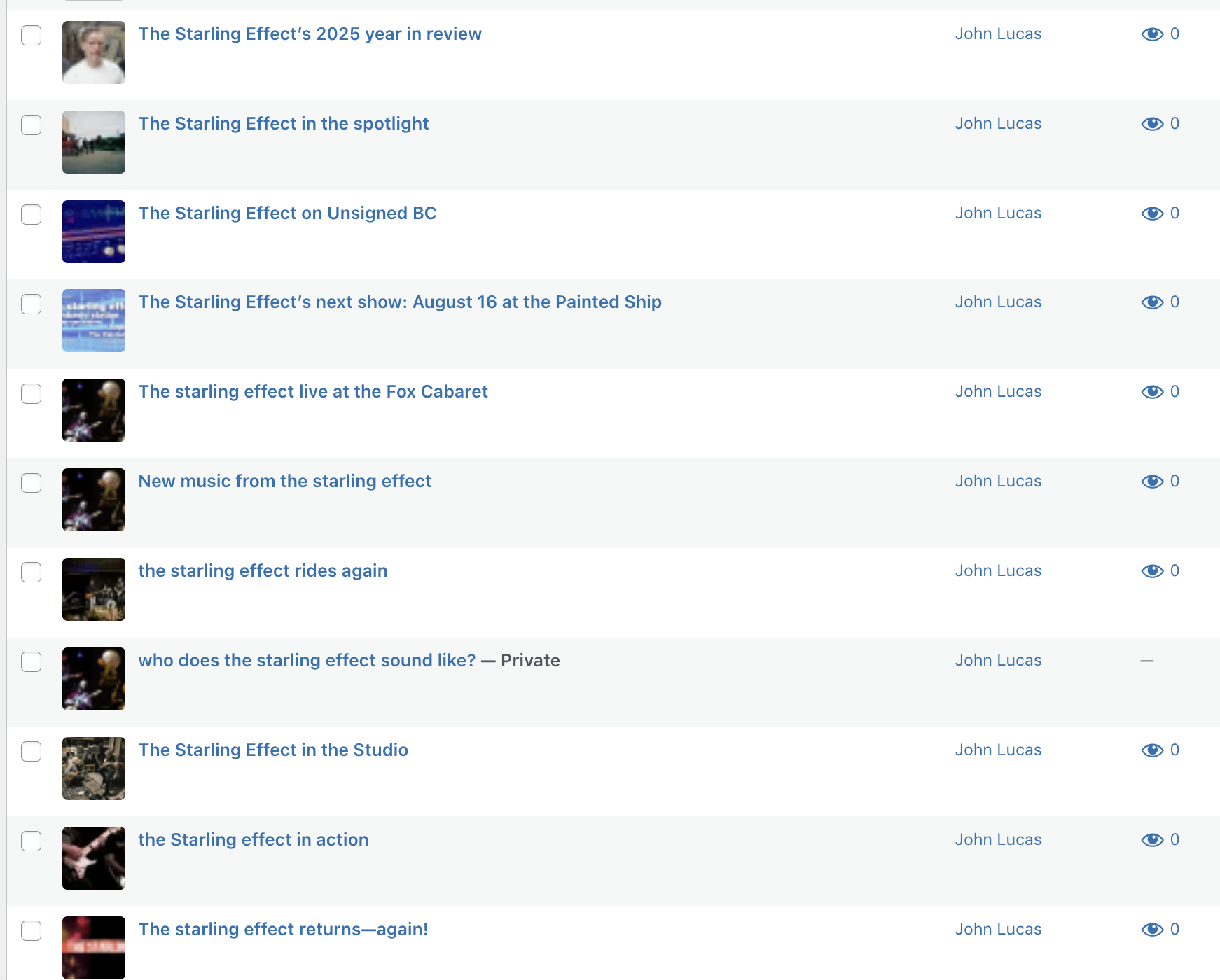
Look, I get the fact that no one cares about my music. Here’s how I know: I regularly post about my band, the Starling Effect, and I see the stats. Exactly zero people have looked at anything I have ever posted on the topic. Literally no one. Ever.
In case you thought I was exaggerating.
But, guess what? This is my blog on my website, and if I want to talk about my band every now and then, I will. Even if I’m the only one who’s interested. So… hi, me!
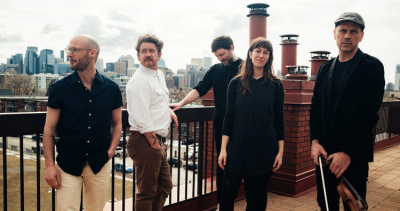
The Starling Effect (which has its own website, by the way) will be playing its first show of 2026 on February 6 at Take Your Time Back (648 Kingsway). This will be our first show at this venue, and that’s not all! It will also mark our debut as a three-piece, following the departure of long-time bassist Alex Reed.
Can we pull it off? You’ll only find out by coming to the show. You can find more details on this Facebook event page, but here’s some info about who else is on the bill:
THE STAKES ARE US formed in 2021 as a collaborative songwriting experiment between Trevor M. Thompson and Jeremy Todd under pandemic conditions. Blending guitars with keyboards and programmed beats, their songs often seem to have an early ’80s post-punk influence (often unintentionally), although other influences creep in as well.
ZOE THE STRANGE is an experimental indie-pop solo project. Zoe likes storytelling, playing characters, dancing, and screaming.
STANZA LUNE is a synthy, sapphic, survivor songster making tunes for the moon. Much of their musical inspiration comes from video games & cartoons they grew up on, and that shines through in their unique melodies, poetic lyricism, and the dreamy, synthy sounds of their Suzuki Omnichord. They’re also a neurodivergent nonbinary lesbian, which greatly affects their creative process.
P.S. If you do actually read this post, please comment and let me know, because there’s a possibility that WordPress is just not showing me accurate analytics.
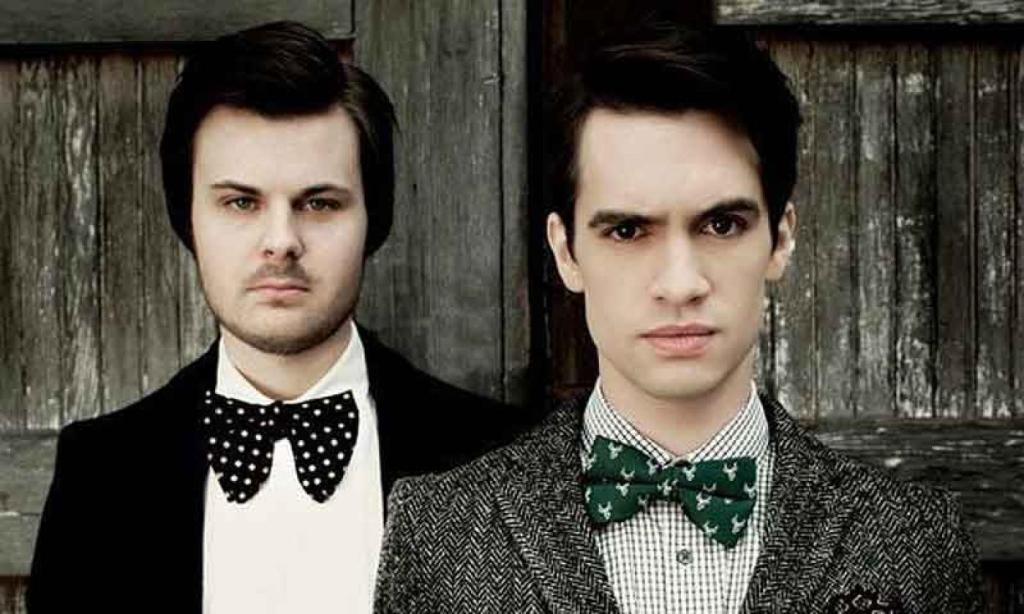
Exactly 12 years ago, the Georgia Straight published my interview with Panic! At the Disco’s frontman, Brendon Urie. By this point, Urie was effectively the last man standing; only he and drummer Spencer Smith remained from the original Panic! lineup, but even Smith was a member in name only and would soon depart altogether. All of which seemed perfectly okay with Urie, who has never been keen on sharing the limelight anyway.
Panic! At the Disco’s Brendon Urie doesn’t mind the spotlight
Panic! At the Disco fans got to see a lot of Brendon Urie in the band’s most recent video. In the clip for the single “Girls/Girls/Boys”, the frontman appears to be naked (although he’s only shown from the waist up), and he lip-synchs the song against a stark black backdrop. It is, in fact, a tribute to an earlier video, D’Angelo’s polarizing “Untitled (How Does It Feel?)”, released in 2000. The R&B star was famously hesitant to bare his ripped physique for the camera, and later felt that it actually hurt his career. Urie, on the other hand, had no such qualms.
“I love being naked, man,” the gregarious singer says, on the line from a tour stop in Mexico. “It was kind of just a natural thing. ‘Oh, I just get to be like I am all the time at home? Oh, cool. Just put a camera there.’ It is strange. You’ve got 30 people behind the camera just watching you, and, like, people you’ve just met for the first time that day. But it kind of surprised me how comfortable I ended up being after the first 10 seconds when the music started. ‘All right, here we go. One take. Fuck it.’ It kind of worked out. I like that rush that you get.”
Urie clearly doesn’t mind having all eyes in the room trained on him. He relishes being the face of Panic! At the Disco, and in fact it is Urie alone who is pictured on the cover of the group’s latest album, Too Weird to Live, Too Rare to Die!. “Full disclosure: I love it,” he says with a laugh. “I really do. I mean, since I was a kid—youngest of five kids—I’ve always been starved for attention, like ‘Look at me! Look at me! Look what I can do!’ And I like it. It feels very natural. It’s never been a big, big problem since we’ve done this record. Some of my favourite record and album covers and stuff have all been the singer, and they create a character and they dress up a little bit. That’s kind of the focus. I enjoy it. Like I said, it feels very natural. I like being the centre of attention. And that’s my ego talking.”
The singer is getting plenty of time in the spotlight on the current tour in support of Too Weird to Live, Too Rare to Die!. He is, in fact the only member of the original configuration currently touring under the Panic! At the Disco banner. As the project’s focus has shifted, from carnivalesque emo to ’60s-throwback rock to unabashed glitter-pop, its lineup has also changed. Founding drummer Spencer Smith is still in the band, but he has been sidelined since last summer in a bid to break his dependence on alcohol and prescription pills.
Always able to see the upside of things, Urie says he doesn’t consider Smith’s sabbatical a bad thing. “It’s actually been really good on both ends,” he insists. “Spencer is able to be at home and get his help that he deserves, and we also have people who’ve stepped up and been able to help us. The guy who’s drumming for us now [Dan Pawlovich] was our tech in the beginning, and he’s been able to tech himself and drum. So it’s been pretty amazing. Everybody’s stepped up and supported us through everything that’s happened. I mean, so many dynamic changes over the last six months. But it’s good. I mean, we’re looking up. It’s been positive so far.”
It just occurred to me that I forgot to do this monthly roundup at the end of December. I must have been distracted by something.
Early Music Vancouver aims to make Handel’s beloved Messiah feel both fresh and familiar
(Stir, December 3, 2025)
SINCE ITS FIRST PUBLIC performance in Dublin in 1742, George Frideric Handel’s Messiah has never fallen out of favour with audiences, even as its presentation has been changed to suit the tastes of the times.
In the Victoria era, fashion dictated massively scaled-up renditions of the beloved oratorio. In 1857, for example, London’s Crystal Palace hosted what was billed as the “Great Handel Festival”, complete with a performance of Messiah by a chorus of 2,000 singers and an orchestra of 500.
Not everyone, however, was a fan of this supersized Handel. Bernard Shaw was among the detractors, writing: “Why, instead of wasting huge sums on the multitudinous dullness of a Handel Festival does not somebody set up a thoroughly rehearsed and exhaustively studied performance of the Messiah in St James’s Hall with a chorus of twenty capable artists? Most of us would be glad to hear the work seriously performed once before we die.”
Richmond mayor hits the right notes at Vancouver Sunshine Lions Club charity concert
(Pancouver, December 8, 2025)
It isn’t every day that you get the opportunity to see a sitting mayor take to the stage and give a musical performance in front of a paying audience. That’s exactly what happened at Richmond’s Fraserview Church on December 7, when Malcolm Brodie provided piano accompaniment for vocalist May Ho and violinist Kan Chen.
Not by himself, mind you, but with the backing of the Vancouver Youth Philharmonic Orchestra. Brodie’s performance of two songs with the ensemble was the centrepiece of the Gentai Charity Concert. Organized by the Vancouver Sunshine Lions Club, the event raised $20,288 for the Richmond Community Foundation (which administers more than a dozen scholarships for secondary-school grads) and it also marked the Sunshine Lions’ 10th anniversary.
The two songs that featured Richmond’s mayor might not be very well-known outside of the Chinese community, but each is significant in its own way...
Vancouver Cantata Singers bridge generations with Christmas Reprise concerts
(Stir, December 9, 2025)
PUT IT DOWN TO genetics, credit the influence of growing up among musicians, or simply call it destiny; whatever the case, Sophia Colpitts was going to end up involved in music one way or another.
“My mom was an elementary-school music teacher and my dad still is, and they both play many instruments, so I grew up doing piano and I eventually started singing in choir when I was 11 years old,” says Colpitts, now in Grade 12. “And then I started writing choral music.”
Choral music certainly seems like the natural choice for the budding composer. One might even say it’s in her blood. Her grandfather, Doug Colpitts, has been a member of the Vancouver Cantata Singers since 1976. Sophia got her own start with the Vancouver Youth Choir, of which she is still a member, and she began composing her own choral works in 2022.
“The first piece I ever wrote was because of the Vancouver Chamber Choir’s Young Composers’ Competition,” she tells Stir in a telephone interview. “I just thought it would be interesting to enter, and so I did. And for that one, I won an honourable mention in the competition.”
Clearly, this is a young woman who takes music very seriously. Most of the time…
How SFU’s Marianne and Edward Gibson Art Museum was designed to be about more than just art
(Montecristo, Winter 2025 issue)
In Siamak Hariri’s view, every major project needs three key figures in order to come to fruition. A founding partner of the Toronto-based Hariri Pontarini Architects, he identifies the members of this holy trinity as the Champion, the Visionary, and the Captain. And in the case of the recently opened Marianne and Edward Gibson Art Museum at Simon Fraser University’s Burnaby Mountain campus, the architect says he knows exactly who filled each of those roles.
The Visionary, Hariri says, was Joy Johnson, SFU’s president and vice-chancellor, whose unswerving support ensured that the 12,100-square-foot, $26.3-million facility was built—and on a prime piece of real estate, no less, with an entrance adjacent to the campus’s main bus exchange. “She put this at the gateway of the entire university, and you have to acknowledge that that’s a daring act,” he insists. “She gave us enough land to spread out.”
The Captain, the architect continues, was Kimberly Phillips, director of SFU Galleries, who steered the Good Ship Gibson through occasionally stormy waters. And the Champion? That was Marianne Gibson, who was determined the new museum would be what Hariri calls “a love letter” to her late husband, Edward Gibson…