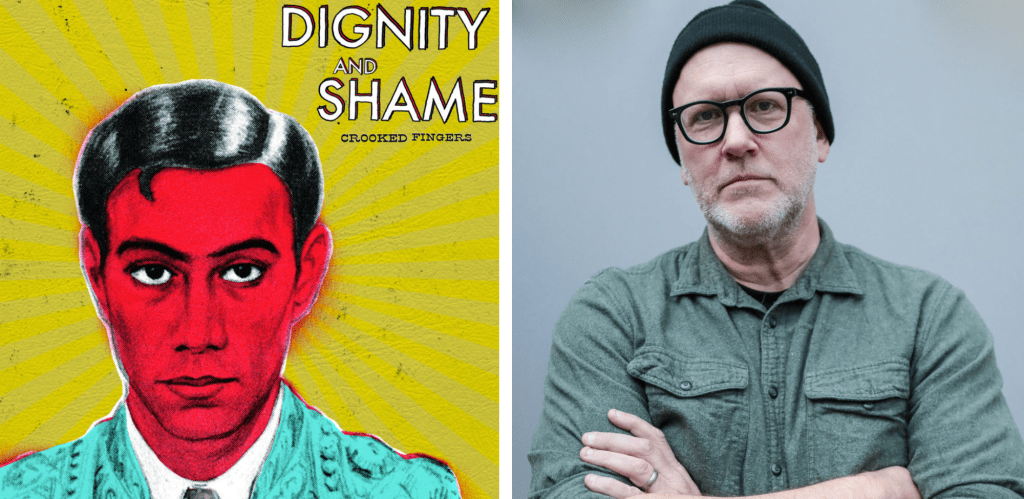
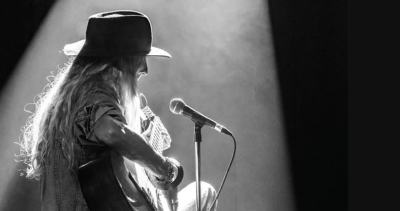
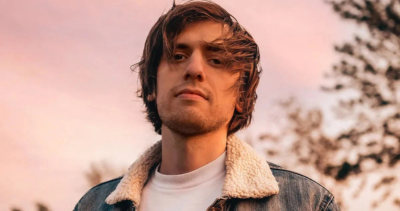
Twenty-one years ago to this day, Crooked Fingers played a show at the long-gone and sorely missed Richard’s on Richards in Vancouver. A few days before that, I had the opportunity to interview Eric Bachmann about his project’s latest album, Dignity and Shame.
Depending on whose opinion you choose to heed, the latest Crooked Fingers record, Dignity and Shame, is either veteran tunesmith Eric Bachmann’s masterpiece or a serious misstep. Reviews in SPIN and Billboard have pegged the disc as the finest entry to date in the band’s catalogue, but Pitchfork’s Marc Hogan was less charitable. Comparing the album’s relatively lighter selections with past triumphs such as “New Drink for the Old Drunk” and “Angelina”, Hogan opined that “At a bar, those tracks would be ordering whiskey shot-for-shot with W.C. Fields while most of Dignity and Shame was in the bathroom spewing its second sangria.”
Bachmann isn’t particularly interested in what Hogan and his ilk have to say. You won’t catch the former Archers of Loaf frontman visiting Pitchfork, or any other music sites, in search of his own name. “It doesn’t seem beneficial to go places on-line that are discussing your reputation,” the Seattle-based musician says, reached at a tour stop in Philadelphia. “It just doesn’t do me any good. It makes me feel self- conscious and weird. I always feel like it’s not my business what anybody thinks of me. I just feel like if I read that stuff it gives me a bad energy or makes me overly self-aware. I have more fun when I don’t know that stuff’s going on.”
The album that’s dividing the critics is Crooked Fingers’ fourth, and it is certainly the most diverse effort yet from Bachmann and his rotating cast of coconspirators. Dignity and Shame opens with “Islero”, a flamenco-flavoured instrumental, and returns to Spain for the matador anthem “Andalucia”. Throughout the disc, Bachmann introduces a parade of memorable characters—the usual assortment of jaded girls, drunken wastrels, and heartbroken lovers—and works in a number of musical styles, from weepy country (“Sleep All Summer”) to piano balladry (“Dignity and Shame”). Most surprising are those numbers that boast a hitherto unexplored accessibility, especially the radio-ready “Twilight Creeps” and “Call to Love”, on which Bachmann’s creaky voice is joined by that of the dulcet-toned Lara Meyerratken.
Bachmann won’t go so far as to admit that he’s making a bid for mainstream acceptance. “Nothing I do musically is on purpose,” he insists, but he does acknowledge that he has given more thought lately to communicating with people. Before, he claims, he took the same attitude toward potential listeners that he takes to music critics: he didn’t spend much time pondering how they might respond to his work. “Now I almost feel that it should be some sort of service,” he says. “Not in an arrogant way or a self-important way, but just like, ‘Well, gee, if I write this song and somebody gets something out of it, that’s pretty great,’ you know? I would love to move somebody in the way that Roberta Flack’s First Take moved me or a Townes Van Zandt song moves me or a Leonard Cohen song moves me. I’d love to do that. I’m not saying I can or I have done that, but I sure do want to try. That to me is the most rewarding thing.”
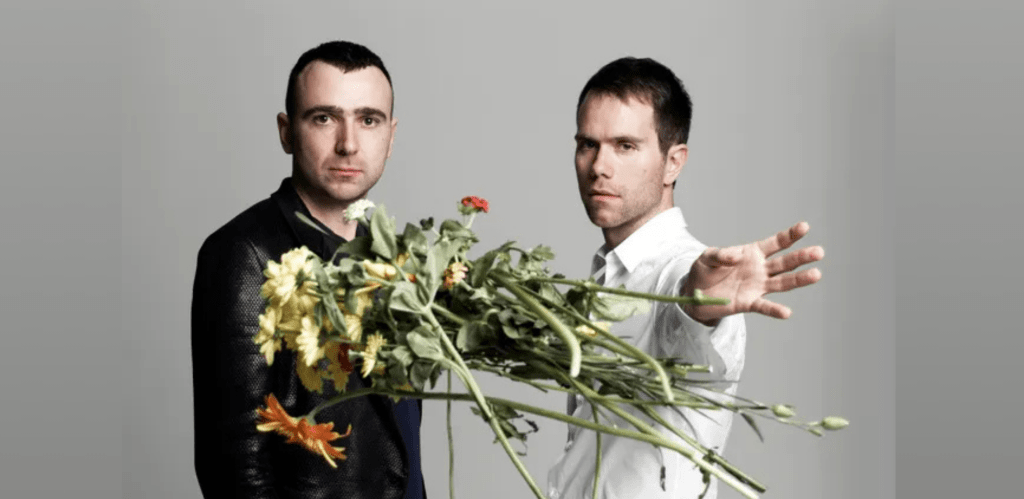
On this day in 2009, the Georgia Straight published my interview with Kim Moyes of the Australian electronica duo the Presets. Moyes had a few choice words for the Smashing Pumpkins’ Billy Corgan, who he desribed as “a sour Sally”, among other choice epithets.
The Presets are burning up Down Under
(This article was originally published in the Georgia Straight.)
For the benefit of those who stopped paying attention to Billy Corgan a decade ago, the shiny-headed singer-guitarist is actively looking for someone to fill the recently vacated drum stool of the glorified solo act he still pigheadedly insists on calling the Smashing Pumpkins. That news probably has a lot of stickmen salivating, but Kim Moyes isn’t among them. The drummer and keyboardist for Australian electronica duo the Presets says that after an incident that occurred last March, he has little use for Corgan, whom he describes as “a miserable prick”.
At the V Festival on Australia’s Gold Coast, the Smashing Pumpkins and the Presets performed simultaneously on separate stages. Corgan moaned that the Sydney-based pair’s thunderous dance beats were distracting (“I can barely hear myself think with that kick drum in my head,” he can be heard complaining on a YouTube video), but Moyes figures the once-mighty Pumpkin king had other reasons to be peeved.
“He was just pissed off because we had bigger crowds than him, and they were having more fun than his crowd,” Moyes says, reached during a sound check at Washington, D.C.’s 9:30 Club. “And also, I guess he’s just sad generally, and a miserable cunt. So, it’s not a feud. He kind of got the shits because we were playing and it was going really well, and he wanted to play an acoustic number. And it happened to be at the peak of our set. He’s the one who started throwing shit on us, telling his crowd to go and bash our crowd and stuff, and then went and complained to the promoter of the festival. I couldn’t give a fuck about him. I used to like the Smashing Pumpkins, you know? I mean, I don’t know him personally or anything like that, and I certainly have never spoken to him, but he just sounds like a sour Sally to me.”
Well, if there’s one thing a Presets show could do without, it’s a wet blanket like old Uncle Fester. With storm-the-nightclub singles such as the throbbing fuzz-disco stomper “Are You the One?” and the droid-factory funk number “Yippiyo-Ay”, Moyes and singer-keyboardist Julian Hamilton have established themselves as the go-to guys for guilty-pleasure dance tracks. The duo is still building a buzz on these shores, but has taken its sassy blend of rock, techno, and industrial-lite to the top of the charts Down Under. The Presets took home plenty of hardware from the 2008 Australian Recording Industry Association Music Awards, including album-of-the-year honours for Apocalypso, the band’s most recent release. The pair was also named best group, and its song “My People”—which sounds a little like the Rapture being tasered by Trent Reznor—won single of the year.
Bona fide stars in Sydney, the Presets pack stadiums on their home turf but have yet to graduate from the club circuit in North America. Moyes insists it’s all the same to him, noting that the dimensions of the venue and the scale of the audience have no bearing on how he and Hamilton play.
“We still try to bring a pretty full, high-octane energy to the performance, no matter what the size, I think,” Moyes says. “We want to give everybody the same experience at any show, so we just do our one dumb thing.”
In order to perform live as a two-piece, Moyes and Hamilton rely heavily on recorded material, which is a modus operandi that the drummer admits leaves little room for spontaneity. “We have a backing track that we play along with that’s got, like, bass and some synths on it and stuff, and then I’ll play drums live and Julian sings and plays other keyboards live, and there’s a little bit of samples in there,” Moyes says. “We build a live set with the tunes, and we sort of blend the tunes in with each other, almost like a DJ set. It takes about a month to build the backing for every live set, and rehearsing and whatever. When we take it on the road there’s not really any variation. We can only drop songs, we can’t really change the order of the songs or anything like that.”
In other words, the Presets won’t be taking requests at their sold-out Commodore show on Monday, so all you smart-asses can keep your pleas for “Cherub Rock” or “Bullet With Butterfly Wings” to yourselves.
IN + OUT
Kim Moyes sounds off on the things enquiring minds want to know.
On the upside of playing scaled-down venues: “When you play in a smaller club or whatever, sometimes you can have the crowd really close to you, and even over you, and it can be so fun because the energy is, like, inches away and you really feel quite interactive with it.”
On the Presets’ level of fame in Australia: “If people see us at a bar or something, they can get quite annoying and yell at us and go, ‘Oh my God, you don’t understand how much it means to me.’ I don’t know. We’re popular. I don’t know how to say it without sounding like a wanker.”
On whether or not he would try out for the Smashing Pumpkins: “Oh, yeah, for sure. I really get along with Billy Corgan, so I think that would be a perfect match.”
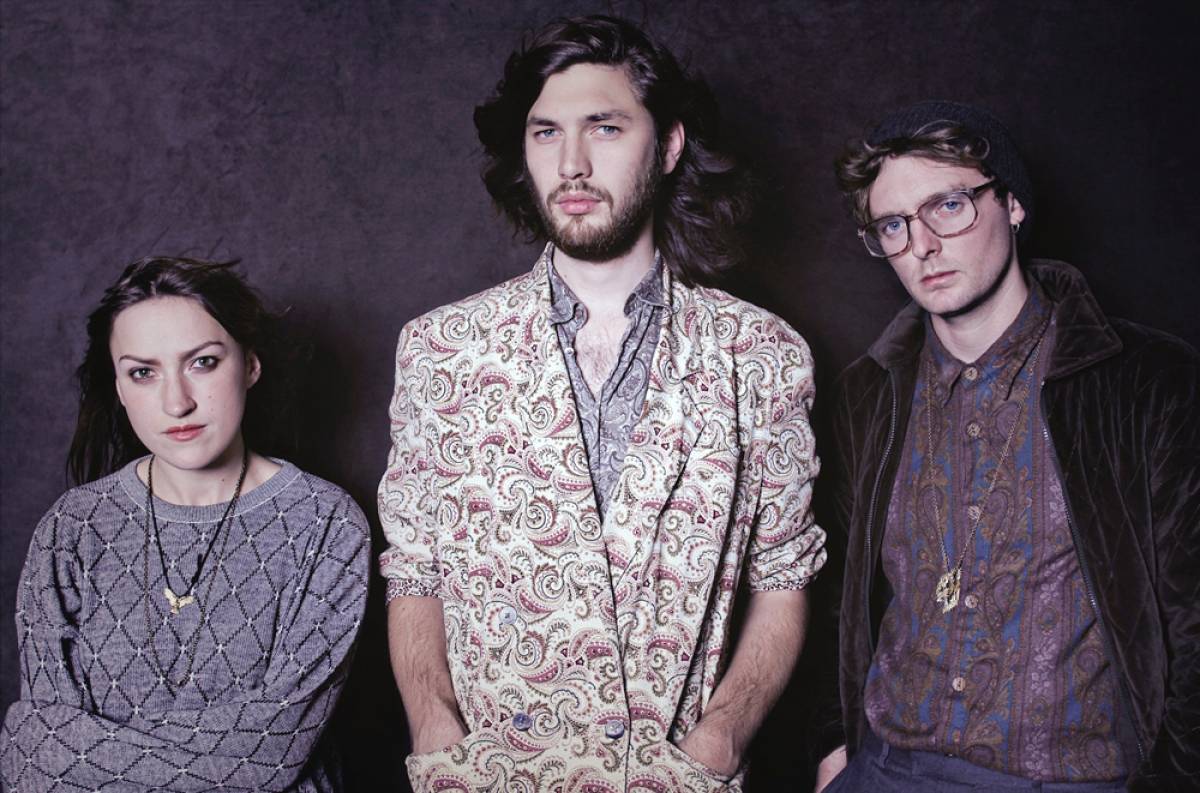
On this day in 2013, the underrated British alt-rock trio Esben and the Witch played at the long-gone and much-missed Media Club in Vancouver. A couple of years before that, the gothic-leaning band also played Vancouver in March (at the Waldorf on the 26th), so I thought it made sense to revisit both of my interviews with the group’s drummer (and former guitarist), Daniel Copeman.
Esben and the Witch has no interest in labelling its sound (2011)
In the Danish fairy tale “Esben and the Witch”, the youngest and smallest of a farmer’s 12 sons saves his brothers from losing their heads to an evil, bearded old hag by tricking the witch into beheading her own daughters instead. And that’s at the beginning of the story!
English musician Daniel Copeman plays in a band named after the grim tale. Reached at a tour stop in Toronto, the guitarist says, “It’s your classic sort of underdog fairy tale, but with a few sort of malevolent twists, where people get their heads chopped off and people get burned in ovens and stuff like that. It’s quite macabre, but we’re drawn to the imagery and everything of it.”
Indeed, the music of Esben and the Witch, as heard on the Brighton-based trio’s debut LP, Violet Cries, is dark and foreboding, shot through with a threat of imminent sonic violence that never quite materializes, lending the whole affair an air of unresolved tension. The focal point is singer Rachel Davies’s plaintive voice, saturated in reverb and surrounded by alternately crashing and ebbing waves of delay- and chorus-treated guitar and electronics, courtesy of Copeman and multi-instrumentalist Thomas Fisher.
You could call it gothic rock (as many already have), but not if you’re hoping to get on Copeman’s good side. He’s heard all the Siouxsie and the Banshees comparisons he wants to hear, thank you. “It feels very glib for someone to say to a band, ‘You haven’t made something new; you’ve just made something that sounds like it was made 20 years ago,’ every time the band does something,” he says. “From a journalistic point of view, it seems strange that journalists wouldn’t want to describe what they’re hearing in a new way.”
In fact, Copeman has no interest in labelling what Esben and the Witch does at all. “People seem to have to put a genre on something, otherwise they don’t feel like other people will be able to understand what they’re talking about,” he says. “I’d like to give people more credit than that.”
Copeman and his bandmates probably don’t have much time to ponder what their music should be called in any case. Things have moved pretty quickly for Esben and the Witch since it put out a self-released EP called 33 in late 2009. The trio’s audience expanded immeasurably when Pitchfork posted one of its tracks, the incendiary “Marching Song”, the following January. Tours with the likes of the Big Pink, School of Seven Bells, and Deerhunter followed, as did the inking of a deal with Matador Records.
All very awesome, and Copeman insists he isn’t taking any of it for granted. “It never gets any less exciting,” he says. “Touring North America as a headline band is something that none of us ever expected to have the opportunity to do, and it feels bizarre but wonderful at the same time. Being able to come to Vancouver and play a gig—I didn’t think I’d ever get to go to Vancouver, let alone go do something that I loved.”
Esben and the Witch takes a more organic approach (2013)
If you were one of the few who caught Esben and the Witch at its first Vancouver show two years ago, consider yourself lucky, because it was an experience that will never be re-created. This is true in part because it took place at the Waldorf (R.I.P.), but also because the English band has reconfigured itself since then, as Daniel Copeman explains. Reached on the road somewhere between Montreal and Toronto, Copeman says that, although Thomas Fisher remains on guitar, he and singer Rachel Davies have switched up their duties for the tour in support of the new Esben and the Witch LP, Wash the Sins Not Only the Face.
“I’m kind of trying to learn the drums as we play shows, which I’m sure is wonderful for audiences who watch me miss beats all the time, but I’m getting there,” Copeman says. “We wanted it to have a bit more of a groove, and a bit more of a live feel to this record, so I’ve stopped playing guitar. And Rachel’s playing more guitar and bass, and I’m doing all the percussive stuff and the synth stuff. Hopefully, it gives it a bit more of an aggressive live feel than it used to have.”
A more organic approach is in keeping with the overall vibe of Wash the Sins. The album retains some of the into-the-black gothic menace of the trio’s first full-length, Violet Cries, but adds in brush strokes of pastel-hued dreaminess, as on the aptly titled “Shimmering” and “Deathwaltz”, which enchants with ethereal melodies but verges on postrock thanks to its dynamic shifts and unorthodox chord changes.
Even more impressive is “When That Head Splits”, which begins with a full minute of slowly building drones before bursting into what, in the world of Esben and the Witch, counts as a pop tune. In the song’s striking video, a woman wanders through, and slowly melds into, a surreal forest landscape. The video’s director, Rafael Bonilla Jr., is heavily under the influence of science fiction, while the song itself was inspired by Salvador Dalí’s painting Metamorphosis of Narcissus, which in turn was based on Greek mythology. Layers upon layers!
“That’s what fascinates us about a lot of our favourite bands and artists,” Copeman notes. “Invariably, everybody’s referencing or is influenced by something.…It’s odd how there’s a lot of circular processes there, where you’ll be influenced by something that someone else has done, and their influences go back to something else, and their influences go to something else, and then you end up almost back where you started. There’s kind of an Ouroboros-like element to the way people are so inspired, where the snake is eating its own tail.”
If you’re getting the idea that Wash the Sins is sort of a cerebral listen, you’re right—Copeman points out with pride that copious research helped shape Davies’s lyrics—but that doesn’t mean it isn’t also an accessible one. That’s one of the things that set it apart from the bleak-yet-cathartic Violet Cries, which Copeman admits was “difficult to listen to”, and deliberately so.
“From my point of view, there was a bit of a mentality, an us-against-them idea, where I wanted to make something that was quite aggressive and oppressive and intense,” he says. “Maybe being more confident, and having toured, and feeling more comfortable with being in a band who are releasing records on Matador, the second one, to me, was supposed to be much more of an inclusive experience. People could get inside the record and could actually enjoy it. But, yeah, oppressive is the word for the first one, unfortunately. I don’t know if many people set out to write oppressive records anymore.”
I get it. You have great ideas to express and expertise to share, but you don’t have the time to distill them into just the right words.
And, let’s face it, you’re not a professional writer.
Fortunately, I am, and I have a lot of experience transforming clients into thought leaders by helping them turn their insights into engaging and accessible copy. Working with industry leaders in hospitality tech, AI, and HR (among other fields), I have ghostwritten pieces that have been published by Forbes, Entrepreneur, Healthcare Business Today, and a variety of trade publications.
Hi! If you’re new here, this is a thing I do every month, where I provide a roundup of all (or at least most) of my writing that has been published in the preceding month. March was a bit of a light month, to be honest, and while I continue to actively pitch, I would also be eternally grateful for any freelance work that just happens to fall into my lap.
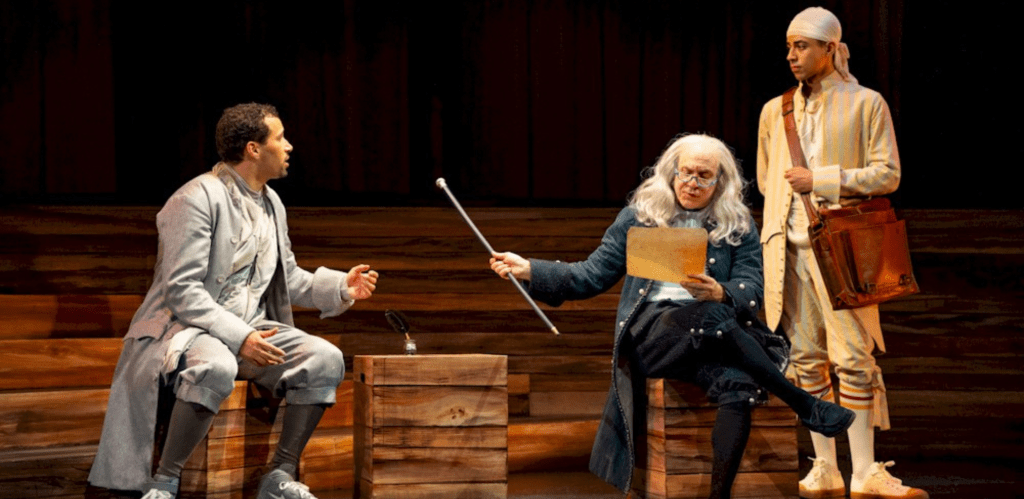
Franklinland takes an irreverent look at one of the Founding Fathers of the United States
(Stir, March 10, 2026)
Considered the greatest polymath since Leonardo da Vinci, Franklin was a prolific writer, a publisher, an inventor, a statesman, and—perhaps most crucial to his sacrosanct status in the U.S.—a staunch proponent of American independence from Great Britain.
He was also, if playwright Lloyd Suh’s Franklinland is to be believed, an insufferable egotist and kind of a shitty dad to his first-born son, William.
U.S.–born actor Brian Markinson plays Ben Franklin in the Arts Club’s upcoming production of Franklinland. He acknowledges that Suh’s script is not especially flattering to the man who has been called “the first American”. “This Benjamin Franklin, as written, is myopic, narcissistic, driven—those things that seem to translate to the country of my birth rather well, and certainly these days it has a different resonance,” says Markinson…
Brahms X Radiohead finds common ground between classical music and alternative rock
(Stir, March 12, 2026)
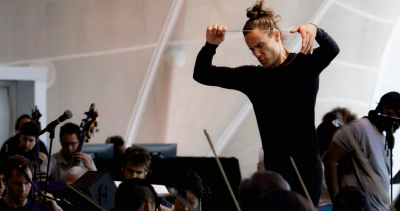
On paper, an orchestral work of the mid-Romantic period wouldn’t appear to have much in common with a dystopian-themed alternative-rock record, but in Hackman’s mind, they make a natural pairing.
“They’re both pieces that have a lot of anxiety, and this brooding feeling; this tense, unsettled feeling,” he tells Stir in a telephone interview. “So, from a macro level, I thought to explore that emotional similarity. And then on the micro level, there are certainly lots of musical devices or key signatures or time signatures or chord progressions that they have in common—but you could say that for a lot of music. Just because things are in C minor doesn’t mean you have to combine them, of course…”
For Black Gardenia’s Daphne Roubini, the artist’s life is one of constant evolution
(Stir, March 16, 2026)
THERE WAS A TIME when you almost never saw Vancouver jazz musician Daphne Roubini without a ukulele in her hands. In 2009, the transplanted Londoner started Ruby’s Ukes, which grew into what was possibly the largest ukulele school outside Hawaii, spawning a festival and a 70-member uke orchestra.
Ruby’s Ukes scraped through the COVID-19 pandemic by pivoting to online classes, but by 2024, Roubini decided to wind things down. These days, Roubini, who fronts the band Black Gardenia, hasn’t forsaken the little four-stringed instrument that many associate her with, but playing the ukulele has taken a back seat to writing songs as her creative vehicle of choice.
When she meets up with Stir at a busy Strathcona cafe, Roubini admits that the instrument initially served as something of a security blanket or a shield. “I was a very, very shy singer, so when I started playing the ukulele, I felt like it kind of protected me in some ways,” she says. “It was between me and the audience…”
Vancouver’s Revived Park Theatre Is an Investment in a Cinephile Future
(MONTECRISTO Magazine, Spring 2026 issue; posted online March 23)
There’s a white rectangle on the floor of the Park Theatre’s projection booth where a high-resolution, large-format film projector used to be—specifically, a Cinemeccanica Victoria 8. The Italian-made 70mm projector is now lodging at Cineplex Odeon International Village, but it doesn’t matter much.
On a behind-the-scenes walkthrough of the space in January, projectionist Sarah Worden promises that a replacement Victoria 8 is on the way, one of the finishing touches to the technical upgrades that the historic cinema’s new owners say will make it any film lover’s dream. It’s less a return to a former glory than it is the start of a new era for the storied movie house.
When the Park Theatre first opened its doors at 3440 Cambie Street on August 4, 1941, cinemas didn’t have much competition for the attention of the viewing public. Broadcast television in Canada didn’t exist until 1952, and a streaming service like Netflix would have staggered the imagination of even the most dedicated fan of science fiction. The advent of the multiplex was still several decades away, and single-screen movie theatres across Vancouver were each showing something different.
Fourteen years ago today, Icelandic indie-folk band Of Monsters and Men played in Vancouver for the first time. A few days before that, I interviewed the band’s singer-guitarist Nanna Bryndís Hilmarsdóttir, who was then on the road somewhere in the United States.
If you want to catch Of Monsters and Men on its current North American tour, be prepared to pay whatever the scalpers are charging. As of this writing, 16 of the 19 shows on the Icelandic folk-pop sextet’s schedule are sold out in advance. Not bad for a group that has never toured outside of its home country before, and whose debut album, My Head Is an Animal, won’t be released on these shores until April 3.
“We did not expect that at all,” says singer and guitarist Nanna Bryndís Hilmarsdóttir, speaking from a tour bus heading from Texas to California. “When we put the tickets on sale and people started buying them, it was selling out in 10 minutes and we were like, ‘What? How come you’ve heard of us?’ We’re very flattered that people actually know who we are and are coming to our shows.”
Hilmarsdóttir can thank the Internet for that. Of Monsters and Men began getting serious attention in the fall of 2010, when Seattle radio station KEXP shot the band playing two songs in a Reykjavík living room and put the videos online. Those clips illustrate how well Hilmarsdóttir and her bandmates can play in an unplugged setting, but they only hint at Of Monsters and Men’s full capabilities.
On My Head Is an Animal, the group moves comfortably from the warm, folksy intimacy of “Love Love Love” to the Arcade Fire-esque anthem “Six Weeks” to the brassy chamber folk of “Little Talks”. That last track features Hilmarsdóttir and her cosinger and guitarist Ragnar “Raggi” þórhallsson trading lines on the verses and harmonizing beautifully on the choruses.
It also has a video that’s virtually guaranteed to add to Of Monsters and Men’s already considerable buzz. In it, the five men in the band play adventurers who discover a lost fairy-like being (portrayed by Hilmarsdóttir) and help her find her way home through a gorgeously rendered CGI landscape filled with volcanoes and fantastical creatures. The eye-popping video was made by the Vancouver-based team We Were Monkeys, comprising director Mihai Wilson and producer Marcella Moser.
“They came over to Iceland, and they went around the country and took some photos and some footage to work with,” Hilmarsdóttir says. “And then we went into a studio in Iceland, which has this huge green screen. And they had us in makeup chairs doing all the makeup, and then they just shot us from the chest up—just like, the facial expressions. We had seen their draft for the video, and we were so taken by the idea, but we didn’t really know what to expect….Then they went back to Canada and worked on it, and a month later they showed it to us, and we were like, ‘What?!’ We were very pleased with it.”
Of Monsters and Men will play a series of dates in Europe soon after its North American tour ends. If audiences over there get a look at “Little Talks”, those ought to sell out as well. They do have the Internet in Europe, don’t they?
I went waaaay back into the archives to dust off this interview with Colin Meloy, which was first published exactly 21 years ago today. I’ve been doing this for a long time.
When the Decemberists’ sophomore long-player, Her Majesty, was released in 2003, it came on the heels of the quirky Portland folk-rock group’s buzz-making debut, Castaways and Cutouts, which had been issued just a few months earlier by the respected Kill Rock Stars label. Both were fine efforts, but it was Her Majesty that catapulted the Decemberists beyond cult status and into the ranks of indie royalty. The disc’s artfully arranged Dickensian tales of soldiers, pirates, and orphaned chimney sweeps garnered critical praise and earned the band a loyal following. With an equally strong new album, Picaresque, slated for release on Tuesday (March 22), the group might well grow too big for its current label, but singer-guitarist Colin Meloy is wary of making a jump into the corporate end of the music world.
“We’ve been talking to a few major labels, but I don’t know if that’s going to be entirely our cup of tea,” he reveals, reached by cellphone in his car, which he’s piloting back into Portland after a few days on the coast. “We’re not quite sure what we want to do. This is our last record for Kill Rock Stars, so I think we are going to be moving on. We’re going to talk to majors, but we’re also going to talk to a lot of indies as well, just because I don’t know if our music is meant for a major-label environment. I don’t know if we can be that big crossover indie-rock sensation that everyone’s been hoping for right now.”
Leave that for Conor Oberst, as Picaresque makes few concessions to the mainstream. The record isn’t without its potential singles, mind you; “The Sporting Life” is a deceptively jaunty-sounding number about humiliation on the soccer pitch, and “The Engine Driver” is a gently rolling lament whose tuneful melancholy brings to mind Glen Campbell’s “Wichita Lineman”. The Decemberists would have less luck hitting commercial radio with “16 Military Wives”, however. Boasting a chorus that demands to be shouted and closing with a blast of rousing brass, the track is a sharply worded summation of Meloy’s disgust at the red-white-and-blue spectacle that is U.S. life during wartime: “Because America can and America can’t say no/And America does if America says it’s so.”
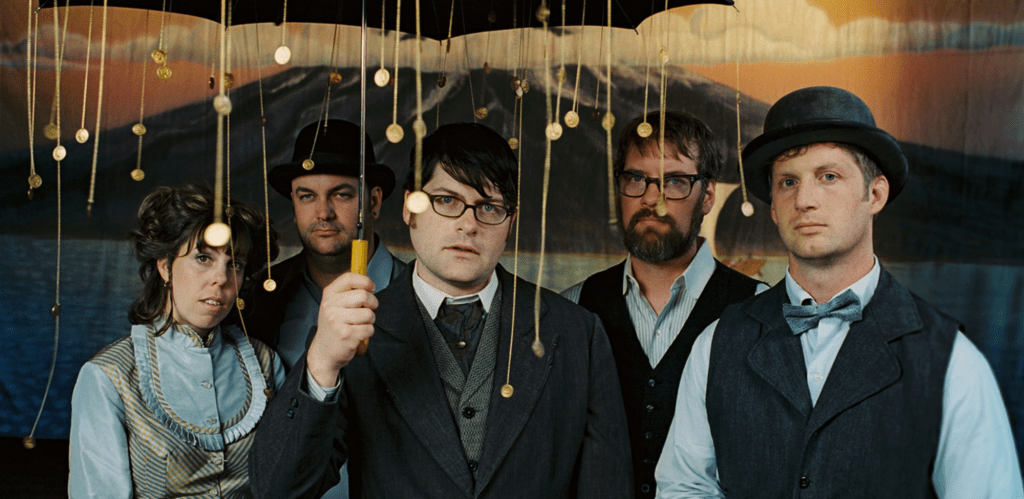
Record execs might also balk at the likes of “The Mariner’s Revenge Song”, an eight-minutes-plus epic of deceit and vengeance complete with sea-chantey accordion and death-in-the-belly-of-a-whale rumbling. Decemberists fans, on the other hand, are already aware of Meloy’s Gilbert-and-Sullivan tendencies, which on Picaresque extend to album photos that feature the quintet’s costumed personnel in stagey tableaux illustrating the lyrics of the more dramatic songs.
Those who have caught Decemberists shows on past tours will have observed that, somewhat disappointingly, the band’s members tend to favour a jeans-and-T-shirts look. For fans thinking of heading to the Richard’s on Richards gig on Saturday (March 19), Meloy promises something a little different. “We are kind of upping the theatricality for this tour, and we’re using some of the backdrops from the photo shoots for the stage, and we’re also having uniforms that are vaguely communist/military,” he says. “But that’s about as far as I would want to take it. I’ve always felt it’s really important, as far as the live show is concerned, to not distract too much from the songs themselves. When it comes down to it, we’re just a rock band, you know? And people should come to our shows expecting to see a good rock show, that there’s not going to be too many props or acting on stage. I feel like there’s enough theatricality in the songs that you don’t really need to punch it up that much.”
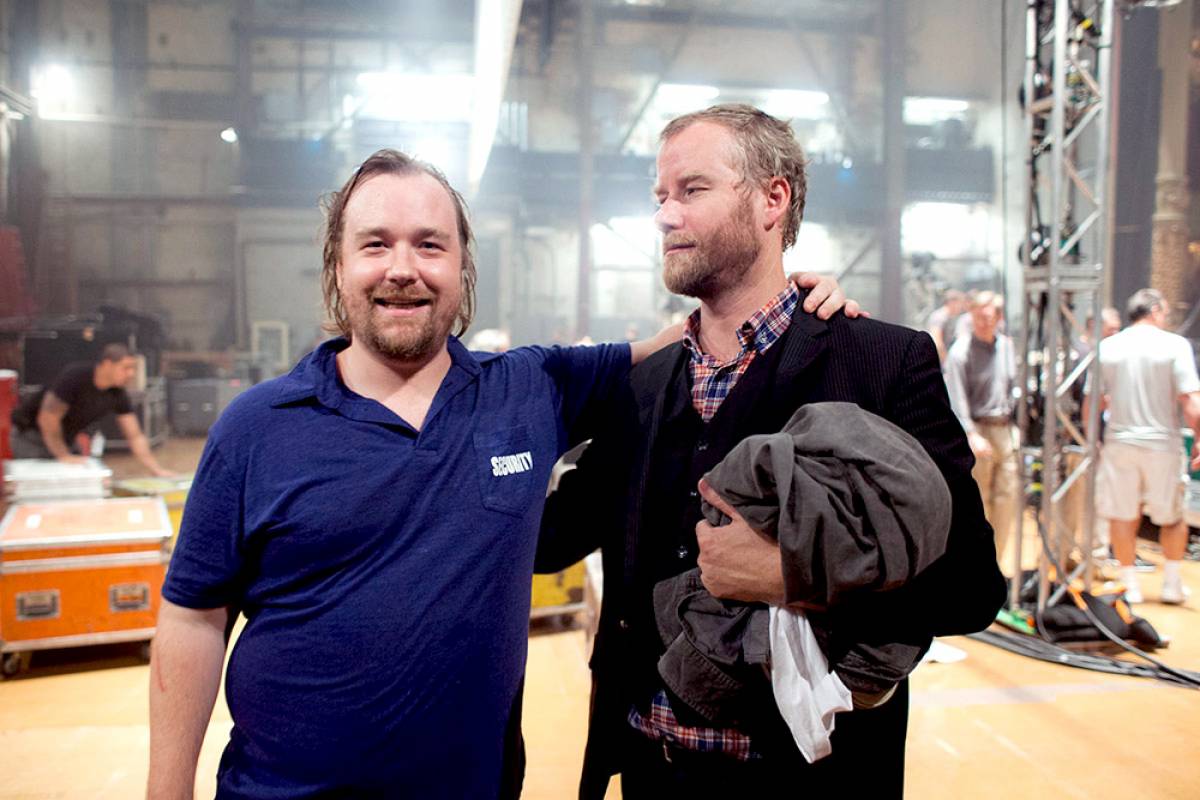
Matt Berninger brings his solo tour to Vancouver’s Orpheum Theatre tonight (see you there?), so it seemed like a good time to revisit the two times I interviewed him back in the 2010s. The first time was when Berninger’s band, the National, was touring in support of its then-new fifth album, High Violet . The second time, I interviewed Berninger along with his brother Tom, whose documentary about his tenure as the National’s assistant road manager, Mistaken for Strangers, was about to hit theatres.
Right about now, Matt Berninger must be wondering what the hell he’s gotten himself into. By the time the Straight catches him in Vienna, where he’s getting ready for a sound check at Arena Wien, the National’s frontman already has about four-dozen shows behind him in support of the band’s latest album, High Violet. Nor are things about to slow down: the National is booked fairly solidly right through to January, when it’s slated for a string of festival gigs in Australia.
“Yeah, it goes on and on,” Berninger says. “Next year is also being scheduled out right now, and it looks like we’re gonna be touring on and off probably through to September of next year, so there’s still a whole ’nother year to go.”
If the singer comes across as a little less than wholeheartedly enthused about the prospect of being on the road for such a long stretch, well, that’s because he is. “To be perfectly honest, for me touring has always been kind of a difficult thing,” he admits. “I’m not a good traveller. I just get homesick really quickly, and there’s something about living on a bus, and shows after shows after shows—I go into sort of a weird place.”
These days, Berninger has an even more compelling reason for wishing he could stay home. He now has a daughter, 20-month-old Isla, who recently posed with him, albeit reluctantly, for the cover of Under the Radar magazine. Because of her, he says, the National is trying to restrict its road trips to no longer than three weeks in duration.
Berninger is abundantly aware, however, that the current tour is a crucial one for his band, which has been honing its artful brand of indie rock for over a decade. High Violet debuted on the Billboard 200 in the number-three spot, a crystal-clear indication that the group’s popular appeal was finally catching up with its critical acclaim.
“We are realists,” the baritone singer says. “We’ve been in a band that’s been trying to get to this point for years. And we know that when you have some attention, it can go away so fast. It’s music. It’s rock ’n’ roll. Bands are hot and then, you know, people lose interest. So we know that we have to dive in and deliver and make our mark while we can.”
If that was also the modus operandi behind the making of High Violet, then the National has accomplished its mission. It is by turns the band’s most direct batch of songs to date (witness the churning propulsion of “Bloodbuzz Ohio”) and its most nuanced, swelling with atmospheric string parts that never threaten to swallow up the otherwise spare arrangements. Accompanied by two sets of siblings—multi-instrumentalist Aaron Dessner and his guitar-playing brother Bryce, and Scott and Bryan Devendorf, who play bass and drums, respectively—Berninger proves his mettle as one of the most gifted lyricists in contemporary rock. These are songs that look outward at our profoundly messed-up world as much as they shed light on the interior life of a man still trying to find his place in it.
The National recorded most of High Violet at its own studio in Brooklyn, which gave it the luxury of much-needed time. This is not, after all, a group of guys who can bang out an album’s worth of material in a weekend.
“We go into what we call ‘circling the vortex’, where we’ll find ourselves lost over and over again,” Berninger says. “With almost every song we’re working on, we get it to a point where we lose sight of what we’re trying to do with the song or the whole record. That happens to us all the time. With our band, there’s nobody who’s totally in charge, so everybody can sometimes step out of the myopic quagmire at different times and see where we are and get some sort of perspective on it and pull everybody out of it. So there’s a strange balance of activity in our band. Half the guys might be thinking that we’re just getting nowhere, and then somebody’ll put it into perspective and say, ‘This song and this song and this song are amazing. It’s almost finished.’ And we all go in and out of that role, I think.”
The biggest struggle this time around, Berninger says, was “Lemonworld”. He notes that the band attempted and rejected something in the neighbourhood of 80 different variations on the song before something finally clicked.
“It just kept getting worse and worse,” the singer says. “We did so many versions and ultimately we went back to a really early, rough version that just had the closest thing to the charm that that song needed to work. It’s a mystery why certain songs are really fragile—and especially a song like that, where, from a musical perspective, it’s not exactly high art. It’s one of the simpler songs. But maybe that’s exactly why the delivery of it had to be just right. Otherwise, it was going to feel heavy-handed or simplistic.”
Once again, mission accomplished. As it appears on the album, “Lemonworld” strikes the right balance between visceral and heady. And here’s hoping Berninger is still pleased with the song. After all, he’s going to be hearing a whole lot of it over the next year or so.
IN + OUT
The National’s Matt Berninger sounds off on the things enquiring minds want to know.
On the inspiration for “Afraid of Everyone”: “I think the song is a reaction to feeling so confused and so frustrated. It’s hard to figure out what makes sense. I don’t trust MSNBC to give an accurate portrayal of what seems to be happening. Obviously, Fox, on the other hand, almost seems to be pure fiction. Honestly, The Daily Show seems to be the only television outlet that I feel is coming from a level perspective. Jon Stewart and his team seem to be the only level-headed, honest interpretation of what’s happening in this country. And it’s a half-hour comedy show!”
On the presidency of Barack Obama, whose election campaign the National publicly supported: “I’ve been disappointed in the pace of the progress. I still completely support Obama, but my hope is that he’s just playing nice so that he wins the next four years, and during those four years he just forces stuff to happen. He’s the president. I mean, George Bush got away with unbelievable things—in the wrong direction. I don’t know why Obama’s playing so nice.”
On why Obama needs to toughen up: “You have to draw blood if you’re going to get anything done in this sort of thing. In many ways, George Bush was more effective at governing, as far as getting things done. I mean, he made torture legal for a while. How could somebody have pulled that off? If Bush and those guys can do things that are just universally illegal, and they can get away with it, why can’t Obama do good things? Just do ’em. Just fucking do ’em and tell everybody to fuck off, and answer questions later.”
Mistaken for Strangers captures backstage drama on a National scale (2014)
Matt Berninger is an atypical rock star: a middle-aged dad with a meditative croon and a penchant for elliptical lyrics. Nonetheless, his band, the National, has a track record of top-10 albums, Grammy nominations, and (perhaps most important of all) rave reviews from Pitchfork.
Tom Berninger, Matt’s younger brother, is not a star of any kind, although his directorial debut, Mistaken for Strangers, is threatening to make him one, having garnered its share of glowing critical notices from the likes of Entertainment Weekly and, yes, even Pitchfork. Opening on Saturday (April 12), Mistaken for Strangers is about Tom’s stint working as a roadie for his brother’s band on its 2010-11 tour. Well, working might not be exactly the right word. Much of the film’s drama (and humour) is derived from Tom’s run-ins with tour manager Brandon Reid.
Tom lasted eight-and-a-half months on the road before the inevitable firing, long enough for him to capture his brother and the rest of the National at their best (and occasionally their worst) with the handheld camera he just happened to have with him. At its heart, though, Mistaken for Strangers is about the relationship between two brothers. There’s a sense that the pudgy man-child lives in a completely different world than golden boy Matt. In a conference call with the Straight, Tom says the film’s focus only became clear when he started to edit the footage with Matt’s wife, Carin Besser.
“Very slowly we kept adding more of me and less of the National. And we actually did have test screenings to make sure that, like, ‘Is this the right move? Are we gonna piss anybody off?’ And for the most part, people said, ‘No, this is Tom’s story. This is the good stuff,’ ” he says, noting that things were crystallized in a scene in which he’s “wasted on the bus”.
“I thought it would be cool to have me drinking all the band’s beer on the bus while they all slept in hotels,” he says. “I partied by myself.…I didn’t know if it was ever going to be seen, but I thought it would be funny. When I saw it later in the editing room, with Carin, it wasn’t very funny. It was kind of sad. And we were like, ‘Ooh, that’s even better.’ ”
While Tom admits that the film plays up the bumbling-slacker angle, one suspects there’s more to the man than what we see on the screen. We get a hint of this when the boys’ mother describes Tom as “the most talented” of the two. Joining his brother on the phone from his home in Los Angeles, Matt readily agrees.
“Tom swims through the world with a very unique stroke,” the singer tells the Straight. “He’s got a unique taste and a very unique vision and a very unique way that he interacts with the world. And I think that’s what she means when she says he was always the most talented—meaning he had this weirdness about him that was very special. And the truth is, I think the whole family always thought she was kind of right about that. Tom has a weird light inside him that he often doesn’t recognize; some strange green light does glow from within my brother that everyone else can see but sometimes he doesn’t.”
Matt may be the rock star of the Berninger clan, but it’s Tom’s “weird light” that makes Mistaken for Strangers sing.
I have a very extensive catalogue of old articles that I think are worth revisiting. Here’s one of them. Exactly 10 years ago this day, Vancouver band the Zolas released their very worthy third album, Swooner. A few days after that, the Georgia Straight published this feature article that I wrote after interviewing singer-guitarist Zachary Gray.
Zachary Gray covers a lot of ground in a short span of time. Over the course of a 45-minute interview with the Georgia Straight, the singer and guitarist discusses—among other topics—green energy, heritage conservation, feminism, and the evolution of his band, the Zolas.
That last subject is particularly germane because the Zolas have a brand-new album out, and it’s a corker. Swooner is a pop record, which is worth noting because the Vancouver-based Zolas have never really made one of those before. Previous outings Tic Toc Tic (2009) and Ancient Mars (2012) were both excellent LPs, but they showcased the artsy indie-rock side of Gray and his long-time collaborator, keyboardist Tom Dobrzanski.
“I kind of think that we’ve always been trying to make a pop record,” says Gray, interviewed at a West Broadway coffee shop. “It took a lot of experience and it took a lot of time for us to get good at it. I just don’t think we were that good at making pop records before, so that albums ended up being a lot more difficult because we didn’t really know how to be simple.”
The songs on Swooner are far too well-crafted to be called simple, but numbers like “CV Dazzle” and “Invisible” are built on infectious grooves that are relatively unadorned, with the hooks front and centre.
“We wanted to make something where there’s only ever five elements going on at most,” Gray says. “That’s always the music I love the most, where the pieces leave room for each other, and that’s how you get real texture and aesthetic out of sounds and stuff. We’d never really focused on the aesthetic of our album before. We kind of relied on a producer to do that. This time we were like, ‘No, we know how we want it to sound. We know what sounds we like. So let’s just find a few sounds that we really like and leave them alone.’ ”
In fact, the band produced Swooner itself at Dobrzanski’s Monarch Studios. For the first time, the core duo was joined by a bassist and a drummer who were actually members of the group as opposed to hired guns. Gray gives four-stringer Cody Hiles and kit-basher Dwight Abell much of the credit for redirecting the cerebral Zolas to the dance floor.
“This is the first album where we’ve had a really solid rhythm section right from the beginning,” he says. “They’re in the band, and it means that we get to write songs that are more rhythm-based instead of being melody-and-chords-based. I feel like melody and chords were the domain of the 20th century, and the 21st century has shifted really hard to rhythm-based music. You can make a song that’s catchy because the beat is catchy, with very little else going on, and we wanted to try our hand at that.”
Mind you, there’s a lot going on in these songs, at least on the lyrical level. Gray is justifiably proud of that aspect of Swooner, noting that this batch of songs contains “the best lyrics I’ve ever written”. Propelled by a guitar riff that bears a passing resemblance to the Stone Temple Pilots’ “Big Bang Baby”, the title track celebrates women who make their mark on the world while still finding the time and energy to be “the spine to a body of friends”. The synth-buzzed “Molotov Girls”, meanwhile, was inspired by the take-no-bull attitude of the balaclava-clad Russian shit disturbers in Pussy Riot, and “Male Gaze” blasts misogynists—in particular members of a contingent Gray describes as “this new millennial wave of chauvinist assholes”—who view women as the prizes in some real-life video game.
If you haven’t picked up on the common thread there, well, let’s just say Gray isn’t afraid to use the F-word.
“It’s definitely a feminist album, but it’s decidedly written by guys,” he says. “I can’t speak for women, I can’t speak for female feminists, but I hope they don’t mind us putting out an album like this.
“When I talk to my friends in town who are politically active, they’re mostly women,” Gray continues. “The people who give a shit about the world and want to make changes—in my group of friends, it’s mostly women. But that’s not the stereotype. I wanted to make a fun record about something that I felt passionately about, and ‘Molotov Girls’ is basically saying, ‘No, girls don’t just want to have fun.’ You just have to open your eyes and read the news to figure that out.”
Gray certainly has his eyes open, and he figures it’s his duty to use whatever clout he might have to comment on what he’s seeing. “People need perspectives expressed out there in the world, in art and in culture and on the Internet,” he reasons. “The kind of assholes who I disagree with have no qualms with voicing their opinion, so I need to do the same thing. I need to show the other side. I need to try to influence the same amount as them—although I don’t enjoy social media enough to actually be good at that.”
So Gray’s no Twitter champion. At least he has the opportunity to reach people through his songs, which he’ll have ample opportunity to do when the Zolas hit the road for tour dates across much of Canada in a few weeks.
“At the core of it, our band really wants to be a weird, intelligent pop band that says something,” Gray concludes—which is a pretty accurate description of the sort of weird, intelligent pop band that the Zolas already are.
IN + OUT
The Zolas’ Zachary Gray sounds off on the things that enquiring minds want to know.
On bonding with the new guys:
“When we met Cody and Dwight, it just became really obvious that they were the ones we wanted to build the band with. The band’s changed a lot, and a lot of it is because of them. They have their own sensibility. It’s kind of cute. Tom and I grew up together; we’ve been friends since we were 13. And they’ve been friends since they were 10.”
On making a feminist LP:
“The album is a product of the kind of conversations that I’ve been having with friends. Not just conversations, but the kind of stuff that comes up when you live in 2015-2016. And feminism’s been a big part of that. There’s been a new feminist wave breaking online, and I’ve been reading a lot about it, because you kind of have no choice. It’s in the air, and it’s happening. People are kind of figuring out that some people—men and women—have a fucked-up way of looking at women sometimes, and that our stereotypes are wrong.”
On his influences:
“When I was a kid, I only liked two kinds of music. It was the ’90s, and I liked grunge, and I liked electro-pop music—like Much Music Dance Mix ’93. And those were two sort of musical movements that were happening at the exact same time. I wanted to see, can we make a dance-grunge song? That was a challenge. I wanted to see if we could combine the elements of ’90s alternative with elements of ’90s electro-pop. So on ‘CV Dazzle’ we were going for a Smashing-Pumpkins-meets-C+C-Music-Factory kind of sound.”
Hi! If you’re new here, this is a thing I do every month, where I provide a roundup of all (or at least most) of my writing that has been published in the preceding month.
Explaining Nardwuar: How a former guerrilla journalist became an unlikely icon
(Paste, February 4, 2026)
By just about anyone’s standards, Nardwuar the Human Serviette had a most extraordinary year. As if throwing out the first pitch at a Chicago Cubs game at Wrigley Field in June wasn’t enough—to say nothing of having Nike release a Nardwuar-themed sneaker collaboration in early December—the man born John Ruskin bid adieu to 2025 by receiving one of Canada’s highest civilian honors.
On December 31, Nardwuar was appointed a Member of the Order of Canada. This means that he is entitled to put the letters “C.M.” after his name, should he choose to do so. More importantly, it is formal recognition of his status as not just a Canadian cultural ambassador, but a global pop-culture figure of real significance. When speaking to Paste, Nardwuar admits that he doesn’t know who nominated him for Order of Canada membership, or how he ultimately got selected. “I can’t even explain myself, so I can’t imagine how people would explain me to the committee,” he says.
In truth, explaining Nardwuar is no easy task. His unlikely ascendance from local college-radio gadfly to revered celebrity interviewer is seemingly at odds with the fact that he comes across, at first glance, as strikingly weird, with his hyper-caffeinated demeanor and a personal style that raises pattern-clashing to an art form. You can’t not notice the guy, to say the least…
Zero Input Enclosure Movement challenges the idea of noise as unwanted sound
(Stir, February 5, 2026)
WHEN STIR gets AO Roberts on the phone to talk about Zero Input Enclosure Movement—an installation and performance piece that the Winnipeg-based multidisciplinary artist brings to Vancouver on Valentine’s Day—the first question is perhaps an obvious one: What the heck is a Zero Input Enclosure Movement, anyway?
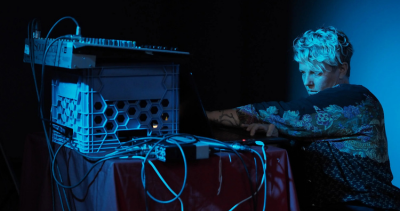
“It is an eight-channel sound installation, at base,” Roberts says. “When you look at it, you would see eight pipes hanging on metal stands, and you would hear sounds being played through speakers that are installed inside the pipes. And then connected to that is a series of mixing boards and pedals, and they’re basically creating sounds that don’t exist.”
Roberts explains that the “zero input” part of the title (which we will henceforth shorten to ZIEM for the sake of our character count) refers to the fact that the sounds generated are fed back into the system, thus creating a feedback loop that evolves over time…
House of Folk revives a Canadian cultural touchstone at the Firehall
(Stir, February 6, 2026)
In the 1960s and early ’70s, Toronto’s Yorkville neighbourhood was inarguably the epicentre of Canadian counterculture. Oh, sure, here in Vancouver you might have been able to catch a double bill of the Seeds of Time and Mother Tucker’s Yellow Duck at the Retinal Circus, if you were hip enough to have read about it in the Georgia Straight beforehand. (And if you didn’t see it in person, you might have been lucky enough to watch it on TV after the fact.)
Yorkville, on the other hand, was where the bohemian action really was. Its legendary folk scene was a magnet, drawing artists from all over the country—including Joni Mitchell, Gordon Lightfoot, Buffy Sainte-Marie, Neil Young, Ian and Sylvia, Murray McLauchlan, and Bruce Cockburn—to the stages of coffeehouses like the Penny Farthing, the Purple Onion, and the Riverboat.
Those venues are long gone now, replaced by the upscale consumerism of the so-called “Mink Mile”. For Vancouver theatre artist Tracey Power, that lamentable reality presented a practical hurdle when she set about creating a show set in Yorkville’s ’60s heyday…
Bilingual Montreal tunesmith Aleksi Campagne carries on a family tradition
(Stir, February 24, 2026)
SOMETIMES, THE BEST pathway to finding new inspiration is to tap into an older way of doing things. When Montreal’s Aleksi Campagne set out to write songs for the follow-up to his debut album, 2023’s For the Giving/Sans rien donner, he did what any other young tunesmith would do.
“Last year I did a month of creation to try to write songs and I decided to go into archives in Quebec to immerse myself in Quebec fiddling music, which was really interesting,” Campagne tells Stir in a telephone interview. “So I was learning fiddle tunes with the purpose of writing new songs.”
Okay, so maybe hitting the archives isn’t what most songwriters would do at all, but Campagne has already established himself as an artist uninterested in following the standard operating procedure…