Hi! If you’re new here, this is a thing I do every month, where I provide a roundup of all (or at least most) of my writing that has been published in the preceding month. For most of April I have been working part time at Stir and writing for them quite a bit as well. I have a couple of other irons in the fire, but otherwise it was a bit of a light month on the non-Stir front. As always, I continue to actively pitch, and I would also be eternally grateful for any freelance work that just happens to fall into my lap, like so many pennies from heaven.
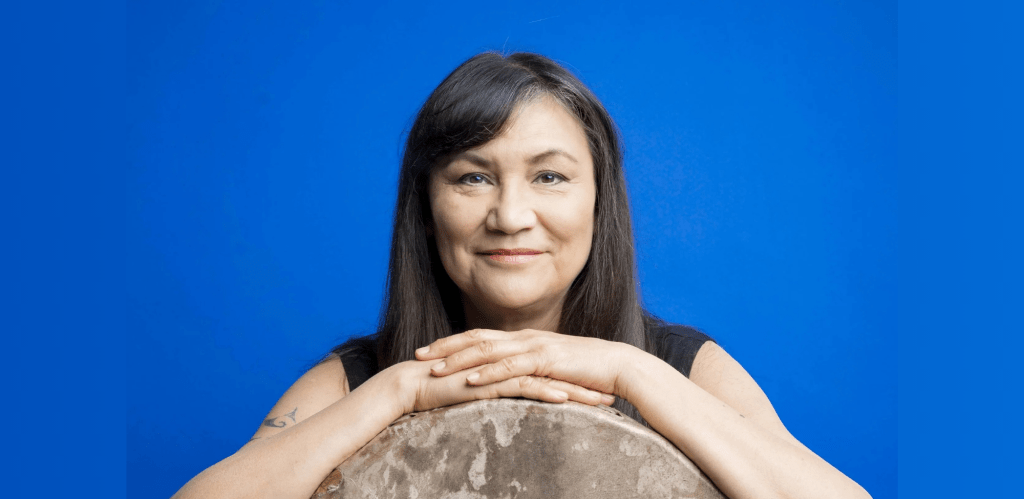
Listening as Activism explores the power of sound, vision, and a decolonized conception of time
(Stir, April 1, 2026)
THE TITLE SEEMS paradoxical at first. As part of its On Curation Mentorship Project, Vancouver New Music is hosting an event called Listening as Activism. We tend to think of listening as a passive thing, as opposed to activism, which is, well, active.
The event’s curator, Freya Zinovieff, doesn’t see things that way. “I would suggest that listening is actually an active thing,” she tells Stir. “I think that we hear passively, but if we really engage our listening, we can choose what we listen to and what we don’t listen to. A big context for this over the last few years for me has been the genocide in Palestine, and Canada’s active involvement in that, and the media’s obfuscation of the genocide, and obfuscation of our involvement. I think a lot about how we need to tune our listening to listen through propaganda, and actively engage with the world around us through our senses—one of those senses being the ears…”
All-female Solidaridad Tango showcases the many sides of Argentina’s national art form
(Stir, April 10, 2026)
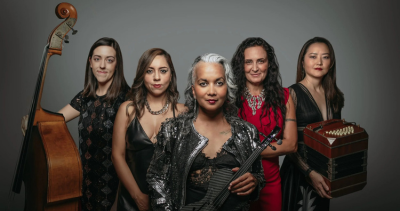
All-female combos aren’t uncommon across various spheres of music—think of the unapologetic badasses in L7, for example, or Vancouver’s own Allegra Chamber Orchestra—but in tango it is very much a rarity. In fact, Solidaridad Tango is the only one in North America.
The group’s founder, Aparna Halpé, tells Stir that a COVID-imposed break in 2021 got her thinking of the behind-the-scenes misogyny that is unfortunately still prevalent in the music industry, where a woman may shine in the spotlight but face disrespect from male peers backstage.
“In the pandemic, when we lost all our gigs and everything shut down, women started talking to each other and we started sharing our stories,” Halpé says over the phone from her home base of Toronto. “It’s the kind of stuff that sets your hair on fire. Someone said, ‘You know, Aparna, you’re really good at putting people together and organizing things, so why don’t you start a band?’ So I did…”
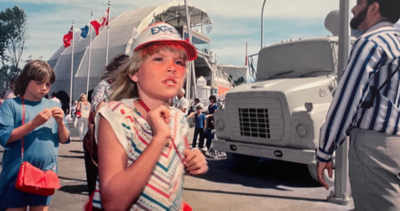
Surrey Art Gallery probes Expo 86’s artistic legacy with In the Shadow of the Pavilions
(Stir, April 15, 2026)
Running between May 2 and October 13, 1986, Expo drew 22 million visitors and changed the face of the city in ways that are still visible. It brought us the SkyTrain and BC Place, for example, as well as Canada Place and Science World.
The world’s fair boosted the region’s profile in an unprecedented way, sparking a tourism boom that has never really slowed down, economic downturns and global pandemics notwithstanding. It also put an international spotlight on some important British Columbia artists.
As with all such things, however, there were only so many golden tickets…
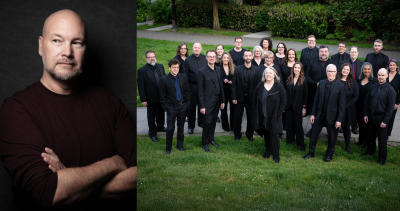
Vancouver Cantata Singers concert is a sort of homecoming for Tyler Duncan
(Stir, April 17, 2026)
IT’S EASY TO dismiss the creative endeavours of one’s own youth. As anyone who has ever stumbled upon an especially earnest bit of prose scrawled in a Grade 9 notebook or a VHS recording of a rushed and clumsy piano recital can tell you, it can be somewhat mortifying to be reminded of those awkward learning stages.
The great Russian writer Vladimir Nabokov, for example, didn’t take much pride in his early work. “The kind of poem I produced in those days was hardly anything more than a sign I made of being alive, of passing or having passed, or hoping to pass, through certain intense human emotions,” he wrote.
Tyler Duncan is kinder to his younger self than many of us. “Sometimes I hear old recordings of myself and I think, ‘Oh, if only I knew the things that I know now,’” the baritone tells Stir in a telephone interview. “But also, I’m sometimes pleasantly surprised…
At DOXA, təm kʷaθ nan Namesake confronts the painful legacy of colonialism
(Stir, April 24, 2026)
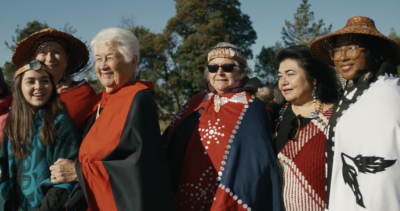
YOU KNOW HIS name, even if your knowledge of exactly who he was is a little hazy, or even non-existent. As they have with countless other prominent white men of his generation, the people in charge of deciding what to call places in British Columbia put Israel Wood Powell’s name on a few things.
Think of Powell Street here in Vancouver and, a few hours’ drive northwest of here on the Sunshine Coast, Powell River (both the river itself and the city). Among the myriad reasons Powell is remembered today is the fact that he was the first chancellor of UBC, and the first president of the Medical Council of British Columbia.
More significantly, Powell was the province’s first superintendent of Indian Affairs, from 1872 to 1889. As history shows, during his tenure he pushed the provincial government to grant Indigenous peoples land and water rights, but his general view was that they needed to be “civilized” according to the white, Christian standards of the day…
Silent classic The Passion of Joan of Arc gave Beautiful Violence a sonic challenge
(Stir, April 27, 2026)
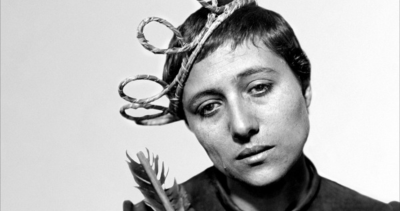
Dreyer chose to focus on the trial and execution, and the director’s extraordinary depiction of these events, Dobbs says, meant that he and McGovern couldn’t approach their task in a formulaic fashion.
“Usually, we think of the three-act structure,” he says. “You know the language of cinema—without trying to sound pretentious—and you can feel where something’s ramping up or when you need to hold back, and that’s how we would write to it.”
The Passion of Joan of Arc utterly defied this approach. The first half hour of the film is a trial scene in which Dreyer shows us almost nothing of the courtroom itself, favouring tight close-up shots of the mocking expressions of the prosecutors and the judge, French Catholic bishop Pierre Cauchon (played with implacable cruelty by Eugène Silvain). Most remarkable of all is the title character’s portrayal by Renée Jeanne Falconetti, who could convey entire worlds of meaning with just an upward tilt of her pleading face…
A Voynich Manifesto probes the unsolved mysteries of a medieval manuscript
(Stir, April 29, 2026)
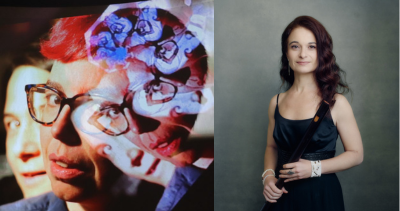
AS FAR AS UNSOLVED mysteries go, they don’t get much more enigmatic than the Voynich Manuscript. It’s a book—a medieval codex, to be precise—but it’s written in a language that has defied interpretation by even the world’s most accomplished codebreakers. Its abundantly illustrated pages are made of calfskin vellum that has been carbon-dated to the early 1400s, but the earliest known mention of the manuscript dates from more than 200 years after that.
Modern fascination with the inscrutable codex began when Polish book dealer Wilfrid Voynich purchased it in Italy in 1912 and presented it in public three years later. In spite of the best efforts of cryptographers and medievalists since then, the book’s provenance and its meaning remain unknown.
“This manuscript would most likely fall under the category of herbarium—so, something that describes plants, even though the plants that are described in the manuscript don’t actually exist on this planet,” musician and multimedia artist Terri Hron says when Stir meets up with her for an interview at a Strathcona café…


Leave a Reply