• “Christmas Hobgoblins”: A holiday tune by Stars of Stone
    Just a little instrumental track my son and I concocted for your festive listening. Bonus points to anyone who knows what the title references.
  • Making music with my kid

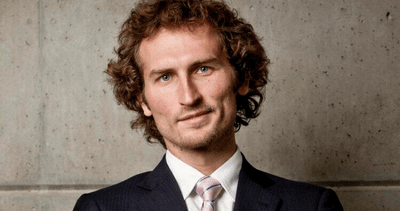
    As many of you know, I am a musician. Well, sometimes. It’s not how I make my living, but it has been one of my main creative outlets for many years.

    My 12-year-old son, Wolfgang, is a huge music fan. He is fascinated by all aspects of music-making, from time signatures to production. He has made slow progress when it comes to learning instruments like guitar or keyboards, but he has a good ear (to which his hand-eye coordination will eventually catch up).

    While my band the Starling Effect has been on COVID-enforced hiatus, Wolfgang and I have begun working on tracks together. To make it even more fun (and to make it feel like an honest-to-god real musical project), we have christened our duo Stars of Stone.

    Over his winter school break, we worked on our first track. It’s an odd instrumental, based on the klezmer scale but given an industrial-rock feel with a big dirty beat. The odd scale gave me a challenge when I added guitar to the song, but I figured it out and leaned into more of a Middle Eastern/flamenco direction—hence the title “Alhambra”.

    Give it a listen and tell me what you think.

  • From the Archives: Anthony Daniels (2015 & 2019)

    I have a very extensive catalogue of old articles that I think are worth revisiting. Here are two of them.

    Anthony Daniels enjoys long career as Star Wars’ most famous droid (2015)

    (This article originally appeared in The Georgia Straight.)

    Such is the secrecy surrounding Star Wars: The Force Awakens that we still don’t know anything about the characters that certain actors play. The cast list on the soon-to-be blockbuster’s IMDb page, for instance, includes Simon Pegg and Warwick Davis, but there are blank spots where their characters’ names ought to be. Is Davis reprising his Return of the Jedi role of Wicket? Do Ewoks even live that long?

    There can be no such speculation about Anthony Daniels’s role. He is, and always has been, C-3PO, the fussy and flappable golden protocol droid who is equal parts Stan Laurel and Felix Unger. Mind you, exactly what Threepio does in The Force Awakens (which opens on Friday [December 18] ) is uncertain.

    When the Georgia Straight calls Daniels, the first order of business is confessing that we haven’t seen the movie yet.

    “Neither have I, actually,” the 69-year-old English actor admits over the phone from Toronto. Daniels has, however, watched his own bits and enough of the rest to make him keen on experiencing the whole thing.

    “I really am excited to see this,” he says. “Everything I’ve seen of it so far has been really rather wonderful and very much going back to the old films, the style of George’s original trilogy.”

    “George” is, of course, George Lucas, the creator of the Star Wars mythos, beginning with the 1977 original. He sold his production company, Lucasfilm—and with it the entire space-opera franchise—to Disney in 2012 and was not involved with the making of The Force Awakens. J. J. Abrams directed this seventh episode of the saga, which was written by him with Lawrence Kasdan and Michael Arndt.

    It’s the first Star Wars movie to be released in a decade, but that doesn’t mean Daniels has had any time off from playing Threepio. The droid has given him steady work in the interim, with the character appearing in everything from video games and The Lego Movie to small-screen series, including The Clone Wars and Star Wars Rebels.

    “I have been incredibly lucky to have been the voice of C-3PO in all sorts of spinoffs—as you said, Clone Wars; hugely popular,” Daniels says. “Now we’ve got Rebels. We had [the 1985 Saturday-morning cartoon] Droids.

    “My total bliss is anything to do with Lego. We’ve just done Droid Tales, and we did The Yoda Chronicles. We can poke affectionate fun at the whole thing. Everybody’s a Lego figure. When people said, about going on The Force Awakens, you know, ‘Was it strange to be back as Threepio?’, not at all, because most months of the year I am in a studio in London recording one of those cartoon things.”

    In other words, playing this single character has become the actor’s career. Daniels acknowledges as much and does so without a trace of resentment. Star Wars, it seems, has been very, very good to him—even if hobbling around in a robot suit hasn’t always been fun.

    “It’s a delightful career,” he says. “Because difficult though Threepio is to play physically and, to some extent, vocally—you know, a whole day’s recording is quite tiring as Threepio—the payoff is that I’m very, very fond of him. And I think he might be fond of me, but we’ll never know. Maybe one day we’ll do a split-screen thing.”

    And with that, the Straight’s allotted time is up, but before Daniels moves on to his next interview, he switches to C-3PO’s prim cadence and signs off with six words that any fan of that galaxy far, far away would be delighted to hear: “May the Force be with you.”

    Anthony Daniels tells a tale of man and droid in I Am C-3PO (2019)

    (This article originally appeared in The Georgia Straight.)

    To determine just how much of a Star Wars geek you are, consider the following phrase: “I Am C-3PO.”

    If your mind automatically filled in the rest—“human-cyborg relations”—the odds of you being a true-blue fan of the Skywalker saga are very high indeed. (And you get bonus points if you just said “Never tell me the odds!”)

    Those words were spoken in the first Star Wars film by Anthony Daniels, who also used them as the title of his book, I Am C-3PO, in which he reflects on his 40-plus years of playing the golden protocol droid.

    “It’s the unspoken phrase, yes: ‘human-cyborg relations’,” says the genial actor, who is at a media-tour stop in Toronto when the Straight connects with him by telephone. “I guess, if I think about it—I haven’t talked about this at all—I am the human, he’s the cyborg, and I talk about our relations. I may use this thought in the future…”

    Daniels relates to the character so well, in fact, that he refers to him as “my friend” throughout the book. It might surprise some readers, then, to learn that the London-based performer was initially skeptical about the whole thing. He was not, it turns out, a fan of science fiction (he writes that he demanded his money back after suffering through 2001: A Space Odyssey), but he agreed to meet with American filmmaker George Lucas to discuss the project that was then titled The Star Wars: From the Adventures of Luke Starkiller. At that initial meeting, Daniels saw something that hooked him almost instantly: Ralph McQuarrie’s concept art depicting C-3PO and his constant companion, R2-D2.

    He writes: “Standing on a sandy terrain, against a rocky landscape, with distant planets filling the sky, Threepio gazed out forlornly. Our eyes met and he seemed yearning to walk out of the frame into my world. Or, I felt, for me to climb over and join him in his. I sensed his vulnerability. Maybe he sensed mine. It truly was a strange moment.”

    It was a moment, in fact, that would shape the course of the actor’s life. Daniels has donned the shiny—and dreadfully uncomfortable—robot suit to play Threepio in almost every Star Wars movie, including Episode IX: The Rise of Skywalker, which is due to hit cinemas on December 19. Some performers chafe at being identified in the public’s eyes with one particular role—Sir Alec Guinness, for example, was famously touchy about being associated with his own Star Wars character, Obi-Wan Kenobi—but Daniels seems genuinely at peace with it.

    “It is difficult for some people,” he acknowledges. “I think I’m helped by him being such an enduring character that he has given me a very interesting career, in one kind of groove, if you will. And maybe I was only designed for that groove, but it’s certainly become a career of its own with all the spinoff activities—and I do like the character. I like how different writers and directors are able to put him in situations that bring out some other side of his abilities and personality.”

    Those spinoff activities are listed in an appendix at the back of the book, cheekily titled “Droidography”. They include radio dramas, TV commercials, video games, and more. Of Daniels’s 77 acting credits listed on the Internet Movie Database, roughly two-thirds are for on-screen or voice performances as C-3PO.

    Threepio has certainly taken Daniels to some enviable places. How many actors can say that they have dined with the king and queen of Jordan, conducted the London Symphony Orchestra, been a presenter at the Oscars, and appeared on Sesame Street four times?

    Daniels credits Lucas with giving him a free hand to develop his own characterization for C-3PO. This happened, in part, because Lucas, although rightly hailed as a visionary, has never been known as an “actor’s director”.

    “George has so much going on in his head, the whole movie, and back then it was really groundbreaking,” Daniels says. “That’s why people took to his films so much—that nobody’d seen a film like this before. And he wasn’t necessarily adept at explaining what he wanted. He kind of chose people—including me, I suppose—who he felt he could trust to get on with things, like Mark Hamill, Carrie Fisher, Harrison Ford, and of course Sir Alec Guinness. He had a lot on his plate, and he accepted what I did on the set, although he clearly had plans to replace the voice.”

    Ah, yes. Just as, in hindsight, it’s impossible to imagine Darth Vader sounding like anyone other than James Earl Jones (even though it was David Prowse we saw on-screen in the original trilogy), it would be hard to envision a version of Threepio who spoke with the voice of, say, Richard Dreyfuss. The American Graffiti star was reportedly in the running, but of course the dulcet British tones of Daniels won out in the end. “Threepio is a one-piece character—he is the voice, the face, the walk, the movements, the attitude—it’s all one, and you can’t take one bit away from him,” Daniels says, with justifiable pride.

    Threepio fans who feel their favourite droid got short shrift in The Force Awakens and The Last Jedi will be happy to hear that he plays a more essential role in The Rise of Skywalker, thanks to director and cowriter J. J. Abrams. But will the character who uttered the first line of dialogue in the entire saga get to have the last word, as well?

    “That’s a neat thought,” Daniels says with a warm chuckle. “It did occur to me on my last day, suddenly, that this was the third time I’ve said goodbye. And as I said in the book, my last shot as we filmed it—not the last shot of the movie, but for me the last day on the set—I have no words at all. So we will see. J. J. loves to move things around, right up until the last minute. So we’ll have to see; maybe, maybe not. I don’t know.”

    In any case, C-3PO isn’t quite ready to shut down, and neither is the man who plays him. Daniels turns 74 in February and says he has no plans to retire. And while the Skywalker saga may be drawing to a close, there are still video games on the horizon. And animated series. And…

    “No, it’s not the end of me being involved with Threepio at all,” Daniels says. “Already there are other projects—not films. The career goes on, and aren’t I lucky?”

  • Hey, look at me—I’m certified!

    Yesterday I took the Google Digital Garage online exam and earned my Certificate in the Fundamentals of Digital Marketing. Hooray for me!

    What does it mean? Well, from what I can tell, with my new certificate and about $10 I can get a Grande Chestnut Praline Latte at Starbucks.

    In all seriousness, I will add it to my growing pile of marketing-related credentials, along with my certificate in Digital Communications from SFU and my training in copywriting from UBC—to say nothing of my real-world experience writing web copy and bios, and creating affiliate-marketing content for a national media company.

    None of which, to date, have even added up to an interview for any marketing-adjacent job. I’m not entirely clear what’s missing from this picture, but I’m open to being enlightened.

  • From the Archives: Sigur Rós at Deer Lake Park (2013)

    I have a very extensive catalogue of old articles that I think are worth revisiting. Here’s one of them. This is the first concert review I have ever pulled from the archives. I guess I just really miss live music. (This article originally appeared in The Georgia Straight.)

    Sigur Rós
    At Deer Lake Park on Monday, May 27

    Despite all indicators pointing toward a biblical downpour for Sigur Rós’s performance at Deer Lake, there was only the slightest hint of drizzle when the Icelandic band took to the stage at the Burnaby park. Or at least I assume that was the case; thanks to the absolute shit show that is parking at Deer Lake, the show was already under way when I arrived.

    I came at an opportune time, however: Georg Hólm had just begun the slowly circling bass line that serves as the pulse of “Ný batterí”. That song, from Sigur Rós’s breakthrough second album, 1999’s Ágætis byrjun, typifies one of the group’s primary songwriting tricks—slow, meditative verses that arc into blaring, melodramatic choruses, with frontman Jónsi Birgisson sawing away at his Les Paul copy with a cello bow and sending peals of droning noise up into the darkening sky. It might be a formula, but it’s an effective one, especially in a live setting.

    For its next trick, however, Sigur Rós proved that sometimes the fireworks aren’t necessary. “Untitled #1 (Vaka)” is a piano-driven slow-burner that never reaches for the heavens, nor does it have to. Its beauty lies in its unassuming quietness, and the sense that Jónsi is revealing some long-held secret, even if none of us will ever know exactly what that is. (The song, like the rest of 2002’s ( ) album, has lyrics in Hopelandic, a gibberish language of Jónsi’s own devising.)

    The guitar-bowing was at its most stratospheric on “Svefn-g-englar”, the 10-minute masterpiece, also from Ágætis byrjun, that brought the Reykjavík band to the world’s attention. To an impossibly sedate tempo—it would be downright plodding if so much weren’t happening overtop of it—Jónsi drew the bow across the bridge of his guitar, sometimes softly and sometimes attacking the damn thing in a way that yielded an air-splitting groan, as if the whole planet was settling like an old house.

    A publicist for a label that I won’t name (because he might be embarrassed, as he should be) once informed me that he couldn’t stand Sigur Rós because of what he called the Céline Dion moments. He meant that point in many of the group’s songs where (with the help, on this occasion, of string and brass sections) they explode into an operatic crescendo of sound and fury. Well, maybe fury isn’t quite the right emotion. But on a song like “Varúð”, the point of those Titanic moments becomes obvious: when they hit, you feel…something. At a Dion concert, you know exactly which heartstrings she’s tugging at, because the songs are so obvious and the manipulation of the audience so transparent. Whether it’s because Jónsi sings in Icelandic (and occasionally the aforementioned Hopelandic) or because the group’s compositions aren’t intended to convey anything that can be parsed as readily as “My Heart Will Go On”, the feelings stirred by Sigur Rós are ineffable.

    It may be trite to say that a song like the new “Hrafntinna” expresses the otherwise inexpressible, but seeing as how I find myself genuinely moved by the so-called “Céline Dion moments”, I may be guilty of basking in triteness.

    In any case, there’s very little basis for comparison between Quebec’s most famous daughter and the band that made the forthcoming Kveikur. On the new record, the often-ethereal Sigur Rós bares its teeth, showcasing an aggressive side that, until now, we’ve only seen in brief glimpses. Numbers like the title track and the epic-length “Brennisteinn” crackle and throb with near-industrial intensity, and their bass-heavy grooves might even owe a debt to the darkest strains of dubstep. Just how heavy is the new stuff? Well, one dude near the front of the stage, clad in a denim jacket with the sleeves hacked off and a Black Sabbath patch on the back, responded to it by whipping his hair back and forth like Jason Newsted in the headbanging glory days.

    By coincidence (or maybe not), the harder Sigur Rós played, the harder the rain fell. And, as if to prove that it has always been capable of rocking out, the band reached back to ( ) to close the concert with “Untitled #8 (Popplagið)”, stretching the song’s towering-inferno coda up to the 15-minute mark, with everyone on-stage contributing to the sweet, sweet rising chaos. Drummer Orri Páll Dýrason pounded at his kit as if it was possessed and he were the exorcist; touring guitarist Kjartan Dagur Hólm brought the shoegazing noise; and Jónsi hunched over his guitar, swinging it around and toppling lights and his own microphone stand. It was thrilling, cathartic, and heavier than fuck.

    Let’s see Céline Dion pull that off.

  • From the Archives: Tom and Matt Berninger (2014)

    I have a very extensive catalogue of old articles that I think are worth revisiting. Here’s one of them. (This article originally appeared in The Georgia Straight.)

    Matt Berninger is an atypical rock star: a middle-aged dad with a meditative croon and a penchant for elliptical lyrics. Nonetheless, his band, the National, has a track record of top-10 albums, Grammy nominations, and (perhaps most important of all) rave reviews from Pitchfork.

    Tom Berninger, Matt’s younger brother, is not a star of any kind, although his directorial debut, Mistaken for Strangers, is threatening to make him one, having garnered its share of glowing critical notices from the likes of Entertainment Weekly and, yes, even Pitchfork. Opening on Saturday (April 12), Mistaken for Strangers is about Tom’s stint working as a roadie for his brother’s band on its 2010-11 tour. Well, working might not be exactly the right word. Much of the film’s drama (and humour) is derived from Tom’s run-ins with tour manager Brandon Reid.

    Tom lasted eight-and-a-half months on the road before the inevitable firing, long enough for him to capture his brother and the rest of the National at their best (and occasionally their worst) with the handheld camera he just happened to have with him. At its heart, though, Mistaken for Strangers is about the relationship between two brothers. There’s a sense that the pudgy man-child lives in a completely different world than golden boy Matt. In a conference call with the Straight, Tom says the film’s focus only became clear when he started to edit the footage with Matt’s wife, Carin Besser.

    “Very slowly we kept adding more of me and less of the National. And we actually did have test screenings to make sure that, like, ‘Is this the right move? Are we gonna piss anybody off?’ And for the most part, people said, ‘No, this is Tom’s story. This is the good stuff,’ ” he says, noting that things were crystallized in a scene in which he’s “wasted on the bus”.

    “I thought it would be cool to have me drinking all the band’s beer on the bus while they all slept in hotels,” he says. “I partied by myself.…I didn’t know if it was ever going to be seen, but I thought it would be funny. When I saw it later in the editing room, with Carin, it wasn’t very funny. It was kind of sad. And we were like, ‘Ooh, that’s even better.’ ”

    While Tom admits that the film plays up the bumbling-slacker angle, one suspects there’s more to the man than what we see on the screen. We get a hint of this when the boys’ mother describes Tom as “the most talented” of the two. Joining his brother on the phone from his home in Los Angeles, Matt readily agrees.

    “Tom swims through the world with a very unique stroke,” the singer tells the Straight. “He’s got a unique taste and a very unique vision and a very unique way that he interacts with the world. And I think that’s what she means when she says he was always the most talented—meaning he had this weirdness about him that was very special. And the truth is, I think the whole family always thought she was kind of right about that. Tom has a weird light inside him that he often doesn’t recognize; some strange green light does glow from within my brother that everyone else can see but sometimes he doesn’t.”

    Matt may be the rock star of the Berninger clan, but it’s Tom’s “weird light” that makes Mistaken for Strangers sing.

  • From the Archives: Chester Brown (2011)

    I have a very extensive catalogue of old articles that I think are worth revisiting. Here’s one of them. (This article originally appeared in The Georgia Straight.)

    Chester Brown must have known what he was getting himself into. In creating Paying for It, the Toronto-based cartoonist was setting himself up for criticism, not just of his work but of himself and his chosen lifestyle. The graphic novel, published this month by Drawn & Quarterly, documents Brown’s interactions with prostitutes over the course of a decade or so. It also includes notes and appendices in which the author lays out his arguments in favour of the decriminalization of selling sex, and against the notion of romantic love in general.

    The book, as you might imagine, has engendered a bit of controversy. Reviewing Paying for It in the Chicago Reader, Noah Berlatsky called Brown’s drawings of the prostitutes “dehumanizing”, and characterized the artist’s libertarian view of sex-as-commodity as “an expression of the individual autonomously pursuing pleasure” and a “soul-crushing sexual ethic”.

    “People are taking issue with certain things in there,” Brown admits, speaking to the Straight over the phone from his home. “I certainly think someone who is brighter and more articulate than I am could have expressed things in a better way, but the book came out as well as it could given my limited abilities. No, I wouldn’t change anything.”

    As for “dehumanizing” his subjects—Berlatsky pointed out that Brown never shows their faces, “turning them into expressionless ciphers”—the cartoonist had his reasons for drawing the sex workers he visited as uniformly black-haired enigmas. Specifically, he was protecting their identities.

    “Yes, I left things out, particularly when it came to matters that might reveal the identities of the prostitutes I saw,” Brown says. “In the very first scene, the first time I see one, in a brothel, she asks me that question about what I do for a living, and I answer that I’m a cartoonist, and that I write and draw comic books. And then she started talking about comic books in her life, and it was very interesting, but that could have been revealing. She had particular experiences with comic books, and maybe she’s talked about those with other people, and so, yeah, I omitted that entirely from that conversation, as if she hadn’t told me any of that stuff. And at every encounter there were things like that, that I left out—things that could have revealed something about a particular woman that might have identified her.”

    Brown, on the other hand, made a habit of being as open about his own identity as possible in his dealings with prostitutes. He started out using the pseudonym “Steve McDougal” but quickly dropped it, partly because of his relative notoriety—his comic-book biography of the 19th-century Métis leader Louis Riel won the author several awards and was lauded by Time magazine—but mostly because he simply had nothing to hide. “I had been talking with one of the women about what I did [for a living], and she had expressed an interest in seeing something by me, so I brought her one of the comic-book issues, from when Louis Riel was serialized as a comic book,” Brown recalls. “And when she saw my name on that, I explained that I’d been using a fake name. And after that point, I realized that johns who are married might have good reason for using fake names, but I’d been open with all of my friends and most of my family about seeing prostitutes, so it wasn’t any kind of big secret in my life.”

    Brown was, in fact, “out of the closet” with his friends right from the beginning, and in Paying for It, he shows himself in conversation with fellow cartoonists Joe Matt and Seth, railing against romantic love and “possessive monogamy”. Ironically—and here is where Drawn & Quarterly would probably like me to warn you of a possible spoiler—it was through his venture into the world of paid sex that Brown found love, or something like it. His relationship with “Denise” began as one between client and contractor but has since become monogamous. Mind you, each of their sexual encounters still concludes with a monetary transaction, and things aren’t progressing the way they would in a standard romance. Brown is okay with that, and so is “Denise”.

    “In boyfriend-girlfriend relationships,” says Brown, “usually there’s this pressure: ‘Let’s move things to the next step. We should move in together and after that there should be a proposal,’ or whatever. There seem to be these steps, and there’s nothing like that in this relationship, where it feels like we’re supposed to be moving it in a certain direction. The relationship is the way it is, and we both seem to be happy with it the way it is.”

    Brown wouldn’t change a thing, in other words, and the same is true for his inevitably controversial book. Well, mostly true. Upon further reflection, Brown allows that he might do one thing differently if given the chance. “There’s a scene in the book where Seth intimates that I’m going through a midlife crisis, and I totally deny it,” he says. “My thinking about that has changed a little bit, in that I think I probably was going through what many men experience as a midlife crisis; it just didn’t feel that way to me because I didn’t experience it as a crisis. A lot of guys might hit middle age and start wanting to have sex with younger women, and might actually do it. If they’re in a relationship—if they’re married, say—they would probably experience that as a negative thing and be down on themselves. They could experience it as a crisis. But because I wasn’t in that type of relationship, it didn’t feel like a negative thing to me. If I was doing it over, I would at least address that in the notes, and say: ‘There might have been something to what Seth was saying.’”

  • From the Archives: Art Spiegelman (2013)

    I have a very extensive catalogue of old articles that I think are worth revisiting. Here’s one of them. (This article originally appeared in The Georgia Straight.)

    Art Spiegelman has no compunction about admitting that he was probably the last person who wanted to see CO-MIX, a comprehensive retrospective exhibition of his work, mounted. It’s that word retrospective, you see. The veteran cartoonist turns 65 on Friday (February 15), but he’s clearly not ready for retirement. He’s best known for his Pulitzer-winning graphic novel Maus (a vivid and gripping narrative about his parents’ experiences during the Holocaust), but he has never been one to rest on his well-earned laurels.

    “I feel I’m being given my gold watch and put out to pasture,” Spiegelman jokes when the Straight calls him at his studio in Lower Manhattan. “It’s not a pretty place inside my head when I think about this. It’s one of the reasons I didn’t want one. Willem de Kooning said, ‘Never have a retrospective while you’re alive,’ but then I researched it further and found out he did it—but then maybe he was senile already by the time he did it, I’m not sure. So, I don’t know. It’s really not what I would have chosen for myself.”

    CO-MIX had its genesis when the organizers of the annual Angoulême International Comics Festival, the largest event of its kind in Europe, gave Spiegelman a lifetime-achievement award (officially called the Grand Prix de la ville d’Angoulême), and along with that honour came a request for a career-spanning gallery show. Spiegelman initially balked at the idea of putting so much work into something that would be shown in a small French town for a few weeks and then taken down. With the help of his friend and curator Rina Zavagli-Mattotti, he was able to get CO-MIX into the Centre Pompidou in Paris, after which it was mounted in Cologne, Germany. It’s about to open at the Vancouver Art Gallery.

    Still, Spiegelman was hesitant to dig through his own past yet again. “I was kind of dragged kicking and screaming, because I had just finished a large period of retrospection just before this call came,” he says. “I had done a book called MetaMaus, which was sifting through all the Maus material. If you’ve seen the book, that was an intense sifting. Prior to that, I had done a book called Breakdowns, which was a reworking and a rethinking of a book from 1978 which was a seminal book in shaping me as an artist, now coming out again with new material. That was also a big work of retrospection, and now they were going to slam me back into that situation of looking at everything I hadn’t looked at for those other two books.”

    Diving back into the Maus material was particularly onerous. As proud as he is of what he accomplished with it—Maus has been published in some 30 languages and has done more than any other single work to elevate the graphic novel into the ranks of serious literature—Spiegelman admits to feeling somewhat shackled by it, knowing that it is what defines him in the minds of many. “With MetaMaus I really felt I had done a major job of excavating and rethinking and reorganizing these things,” he says. “I was hoping that was my jailbreak from Maus—the one that locks my brain down: ‘You made Maus. That makes you a very responsible human; you may not do a graphic novel about a talking penis, okay?’ I just figured MetaMaus was all I could offer to Maus, in service of that work—to just take out all of the rough sketches, the underlying material, sift through it, analyze it as best I could, and presumably then walk away. But instead I felt, when I had to work on the retrospective, that I’d been killed and made the executor of my own estate. And that’s dogging me a little bit. It’s getting a little better as we go from venue to venue. It gets smoother to figure out how to put it together, especially if Rina, as she is, stays involved. But I understand why there’s a lyric in a Bob Dylan song: ‘She’s an artist, she don’t look back.’ It’s not necessarily a good idea.”

    VAG visitors will be glad Spiegelman relented: the range and depth of the work that makes up CO-MIX is staggering. In addition to studies for and finished pages from Maus and Breakdowns, the exhibition includes examples of the artist’s underground comics from the late 1960s, some of the covers he created for the New Yorker between 1992 and 2003, and his post-9/11 broadsheet pages, collected as In the Shadow of No Towers. Flipping through the show’s catalogue, one is struck by the scope of Spiegelman’s influences—his drawing makes explicit reference to everyone from Pablo Picasso to Rube Goldberg to Dick Tracy creator Chester Gould—and by his gleeful twisting of the conventions of the comic-book medium.

    “He’s an interesting guy,” says Bruce Grenville, senior curator at the VAG and the man responsible for bringing CO-MIX to Vancouver. “There’s just so much in the work. I think that’s what’s so wonderful about the show….You can’t believe the complexity and the density that he puts in there. And yet, at the same time, they’re kind of open and easy as well.”

    In 2008, Grenville put together the VAG exhibition Krazy! The Delirious World of Anime + Comics + Video Games + Art, of which Spiegelman was a co-curator. “People still talk about it,” he says of that large and wide-ranging show. “It probably reached to a broader audience than we sometimes get, because traditional visual art has a narrower bandwidth, and this opens it up a bit.”

    Spiegelman notes that the barrier between “high art” and “lowbrow” has eroded significantly over the past 20-odd years. More and more, work like his is being taken seriously, for better or worse.

    “I think at this point, comics are as capable of making something that you’d want to call art as anything else,” he asserts. “And that’s both a plus and a minus—there’s something great about comics being an outlaw medium. And that’s, of course, getting lost—and I’m even partially to blame, and I apologize. I think it’s been one of the strengths of it as a form, that it doesn’t have to conform to cultural preconceptions.”

    Ever the champion of the underground, Spiegelman is understandably most impressed by what’s happening outside the sphere of mainstream comics. As an example, he touts Chris Ware’s groundbreaking Building Stories as “a work of genius. Brilliant. But I’m not as interested in X-Men, or The Archie Wedding. But at this point it’s like any other medium. It’s like if you talk about books, you’ve got 50 Shades of Grey and you’ve got really serious literature sitting in the same shop, you know? And similarly, you go to museums and there’s stuff that’s so clearly a fraud, and there are other things that you’ve got to slow down and attend to. In movies you’ve got the same kind of spectrum, ultimately. What’s really popular isn’t necessarily what’s really great, nor is it a priori a sign that it’s terrible.”

    Mind you, even if something is terrible, the odds are good that Spiegelman will find something to like about it regardless. He just loves comics. “I’ve gotten to the point where I even like the stuff that I think sucks,” he admits. “I like the medium, and as a result I’ll look at something and go, ‘God, that’s just impossibly stupid.’ But I say it with a certain kind of admiration.” 

  • From the Archives: Jason Pierce of Spiritualized (2012)

    I have a very extensive catalogue of old articles that I think are worth revisiting. Here’s one of them. (This article originally appeared in The Georgia Straight.)

    No one has ever accused Jason Pierce of taking shortcuts. The Spiritualized mastermind has been known to take as long as a year to mix an album, even though he admits he doesn’t especially enjoy the painstaking process. He’d rather be on-stage than in the studio. Being detail-oriented usually pays off for Pierce, though, and there may be no better example of this than “Hey Jane”.

    The song starts as a jangly pop number that builds to a psychedelic rave-up before crashing into a wall of dissonance and petering out. Then things pick up again, cruising along to a krautrock beat topped by heaven-sent gospel harmonies. The structure of “Hey Jane” seems to mirror the life of its title character, a journey from desperation and squalor to ultimate redemption. The song takes almost nine minutes to play out. It’s nearly matched by a couple of other tracks (“Headin’ for the Top Now” and “So Long You Pretty Thing”) on the new Spiritualized album Sweet Heart Sweet Light. But “Hey Jane” ultimately takes longest-song honours, so, naturally, Pierce picked it to be the first single, at its full length.

    “It wouldn’t work in any other way,” the 46-year-old Englishman says, reached at a tour stop in Austin, Texas. “I mean, people play it on the radio—the first three minutes. I think it’s kind of ludicrous. It doesn’t really make sense like that. That’s what’s weird about music. Everything’s relative. The end of ‘So Long You Pretty Thing’, where that lyric comes out—‘So long you pretty thing/Save your little soul’—they tried to edit that down into a single, so it’s just round the end section. And it’s not that ecstatic; it’s not that great a sound. But it is, comparative to the intro and the way the middle section pans out. It’s a little bit like that with ‘Hey Jane’. No part of it is great, in a kind of pop way, but it makes sense in its entirety. So there’s no way of releasing it any other way.”

    That Pierce thinks of his work in pop terms at all is somewhat surprising, given that the oeuvre of Spiritualized ranges from drone-rock bliss-fests (“Electric Mainline”) to 17-minute avant-jazz freakouts (“Cop Shoot Cop”) to lush, symphonic ballads (“Stop Your Crying”). He says, however, that his initial impulse with Sweet Heart Sweet Light—Spiritualized’s seventh studio album and its first since 2008’s Songs in A&E—was to make it a pop record in the vein of the Beatles. When it dawned on him that he wasn’t really all that interested in the Fab Four, his reference points shifted to more esoteric fare, such as albums by Charlie Feathers and Neu!, Captain Beefheart’s Clear Spot, and Kill City by Iggy Pop and James Williamson. Those were his touchstones, at any rate, but it’s not as if he brought a stack of LPs into the studio with him.

    “I didn’t listen to them once when I was making this record,” Pierce says. “I wasn’t after copying the sounds or the sonic of those records. It’s just the idea of those records: that they weren’t records that reached for the stars, or that they weren’t written about like pinnacles of rock ’n’ roll history, but they were beautiful collections of songs by people that had soaked up a bit of musical wisdom. They didn’t have that kind of arrogance of youth, where the width of your music is actually very slim.”

    Mind you, Sweet Heart Sweet Light does contain some of the most immature songwriting to be found on any Spiritualized effort. That’s not meant as a slight, either; the writing in question came courtesy not of Pierce himself, but of his daughter, Poppy. Nine years old at the time the album was recorded, Poppy contributed lyrics to the intro of “So Long You Pretty Thing”, and she sings the following lines with her father: “If you feel lonely/And the world’s against you/Take the long way home/Past the scary Jesus/And you’ll find my door/With your name in diamonds/And you’ll feel lonely/No more.”

    The verse doesn’t make a whole lot of sense, but its naiveté is charming, which somehow makes it perfect. That’s a quality that Pierce, who says his best work often emerges from failed attempts at doing something else entirely, relishes.

    “It’s like when I write orchestrations,” he says. “I don’t think I’m great at writing orchestrations, but I write orchestrations that kind of horrify the string players that come in to do it, like it’s so wrong. It’s like art, isn’t it? You have to unlearn to be able to find the line that works. You could learn things like a talent, but you have to be able to unlearn how to do it to find something that isn’t just a product of that learning.”

    In other words, there’s no shortcut.

  • ESports, cannabis, and me: welcome to the new normal

    Four months ago, I was doing pretty much what I had been doing for the two decades leading up to that point. I was working in the editorial department of the Georgia Straight, editing copy and occasionally writing about music or graphic novels as space allowed.

    Oh, sure, the paper was under new ownership, but so far that had not affected me much. Then something called COVID-19 happened. And within a few weeks I was no longer working out of Straight HQ, nor really working for the Straight at all.

    Like pretty much everyone else with an office job, I now find myself working from home. More specifically, I am working at a little desk tucked underneath a child’s IKEA loft bed. It’s not so bad, actually. I have windows next to my desk, which is more than I can say for my last cubicle in the dungeon known as the Straight editorial floor.

    Possibly the biggest difference in my working life, though, is that I’m not an associate editor at the Georgia Straight. I’m not a music journalist anymore, either. I am instead now the Editor (with an uppercase “E” and everything) of two websites: CannCentral.com and ECentralSports.com. Both sites are owned by Media Central Corporation, which also owns the Straight and NOW Toronto.

    This is the part where I confess that, before I started this double-barreled new gig, my knowledge of both ESports and cannabis was minimal. Now, however, I find myself becoming something of an expert in the two completely unrelated topics.

    Well, as much of an expert as one can be without being an active participant. I enjoy playing video games, but I’m never going to give Artour “Arteezy” Babaev anything to lose sleep over. As far as cannabis goes, let’s just say I’m not exactly Tommy Chong.

    No matter. There’s no rule that says you have to do something in order to cover it effectively. If that were the case, only boxers could write about boxing, and no one wants to read that, do they? Admittedly, this is a different way of doing things for me. My main beat for the entirety of my career up until now has been music. I have also been active as a musician for roughly the same span of time. (Not a successful one, mind you, but I have fun with it.)

    I’m grateful for my continued employment in the face of the weirdness of life in 2020. If you would like to help keep me employed, please visit the websites in question and click on as many links as you feel inclined to click.

    At the very least, it will give me something to do until someone—anyone!—expresses interest in publishing this book I wrote.