• From the Archives: Martin Amis, Part One (2012)

    I have a very extensive catalogue of old articles that I think are worth revisiting. Here’s one of them. (This article originally appeared in The Georgia Straight.)

    He gave his latest novel, Lionel Asbo, the subtitle State of England, but Martin Amis has been doing a lot of thinking about the state of America. The British novelist has had ample opportunity to closely observe our neighbours to the south, as he now resides in Brooklyn’s historic Cobble Hill neighbourhood. The move to the U.S. was undertaken for personal rather than professional reasons, but Amis has already picked up a bit of freelance work reporting on the American scene. Last month, he covered the Republican National Convention in Tampa, Florida, for the Daily Beast. Not being a U.S. citizen, Amis won’t be voting in November’s general election, but in his Daily Beast piece, he made it pretty clear where his sympathies lie: “We know that Republicans refuse to compromise with Democrats. For how long will they refuse to compromise with reality?”

    Reached at the Toronto headquarters of his Canadian publisher, Amis opines that the GOP is the party of choice for those who are suspicious of anyone who dares to display intellectual leanings. “I wrote earlier that if the Democrats represent the American mind and the Republicans represent not the American heart or soul but the American gut, we had two terms of a gut presidency with George W. Bush,” he says. “And everywhere else on Earth, or certainly in the free world, the argument between bowel and brain was settled centuries ago in favour of brain. It’s an ancient idea that the leader of a democracy should be not the cleverest but the most average. That’s an arguable point, but the world has decided otherwise—except in America, where it still divides the country right down the middle. I’ve never had any doubt that you should follow the brain. Of course there are huge populations that don’t feel that way, but in America they don’t really impinge on intellectual life except during elections.”

    The two central figures in Amis’s 13th novel, Lionel Asbo—the career criminal of the title and his nephew and ward, Desmond Pepperdine—reside in a fictional corner of the author’s homeland (specifically, a down-at-heel London borough called Diston), but they embody this gut-versus-brain struggle. Born into poverty, the orphan Des sees education as his ticket out of squalor. His uncle, on the other hand, takes great pride in cultivating his own ignorance. Simply put, he’s one bad bastard, whose life is punctuated by spells in prison for offences that aren’t always spelled out. Amis shows us Lionel’s comings and goings from Desmond’s perspective, but we are never shown his acts of violence, only their consequences.

    Des himself is hardly without his faults. He’s 15 when the novel opens, and just beginning an incestuous affair with his grandmother Grace, who is, by Diston standards, ancient at the age of 39. That aside, he is easily the most sympathetic figure in a canon populated by rogues and antiheroes, like John Self, the hedonistic protagonist of Money, and Keith Talent, the lecherous abuser in London Fields. “I am amazed that I did create Desmond, because he is by far the most saintly character I’ve ever done,” Amis says. “Admittedly, he’s in trouble when the novel opens, but that’s soon quite a way behind him.”

    If Desmond’s back story reads like something out of a Charles Dickens melodrama, that’s no accident. “His example was always present in my mind, because his good characters are failures as works of art, almost without exception,” Amis says of Oliver Twist’s creator. “Well, I suppose you’d say David Copperfield is a believable, mixed sort of character. But all his out-and-out goodies—like Little Nell, Little Dorrit, Esther Summerson—it’s almost a commonplace of criticism that all his energy goes into the villains and none is left for the good characters, who remain faceless and indeed bodiless propositions, and not believable and not sympathetic and not fun to write about or to read about. It is very difficult to do goodness. Henry de Montherlant said happiness and goodness write white—you know, the letters don’t show up. Perhaps Tolstoy’s the only writer who has ever made happiness really a delight to read about. It’s always uphill work to make the goodie the sort of person you want to see on the page. I knew I could do Lionel. I didn’t know I could do Desmond, and I’m quite pleased at how he turned out. Once we’re out of the first quarter of the book, he doesn’t really put a foot wrong, and yet I think he is likable.”

    After that first quarter, Lionel’s fortunes shift rather dramatically. An unfathomable £140-million lottery win thrusts him into the spotlight, where he and his newly acquired consort, a Page 3 girl turned poet called “Threnody”, become the objects of that blend of adulation and enmity peculiar to the U.K. tabloid press. The man himself refuses to change, or to learn and grow, for that matter. He would still rather be feared than loved, he still fuels his pit bulls’ rage with Tabasco sauce, and his verbal skills continue to devolve. Throughout the novel, Amis makes a point of noting Asbo’s mangled pronunciations (“pathetic” becomes “puffeh ic-cuh”; his own name becomes “Loyonoo”).

    This became a point of contention with some critics, who felt that a child of privilege like Amis (the 63-year-old is the eldest child of the celebrated novelist Kingsley Amis) had no place telling a story rooted in England’s gritty underbelly in the first place. “I did hear, and in fact it became a sort of minor news story, that I shouldn’t write about the working class, or whatever you want to call that strata, and that I didn’t get the language right,” he explains. “Now, the first criticism is too pathetic to answer. It’s so wrong on about a dozen counts, and it’s just a certain kind of mind trying to be self-righteous while at the same time insulting the working class—trying to ghettoize the working class. But as to the accusation that I didn’t get the lingo right: I wasn’t trying to get anything right. I mean, the rhythms are right, I know that. But I was trying to create an idiolect—you know, a way of talking for one individual, not for a class. There probably isn’t anyone who talks like Lionel, but that’s what I wanted. Des said, ‘His verbal prose is going downhill,’ and that’s the direction that Lionel would want it to go.”

    Amis doesn’t read reviews of his books. He has a notoriously acrimonious relationship with the press back home, which, as he wrote in The New Republic recently, views literary writers with “emulousness, a kind of cruising belligerence, and an instinctive proprietoriality”.

    “I went back there earlier in the summer, to England, naively hoping that it was all going to be different,” he says, “and it wasn’t one bit different, and I suspect it will always be that way. I don’t know. I can’t account for it. But writers in general are resented more in Britain.”

    All the more reason, then, for Amis to keep a close watch on the state of America.

  • From the Archives: Strand of Oaks, Part Two (2019)

    I have a very extensive catalogue of old articles that I think are worth revisiting. Here’s one of them. (This article originally appeared in The Georgia Straight.)

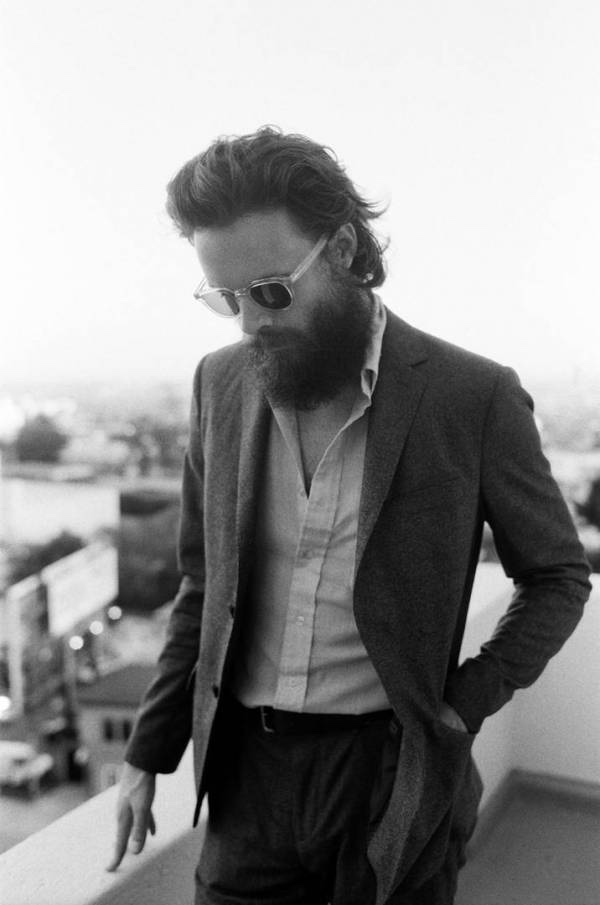
    His picture is on the cover, but Timothy Showalter insists that he is not, in fact, the person primarily responsible for the existence of the latest Strand of Oaks album, Eraserland.

    In fact, there was a point, sometime between the release of his last LP (2017’s Hard Love) and the start of the Eraserland sessions, when Showalter was pretty certain he didn’t want to make another record. Ever. It was a time of soul-searching for the 36-year-old singer-songwriter. He had always defined himself as a musician, but suddenly that didn’t seem like enough to sustain him. He wanted to know who Timothy Showalter really was.

    It might be somewhat ironic, then, that the very thing that helped Showalter through his existential crisis was music. Just how cathartic did writing and recording Eraserland turn out to be? Well, consider that the album opens with the line “I can’t feel it anymore” (from “Weird Ways”) and closes with “I hope it never ends” (from “Forever Chords”).

    Showalter gives full credit to his friend Carl Broemel, who happens to be the guitarist for My Morning Jacket, for pulling him out of his slump.

    “I had no songs,” Showalter says when the Straight reaches him on the road in Birmingham, Alabama. “Carl kind of reached out through the mist and said, ‘Hey, if you ever want to play songs or write some music together…’ And I said, ‘Of course,’ and then he spent the rest of the day contacting the rest of the people on the album and booking the studio time. And when I found out it was a reality, surprisingly, then I was faced with ‘Oh, I need to write songs now.’ And I think that was the true jumping-off point. I wrote songs for them as opposed to me, and I wanted to give them as good of songs as I could create at that moment. I’d never had that approach before, and I think it allowed for the songs to maybe evolve and change from the pattern I’d done in the past.”

    It didn’t hurt that among the people Broemel tapped to help make the album were his My Morning Jacket bandmates: bassist Tom Blankenship, drummer Patrick Hallahan, and keyboardist Bo Koster. The result is perhaps the finest record Showalter has ever released under the Strand of Oaks moniker, with highlights including the fade-into-you ballad “Keys”, the lysergically motorik “Hyperspace Blues”, the heartland-rocking “Ruby”, and the mournfully dreamy hymn that is the title track.

    Throughout the recording process, Showalter found himself in awe of his collaborators—not just for their chops, but also for their restraint.

    “As a fan of their music, I was game for them to just be on all cylinders the whole time,” he says. “I want to see Carl Broemel play a solo for 45 minutes, and Patrick do drum fills and whatnot, but what was so amazing about how they interpreted a song was that it was almost what they didn’t play that made the record so special. They all were so in tune with their own part, but also how it fit in with the song as a whole. It’s just a testament to them as musicians, but more importantly as human beings, because it was so based around love. I think they truly loved the idea of working together, and the four of them are such a special unit.”

    In the end, Showalter found himself a step closer to answering the questions that had left him immobilized before Broemel and company lit a fire under him. Those questions, he says, included “Why am I here?” and “Why am I doing this?”

    “Not just musicwise, but why am I doing all of this?” he clarifies. “And why am I who I am? My producer, Kevin Ratterman, made this good point. He said, ‘This record, lyrically, sounds like a breakup letter or a suicide note to your ego.’ I really think that makes sense, and I think that might be what Eraserland means. You have the power to say ‘I’m not going to be willed into this existence that may have trapped me with patterns or behaviour or inherited anxieties,’ and all of those issues we face constantly. It’s that kind of liberating freedom, like, ‘I can break this cycle—or try to, at least.’ ”

    What’s most striking about talking to Showalter—aside from how unflinchingly honest he is—is how much he sounds at peace with himself and his place in the world. It’s as if he has come to the conclusion that defining himself as a maker of music isn’t so bad after all.

    “My biggest fear in life is to not have purpose,” he says. “And I think that’s part of the reason why I really identify so much as being a musician. Because I love playing music and everything, but it gives me a reason to exist.

    “I always say that my concept of success is just having something to do next, and a reason to do something next,” he adds. “And I felt like before I made Eraserland, I didn’t have that, and I didn’t have the confidence nor the reason to do that. And that’s why I’m so thankful, especially to Carl for giving me purpose again. And now I can be on the road and get to connect with people every night and talk to the really good people who come out to my shows. And that just reinvigorates the whole sense of purpose even more.”

  • From the Archives: Strand of Oaks, Part One (2014)

    I have a very extensive catalogue of old articles that I think are worth revisiting. Here’s one of them. (This article originally appeared in The Georgia Straight.)

    When the Straight catches up with Timothy Showalter, the Strand of Oaks frontman is at a tour stop in Bloomington, Indiana. Not the most glamorous locale, perhaps, but being there is a big deal for the Philadelphia-based musician, because it’s a return to his old stomping grounds.

    “It’s a big nostalgia trip, because both of my brothers went to college here,” he says. “I probably got drunk here way too young many, many times, and have some good memories of this place, so it’s nice to be back in the Midwest.”

    Strand of Oaks’ next stop, just three hours upstate from Bloomington, is Goshen, which happens to be Showalter’s hometown as well as the setting of the song that opens his latest album, HEAL. “Goshen ’97” roars to life with some typically blistering lead guitar courtesy of Dinosaur Jr.’s J Mascis. The lyrics paint a portrait of the now 32-year-old Showalter at the start of his musical life—finding his dad’s old tape machine, buying cheap Casio keyboards, and singing Smashing Pumpkins songs to his bedroom mirror. It’s a wistful reminiscence, but the chorus refrain of “I don’t want to start all over again” makes it clear that, were Showalter given the chance to be that socially challenged 15-year-old once more, he’d pass, thank you very much.

    “I think that’s a healthy form of nostalgia, because anything, in the haze of memory, can become nice,” he says. “And I realized it was a really bad time, but also a good time. But more importantly, I just want to have that in the past, you know, and wear those awkward teenage years like a badge of courage: I did it, I survived it, it didn’t get me, so let’s just keep it there.

    “For me to have that song first on the record also felt like a Reset button was hit,” he continues. “My whole career, I’d made a different kind of music, and I wanted to just come out of the gates running. I wanted to be bold, I wanted to start with this. If that song was Track 5, it wouldn’t work like it does on Track 1. It needed to be the first thing people hear.”

    Indeed, “Goshen ’97” is unlike anything found on any of the previous three Strand of Oaks albums, which were more in line with the subtly shaded folk-rock of Iron and Wine or William Fitzsimmons. (Showalter, it must be said, possesses a wizard-king beard to rival both.) Speaking in terms any Bruce Springsteen fan will understand, Showalter states that he is now well past his Nebraska phase. With its mix of guitar-led rockers (“Shut In” and “For Me”) and dancing-in-the-dark synth-pop tunes (“Same Emotions” and the title track), HEAL seems to have more in common with the commercial juggernaut with which the Boss followed up Nebraska. Showalter says that the notion hadn’t occurred to him, but he doesn’t disagree.

    “I love Born in the U.S.A., because some of those are just heart-wrenching lyrics,” he enthuses. “Even on the song ‘Born in the U.S.A.’—they’re some of the saddest lyrics I’ve ever heard, yet there’s this anthemic music mixed with really touching, sincere, earnest lyrics. But it can be played in a stadium. That’s kind of what I wanted with this. I wanted to be singing about really strong, real emotions, but I didn’t want it to sound like an Elliott Smith record, you know? I wanted it to be bold. Anthemic is much more powerful, I think, than introspective, especially for this record.”

    The strong emotions to which Showalter refers are tied largely to the same sort of unsentimental looking-back that gave rise to “Goshen ’97”. Although the title pertains to actual physical healing—during the mixing phase, Showalter was recovering from injuries sustained in a head-on collision with a semi that he and his wife were lucky to walk away from—it goes deeper than that, and further into the past. The singer has, to coin a phrase, seen some shit. More than a decade ago he went through a particularly traumatic breakup after his then fiancée had an affair while Strand of Oaks was on tour. A few months after that, Showalter lost his house to a fire.

    These are things his previous efforts have touched upon, but his songwriting has never been as specific as it is on HEAL; he goes so far as to name the woman who betrayed him. “It’s practically a diary entry,” Showalter admits. “It’s almost uncomfortably honest at times. I didn’t intend for it to be that way, but I just wanted to go there. I didn’t want to hide behind metaphors anymore.”

    Above and beyond the lyrical catharsis, however, the performer seems to be most thrilled about being able to walk out on-stage every night, crank the volume knob on his amp, and rock the fuck out.

    “I love playing loud music,” he asserts. “It’s been such a liberating experience, too, to be able to turn guitars up, something as simple as that, and play music loud. The new album has lyrics that you can really attach to, but I think I’m most excited that there’s a visceral element to it. It’s physical now. You can react to it on many different levels. You can drink a bottle of beer and head-bang to it, or you can think about painful experiences in your life that I might be singing about that are similar. And I frankly don’t care which way people take it. If they just want to turn it up loud and have fun with it, then more power to them.”

    In & Out: Timothy Showalter sounds off on the things enquiring minds want to know.

    On getting J Mascis to play on “Goshen ’97”: “It was an incredibly easy process, because we’re on sister labels. He’s on Jagjaguwar and I’m on Dead Oceans. I turned in an early demo of the song, and I had my own face-melter shred part. And then someone at the label was like, ‘Oh, man, it would sound cool if J Mascis played on this.’ I said, ‘Yeah, it’d be cool if Jimmy Page played on it too, but things like that can’t happen.’ And then 24 hours later, we had him on the track. We sent him the track, he shredded face, and then it just happened.”

    On the support of his wife, Sue: “She should have gotten the producer credit for this. Not only is it difficult songs about our personal life, but she was just there, hearing hundreds of demos, mostly in bad forms. I would wake her up in the middle of the night and be like, ‘I put a new guitar part down!’ And she’d be like, ‘I heard this song 20 times already today, Tim. We’re good. Can I just hear the record when it’s finished?’ ”

    On his lyrical references to other musicians: “It’s paying tribute. This record is about relationships, but it’s mostly about my relationship to music—what it’s done to my life and how much it’s helped me. At the initial starting point of wherever my head was at to get this record going, I had Sharon Van Etten on my headphones. And I was like, ‘Why wouldn’t I say that?’ Of course I should say that, because she helped me. Songs do that. Smashing Pumpkins did that when I was 15, and Jason Molina did that for most of my life.”

  • I created a section of this site to highlight my unpublished middle-grade fantasy novel. Please take a look and pass the link around freely. I haven’t had any luck at all getting agents to read this thing I spent three years writing, and I could use a little help.

    Photo by Francesco Ungaro on Pexels.com
  • Got freelance?

    Today I learned that my hours, and therefore my income, will be reduced significantly, effective immediately. This is, as you might expect, fallout from the current pandemic. While I count myself lucky that I did not get laid off (as several of my colleagues did), the reduced income will hurt. So I am reaching out to my network. I know these are hard times for everyone and that business is generally bad, but I could really use some freelance work, now more than ever.

    I am a damn good writer and editor, on both the journalistic side of things and the PR/marketing side. I’m pretty good at social media and SEO, and I have faked my way through a few Google ad campaigns in my time. (I also play guitar and some people seem to enjoy that.)

    To learn more about me and what I can do for you or your business, please see my LinkedIn page.

    So, that’s my spiel. Any and all offers seriously considered. Thanks, everyone. (Please share this post.)

  • Self-isolate and chill

    Over on Straight.com I have been recommending music-related movies to stream at home in this time when live music isn’t happening.

    Click here for Part 1.
    Click here for Part 2.

  • Interviewing 101

    Have I interviewed you? Did you enjoy the experience? Would you like to endorse my skills with a short testimonial?

    I’m in the early planning stages of a new project. Stay tuned for details…

  • A belated Happy New Year! And yes, I realize everything I do with this blog is belated. Nonetheless, this is actually new news! Well, newish. The debut EP by my band, the Starling Effect, came out last year, but it took us a while to get it everywhere. And by “everywhere”, I mean Spotify, iTunes, et cetera. Hell, it’s even on Napster! Which is apparently still a thing! Who knew?

    Click here to stream the songs from the service of your choice.

    Oh, and we have a non-EP track coming out as well. The Starling Effect’s version of “Old Man Kensey” was originally released as part of a tribute compilation put together by The Blog That Celebrates Itself. We are re-releasing it as a single, and although it isn’t out yet, you can click here to get notified when it becomes available.

    If you live in Vancouver (or plan to be here in early February), please consider coming to see the Starling Effect play at the Roxy. It will mean a lot to us, and this will probably be a really good show to catch us at, because it will be the first time we’ve ever played at a venue where everything is properly miked and mixed.

    Click the image above to purchase advance tickets.

    Here’s a clip from our last show, which was at the Princeton, a venue that doesn’t mike anything but the vocals and that, in fact, doesn’t even have a sound person at all. And you can tell! The sound isn’t great, but the spirit is there. (Although the sound of my guitar, sadly, is not.)

    That video was captured by Allan MacInnis, of the peerless Alienated in Vancouver blog, who also wrote this very nice piece about us for the Georgia Straight.

  • Oops, I keep forgetting to post stuff here. But this one is pretty important to me, since I haven’t released any new music in a long time. My band the Starling Effect has just put out a self-titled EP, and you can check it out below: