• Recently Published: September 2026

    Time once again for my usual roundup of my published work from the past month. In addition to the below, I would also like to point out that the latest print edition of MONTECRISTO Magazine is now out, and it includes an article I worte about the new Vancouver Opera season. Also the annual Stir Fall Arts Guide, a 100-page print magazine, has apparently hit the streets of Vancouver already, although I haven’t seen it yet. I have a few pieces in that as well.

    Domestic life and video-game music shaped Basia Bulat’s most recent batch of songs

    (Stir, September 11, 2026)

    IF YOU LIKE the sound of Basia Bulat’s 2025 album Basia’s Palace, you have motherhood and 1990s video games to thank, at least in part.

    The Montreal-based singer-songwriter has a style rooted in acoustic folk, but throughout a recording career that has spanned two decades, she has taken her share of sonic detours. On 2016’s Good Advice, for example, Bulat added a few dashes of indie rock and R&B to the mix, while for 2022’s The Garden, she teamed up with a string quartet to reinvent songs from her catalogue as chamber-pop mini-masterpieces.

    Basia’s Palace was created in the basement of the house Bulat shares with her husband (fellow musician Andrew Woods) and their two children—a two-year-old and a newborn, at the time. That domestic reality heavily influenced the songs, and so did Dragon Warrior IV. 

    “I was playing a lot of video games, and I was listening to a lot of the music of the video games of my childhood,” says Bulat when Stir reaches her by phone at a rehearsal space where she’s preparing for her upcoming solo tour…

    Read the rest here.


    With its technically demanding production of Heist, the Arts Club aims to wow the audience

    (Stir, September 14, 2026)

    THE LIST OF TECHNICAL requirements for Heist reads more like specs for a Hollywood film production than for a stage play. According to the official Heist website, the show calls for “lasers, drones, sensors, fog, flashing lights, high-tech toys…on screen graphics, rapid-fire sound cues” in addition to aerial sequences in which one of the actors descends from on high in a harness. 

    Playwright Arun Lakra has acknowledged that Heist—about a team of criminals attempting to steal a highly prized diamond from the lair of an international jewel thief—draws much inspiration from big-screen capers like Ocean’s 11. It’s the play’s movie-like aesthetics that make staging it a daunting prospect for any theatre company.

    “I’ve always tried to braid the design of a show really intricately with all the other storytelling, but I’ve got to say, this is next-level,” says Andrew Kushnir, who’s directing the Arts Club’s upcoming production of Heist. “The number of cues for this show—across lighting changes, sound changes, video changes, aerial changes, laser changes—it’s in the hundreds and hundreds. It’s at an operatic level. I’ve worked on shows that are intricate, but I’ve got to say that this is the most complex in terms of integrating all those design elements, and it kind of befits a heist story. Any heist movie has you wondering, ‘Can these people actually pull this off?’ And I’d say the play is no exception…”

    Read the rest here.


    In Job, The Cultch presents a psychological thriller for the age of social media

    (Stir, September 22, 2026)

    IN MAX WOLF FRIEDLICH’s drama Job, tech-company employee Jane has come to therapist Loyd’s office, seeking to get green-lit to return to work after an on-the-job meltdown has landed her on extended leave.

    And that, dear reader, is about all we can tell you without the risk of revealing too much. Brian Markinson, who’s playing Loyd in The Cultch’s production of Job, is happy to talk about the show with Stir, but he’s also determined to keep the conversation spoiler-free.

    “What’s great about the play is that it is open to interpretation, and an audience is going to bring their own story to it, and what they think the thing is ultimately about,” he says.

    “We have to be intentionally vague about it,” says Markinson’s co-star, Elizabeth Barrett, who is also on the call. “Just by nature of it being a psychological thriller, it’s most satisfying for people if they come in not really knowing anything, I would say. In fact, I would suggest that to people.”

    That might come across as a caution against reading the rest of this article, but we shall try to avoid revealing too much…

    Read the rest here.


    Xiu Xiu explores the sonic and visual worlds of David Lynch’s surrealist horror classic Eraserhead

    (Stir, September 23, 2026)

    YOU WOULD BE forgiven for assuming that Eraserhead Xiu Xiu is either a screening of David Lynch’s 1977 first feature with live accompaniment by Xiu Xiu or simply a concert in which the experimental rock band performs the film’s score.

    Neither of those is the case, as Xiu Xiu’s Jamie Stewart explains on a Zoom call from his studio in Berlin.

    “We’re not playing to the film of Eraserhead,” he says. “We’re doing an interpretation of the aesthetic of Eraserhead, which is very, very distinct. And the way that we thought about it was, what if Eraserhead was 12 hours long instead of two hours long? What other sounds that would fit in that world could still happen? Our concert’s about 50 minutes long, and we made a 50-minute film to go along with it that has no footage from Eraserhead, but, again, if Eraserhead was 12 hours long, what else could possibly have been in Eraserhead?”

    The fact is that a straightforward live performance of the surrealist body horror movie’s soundtrack would be a Sisyphean task. Apart from a few snippets of Fats Waller tunes played on a pipe organ and one undeniably haunting original number called “In Heaven (Lady in the Radiator Song)” (composed by Peter Ivers, with lyrics by Lynch), Eraserhead doesn’t feature much in the way of music. What Lynch and sound designer Alan Splet created for the film was more of a sonic world than it was a score…

    Read the rest here.


    Little Miss Higgins considers no town or venue to be too small for annual Harvest Tour

    (Stir, September 24, 2026)

    LITTLE MISS HIGGINS has dubbed an upcoming string of 19 concerts across Western Canada her second annual Harvest Tour. And you can take that name literally, not just because the tour takes place during harvest season.

    The merch table at every show will feature some items that you won’t find anywhere else, including handmade soaps and even a little something the Winnipeg-based singer-songwriter cultivated with her own hands.

    “I have started selling my garlic that I grow,” Higgins tells Stir during a telephone interview. “I’ve always loved growing garlic. If people have seen my show, they’ve probably heard me talk about my garden. It’s woven itself into some songs here and there. And one of the things I truly love is garlic, so I’ve been growing a porcelain hardneck variety called Music—of course, I had to.”

    Higgins—known as Jolene to her family and the taxman—reveals that her garlic patch yielded about 1,000 bulbs this year. Not an industrial farming operation to be sure, but an ample crop for her purposes.

    “We harvested it, hung it up to cure, and now I just have to trim it up and it’s ready to go,” she says.

    If you’re getting the impression that this is someone who prefers to do things the old-fashioned way, the music she makes won’t dispel that notion…

    Read the rest here.


    Songwriter D.L. Forrest’s Fresh Eyes on Vancouver

    (MONTECRISTO, September 25, 2026)

    Daniel Forrest had not so much as set foot in Vancouver before deciding to pull up stakes in Philadelphia and set off for a new life more than 4,700 kilometres away, piloting a U-Haul from one coast to another and across the border.

    “I’d never been here before,” the musician says. “It seemed like a cool place to be, another country to experience, meet new people. And my partner likes to bike and hike and camp and stuff, so it just seemed like a good place for us to be.”

    Five years on, Forrest balances his academic pursuits—he’s a PhD candidate at UBC’s Institute for Resources, Environment and Sustainability—with a seemingly superhuman level of musical activity. Along with his membership in three bands, he also performs and records as a folk-rock-leaning singer-songwriter under the name D.L. Forrest.

    Perhaps the most striking thing about Forrest is how keenly he has come to observe the place he initially knew nothing about. That perspective is woven through the songs of Buddie, the grunge-pop project he started before his big move…

    Read the rest here.


    Do You Love It? highlights

    I continue to chip away on my new music blog, Do You Love It?, which I launched on Substack on July 16. I’m quite excited about this relatively new venture, and I hope you will be too. What I hope most of all, though, is that you will subscribe. Currently, all the content is available for everyone, but in the near future I will be posting some exclusive subscriber-only content.

    Here’s what I posted in September.

    From the Archives: Tame Impala (2011-12)

    I interviewed Kevin Parker at a pivotal time in his musical evolution

    From the Archives: The Killers (2012 & 2018)

    Whatever happened to the SKOOKUM Festival, anyway?

    From the Archives: José González (2015)

    The Swedish singer-songwriter talks about his seven-year solo hiatus and his “mushy” aesthetic

    Live Shots: The Zaxons, Johnny De Courcy, and The Stakes Are Us

    At LanaLou’s on September 20 (photo of Johnny De Courcy is shown abaove)

    My First Listen: M83, I Wrote You a Letter

    A track-by-track reaction to the long-running French project’s latest album
  • Recently Published: August 2026

    Time once again for my usual roundup of my published work from the past month. I’m still working part-time at Stir, so as usual there’s a lot from there, but a few other things as well. Actually, there’s not as much from Stir as usual, because a lot of my hours have been devoted to creating content for the annual Fall Arts Guide, a 100-page print magazine that hits the streets of Vancouver in a few weeks. Let’s go!

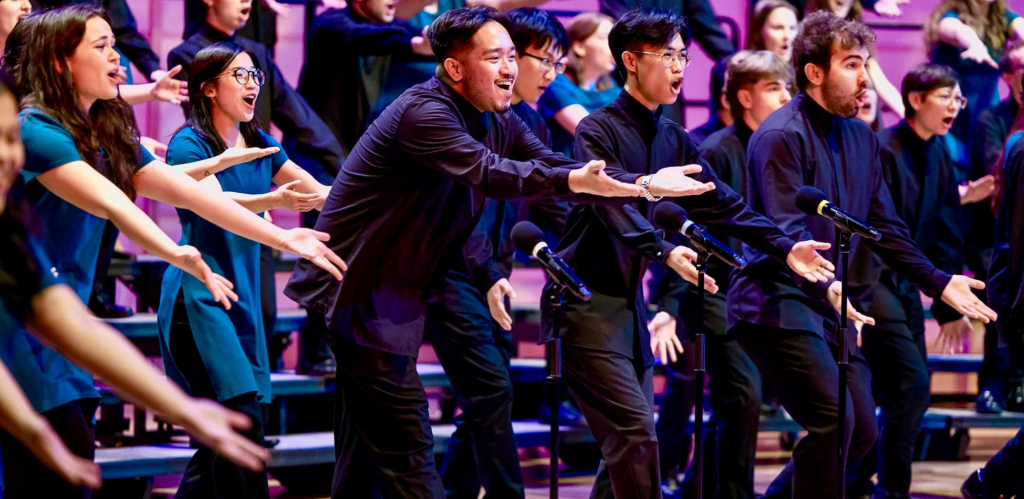
    Vancouver Youth Choir takes it outside for Music on Main’s Summer Pop-Up Concerts series

    (Stir, August 4, 2026)

    YOUNG PEOPLE WANT to have their voices heard. That’s true in a general sense, but also specifically in a musical one, which goes a long way toward explaining the phenomenal growth of the Vancouver Youth Choir. In fact, the ensemble, which artistic director Carrie Tennant founded in 2013, has had to cap its membership at 730 singers across 16 ensembles at eight levels.

    In a telephone interview, Tennant tells Stir that the high level of demand for spots in the choir doesn’t surprise her.

    “It’s really hard for young people to find authentic places of connection in their lives right now, that are human to human, and not either through a screen or removed in some way,” she says. “And so, there’s a real hunger for group singing, especially at the level of artistry and heart that these kids have. They’re so passionate about it. It’s not just an after-school activity for them. It’s an art form, and they take the community and inclusivity just as seriously as they take the Monteverdi or the Decemberists…”

    Read the rest here.


    Be(ing) Moss closes the Vines Art Festival with a meditation on humanity’s place in the natural world

    (Stir, August 6, 2026)

    THE IDEA THAT everything has a spirit is a theory at the core of a number of belief systems, including Japan’s animistic Shinto religion, Buddhist and Taoist philosophies, and Indigenous and shamanic views of the world.

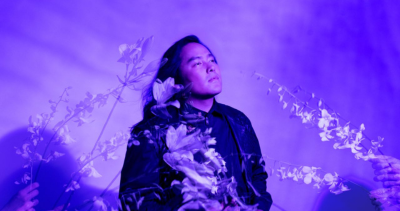
    It’s also the concept at the heart of Be(ing) Moss, a work that the duo of Soya and Chantal will be presenting at Trout Lake as part of the final day of the Vines Art Festival. The interactive performance draws on contact-improvisation dance and earth-based art.

    When Stir speaks to the cocreators a couple of weeks before the Vines finale, Soya and Chantal are still working on the piece’s details—but they are very much in agreement when it comes to the underlying themes. Be(ing) Moss is about, well, being moss.

    Noting that the work is “a kind of ancestral experience ritual”, Soya acknowledges that, from an audience perspective, it won’t look like much, at first…

    Read the rest here.


    At Purple Brand Jeans’ Vancouver Headquarters, Form Follows Function

    (MONTECRISTO, August 10, 2026; keen-eyed readers will notice that I mentioned this in my last roundup, when it was only available in print)

    It would be difficult to think of something that more perfectly embodies the notion of form following function than a pair of jeans.

    Rob Lo is well aware that his fashion label Purple Brand, which he co-founded with Luke Cosby, isn’t reinventing the wheel. Purple Brand makes jeans, T-shirts, hoodies, and other “basics,” but it makes them to an exacting standard that elevates them into the luxury category. As the Vancouver-founded label’s loyal customer base has grown, so has the scale of its operation, which now includes an office and flagship store in New York City and another retail location in Houston, Texas.

    The key to Purple Brand’s success is its ability to turn functionality into a fine art. According to Lo, that’s a trait the label shares with Scott & Scott Architects, the husband-and-wife team he contracted to turn a nondescript warehouse building in Mount Pleasant into the denim company’s Vancouver operations studio.

    “What we do is take an existing product and make it better,” Lo says…

    Read the rest here.


    The Polygon Gallery goes online with new digital exhibition platform, Parallelogram

    (Stir, August 18, 2026)

    One thing Parallelogram is most definitely not designed to do is resemble the unrelenting and stultifying engagement of platforms such as Instagram or TikTok.

    “I’m not on social media myself because I find that infinite scroll actually really daunting,” Ramsey says. “I read all these reports of these dopamine hits and how addictive it is, but I have the complete opposite reaction to an infinite scroll. It shuts me down and makes me run in the opposite direction. And so as someone working on this, I had no desire to replicate that whatsoever.” 

    By not overwhelming the viewer with a bottomless well of content, Parallelogram ensures that each work has equal opportunity to be seen and given due consideration. Ramsey points to Vivek Shraya’s short video “Bodyrebuilding” as a case in point.

    Inspired by the type of photography found in vintage physique magazines, Shraya uses the piece to delve into both her experiences as a trans woman and her connection with her body as someone who lives with chronic pain…

    Read the rest here.


    East Van Schools Improv Project is about much more than funny business

    (Stir, August 25, 2026)

    SURVIVING HIGH SCHOOL is a lot like doing improvisational comedy, when you think about it. Rather than beat that analogy into the ground, let’s just say that it’s one that probably isn’t lost on Jessica Gutteridge, managing director of the Improv Centre.

    Gutteridge and her comedic colleagues have made the link between funny business and secondary education more concrete through the East Van Schools Improv Project. That program sees pairs of performers from the Improv Centre’s rotating ensemble lead 90-minute after-school classes for students at participating schools.

    “For a 10-week period, the teachers will come every week, work with the group of students in the cohort on teaching them everything they need to know about improv performance, playing games with them, working on stage presence, working on collaboration and cooperation, and ultimately working toward presenting a showcase of their performances at our theatre on Granville Island,” Gutteridge tells Stir…

    Read the rest here.


    Do You Love It?

    In my last roundup, I mentioned that I had officially launched my new music blog, Do You Love It?, on Substack on July 16. As noted at the time, I’m quite excited about this new venture, and I hope you will be too. What I hope most of all, though, is that you will subscribe. Currently, all the content is available for everyone, but in the near future I will be posting some exclusive subscriber-only content.

    Here’s what I posted in August. It was an Interpol-heavy month, because the band released its lates album on August 28. I decided to dive into my archives and revisit all my old interviews with various members.

    Interpol Friday, part 1: 2004

    In which I revisit my first interview with frontman Paul Banks

    I asked ChatGPT to write a bio for my band. The results were a hilarious disaster

    An object lesson in the folly of relying on AI to do your work for you

    Interpol Friday, part 2: 2008

    In which I get Carlos D on the phone and demand that he tell me what he’s wearing

    Photos: Pleasant Day Fest

    Various stages on Main Street in Vancouver on August 8, 2026

    From the Archives: Julie Doiron (2004)

    Because it’s August 10, that’s why

    Interpol Friday, part 3: 2011

    Leading up to the August 28 release of the new Interpol album, This Mirror Weights a Ton, I am revisiting all of my past interviews with the band

    Interpol Friday, part 4: 2014 & 2019

    Revisiting my two interviews with drummer Sam Fogarino

    From the Archives: Strand of Oaks (2014)

    Timothy Showalter on wearing his awkward teenage years as a badge of courage

    My First Listen: Interpol, This Mirror Weighs a Ton

    A track-by-track reaction to the new album

  • Recently Published: July 2026

    I’ve been busy this past month! Not just freelancing, but also with my very own brand-new Substack project, which I decided to call Do You Love It? I’ll tell you all about that as soon as I get through the usual freelance roundup. As it has been for the past few months, most of my writing has been for Stir, as I have been working for them on a part-time basis. I really appreciate the work!

    Forever in Blue Jeans

    (MONTECRISTO, May 15, 2026)

    It’s exceedingly rare these days for something I write to wind up exclusively in print and not online, but that ended up being the case with this MONTECRISTO article. The piece—all about local clothing label Purple Brand‘s new Vancouver HQ and the work Scott & Scott Architects put into it—appears in the Summer 2026 issue of the magazine. It’s on pages 26 through 30.

    If you want to read it—and you should, because I’m pretty proud of it!—you can order a copy of the magazine or pick it up in person at one of the locations listed here.


    Fast-rising Punjabi singer Rashmeet Kaur is keen on eclectic sonic exploration

    (Stir, July 3, 2026)

    Rashmeet Kaur discovered the power of a high-quality live-performance video herself when her debut full-length album, Kaura, was released to a response that she considered underwhelming. The 2024 album should have been a slam dunk. The New Delhi-based singer was already a rising star thanks to her many Bollywood soundtrack contributions, to say nothing of being a featured vocalist on Major Lazer’s Grammy-nominated 2020 LP, Music Is the Weapon, alongside such heavyweights as Nicki Minaj and French Montana.

    Kaura garnered the Punjabi singer good reviews and even a Rolling Stone India cover feature, but having spent three years crafting the record in collaboration with 10 producers and 30 artists from all over her home country and as far afield as Canada (Toronto rapper Fateh) and France (Paris-based emcee Tracy De Sá), Kaur had hoped the project would make more of an impact.

    “The result was not as I expected…”

    Read the rest here.


    Concrete Vehicles’ noise-rockers specialize in music as unique as their band’s name

    (Stir, July 6, 2026)

    THERE ARE DISTINCT advantages that come from giving your musical project a unique name. One is that it makes it easier for potential fans to find you online; when you Google “King Gizzard and the Lizard Wizard”, the search engine knows exactly what you’re looking for.

    Another compelling reason to choose your band name wisely is to avoid any intellectual-property disputes down the road. The Vancouver-based act formerly known as Computer found this out the hard way in March of this year when it received a cease-and-desist letter from someone else who had a copyright claim on that very name for their own project. The missive gave Vancouver’s Computer 14 days to pick another name or face legal consequences.

    The timing was unfortunate, as the local band had already signed to a prominent label and had released its debut album, Station on the Hill, several months earlier.

    Read the rest here.


    Canadian singer-songwriter Aysanabee is proud to be a role model for Indigenous youth

    (Stir, July 10, 2026)

    For his remaining festival dates this summer, Aysanabee will be flying solo. Don’t expect to see him onstage much after that; he’s got an album to write and record, and he has no intention of rushing the process.

    “In 2023, when I won those first two Junos, there was this immense pressure I put on myself to put something out immediately and kind of keep the momentum going,” he admits. “But this year it’s like, I’m no longer ‘emerging’ anymore. I feel like I’m a medium-level emerged artist. I just really want to take my time and put the work into a record I’m super proud of.”

    One might argue that he ought to feel that way about everything he’s released to date, including this year’s Timelines, an EP featuring acoustic versions of some of his best-known songs, including the hit single “Nomads”. He’s certainly making a deep impression on listeners; Aysanabee recalls one young fan who waited in line to meet him after a show in St. Catharines, Ontario…

    Read the rest here.


    Toronto-based Nastasia Y carries on a family tradition of song and rebellion, at Mission Folk Music Festival

    (Stir, July 14, 2026)

    NASTASIA YEROFEYEVA comes by her love of music honestly. The Toronto-based singer, songwriter, and keyboardist, who records and performs under the name Nastasia Y, has lived in Canada since the age of 11, but she was born in Kyiv, Ukraine.

    “Growing up, music was a really, really big part of life,” Yerofeyeva says. “Music, in particular folk music, is really different in the way it’s experienced there. It’s a more communal style of living, in a way. For example, any birthday, any celebration, any get-together, there would always be music and singing. It would almost be weird to not sing, to maybe listen to recorded music and not sing. Or at least in my family, the way I grew up, because my dad was a singer, and he was in a band.”

    Kost’ Yerofeyev was indeed in a musical group, called Ruthenia, and his activities suggest that he didn’t just pass down an appreciation for Ukrainian folks songs to his daughter, but a bit of rebel spirit as well…

    Read the rest here.


    At the Vancouver Folk Music Festival, the eclectic Valerie June promises a little bit of everything

    (Stir, July 15, 2026)

    June is an engaging interviewee, with a warm, easy laugh and a Tennessee accent that imparts an aura of down-home wisdom to whatever she says. Moreover, the conversation takes an especially interesting turn when it comes to her creative process. June doesn’t take all of the credit for writing her music; as she experiences things, she “receives” the songs from somewhere outside herself.

    “To me, when I’m working in that space, co-creating with something that’s invisible—that’s another realm or another world—that’s so magical to me,” she says. “And that’s where I like to be more than anything, more than even performing or touring. I like to be communicating with whatever realm that is that gives us songs and music.”

    The songs June receives are not always fully formed—sometimes she’ll get a single line of lyrics or the beginnings of a melody—nor are they all necessarily suitable for mass consumption….

    Read the rest here.


    Vancouver’s socially conscious Buddie on evolving its sound beyond “grunge pop”

    (Stir, July 16, 2026)

    THERE’S A CERTAIN alchemy that happens when like-minded musicians get together in a garage, basement, or rented rehearsal studio and create something as a collective. It’s a kind of magic that the members of the Vancouver indie-rock band Buddie have only recently begun to tap into.

    Singer-guitarist Dan Forrest began Buddie as a vehicle for his own songwriting several years back when he was still living in Philadelphia. He moved to the West Coast of Canada in August of 2021, bringing the Buddie name with him and recruiting a crew of local musicians to play with him.

    The current version of the band includes guitarist Patrick Farrugia, bassist Lindsay Partin, and drummer Natalie Glubb, all of whom have begun to make their creative voices heard.

    “One of the most exciting things that’s been happening maybe the last six months or a year has been figuring out how to write more as a unit,” Forrest tells Stir in a Zoom call along with his bandmates… 

    Read more here.


    Early Music Vancouver artist in residence Marc Mauillon loves the challenge of 17th-century opera

    (Stir, July 22, 2026)

    First performed in 1607, Orfeo is one of the oldest surviving operas, and the earliest one still performed today. It’s fair to say that Marc Mauillon knows it as well as anyone possibly could; the French singer has been performing the title role since the beginning of his career, often under the baton of Spanish conductor Jordi Savall. A magnificent example, performed at the Royal Opera of Versailles in 2021, was recorded for posterity; a review by BBC’s Classical Music website praised Mauillon as “absolutely superb in the title role”.

    That role, incidentally, was originally scored for a tenor but is generally performed by a lyric baritone now. That in-between range, it turns out, suits Mauillon’s voice just fine.

    “Well, it’s the story of my life,” he tells Stir. “I’ve never decided whether I’m a tenor or a baritone, but these days I consider myself more as a ‘baritenor’. So it’s not a way to solve the problem; it’s a way to avoid it! But I’m very happy to consider myself like this…”

    Read the rest here.


    Do You Love It?

    On July 16, I officially launched my new music blog, Do You Love It?, on Substack. The brand-new, original content will focus mostly on Vancouver’s independent music scene, but I will also be including many articles from my extensive archives.

    I’m quite excited about this new venture, and I hope you will be too. What I hope most of all, though, is that you will subscribe. Currently, all the content is available for everyone, but in the near future I will be posting some exclusive subscriber-only content.

    Click here to check it out.

  • Do You Love It?: An introduction to my new Substack

    Hey there! I have just made my first Substack post. I have decided that, moving forward, this is where my content will live, while my regular website (the one you’re on right now) will continue to be a portfolio and career-updates blog.

    My Substack is called Do You Love It?, which is also the title of a somewhat obscure song by one of my favourite bands, Mew. (I hope they won’t mind.) For now, everything is free, but eventually I will have some content that is exclusively for subscribers. Because this is, after all, what I do for a living. There will always be free stuff, though.

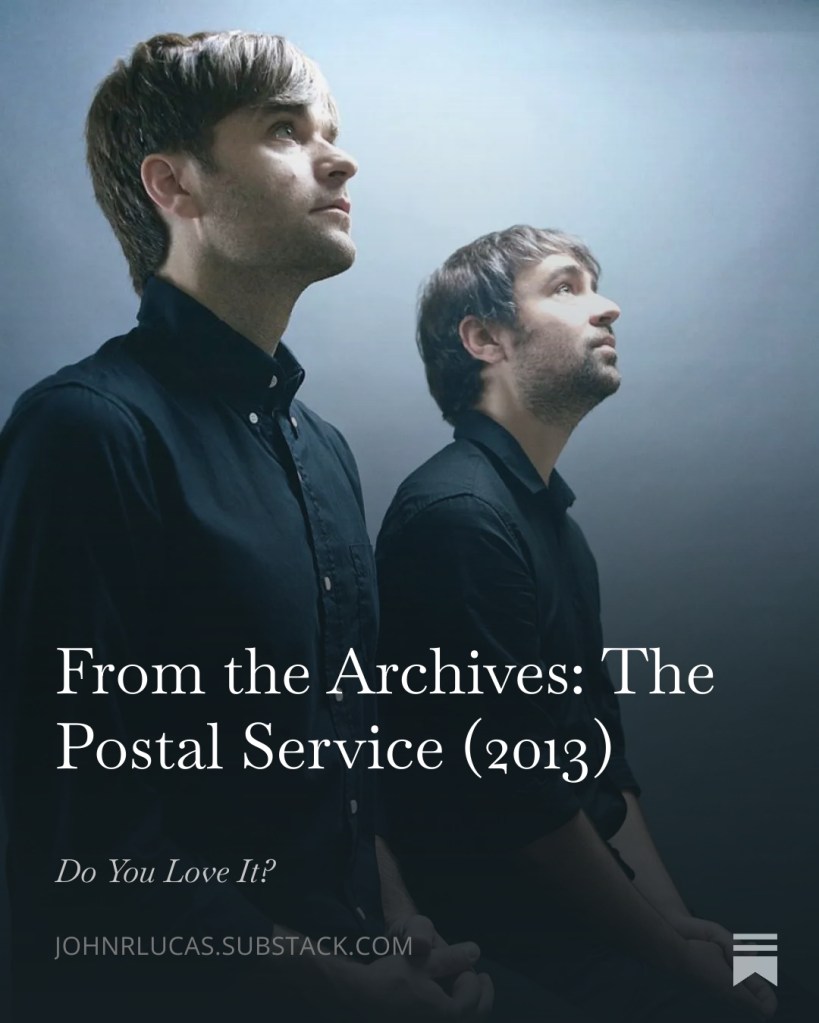
    I decided to kick things off with a story from my archives, a Postal Service interview from 2013.

    Please check it out! I will try to add content on at least a weekly basis. Mostly archival articles, but new original content as well if the response is suitably encouraging.

  • Recently published: June 2026

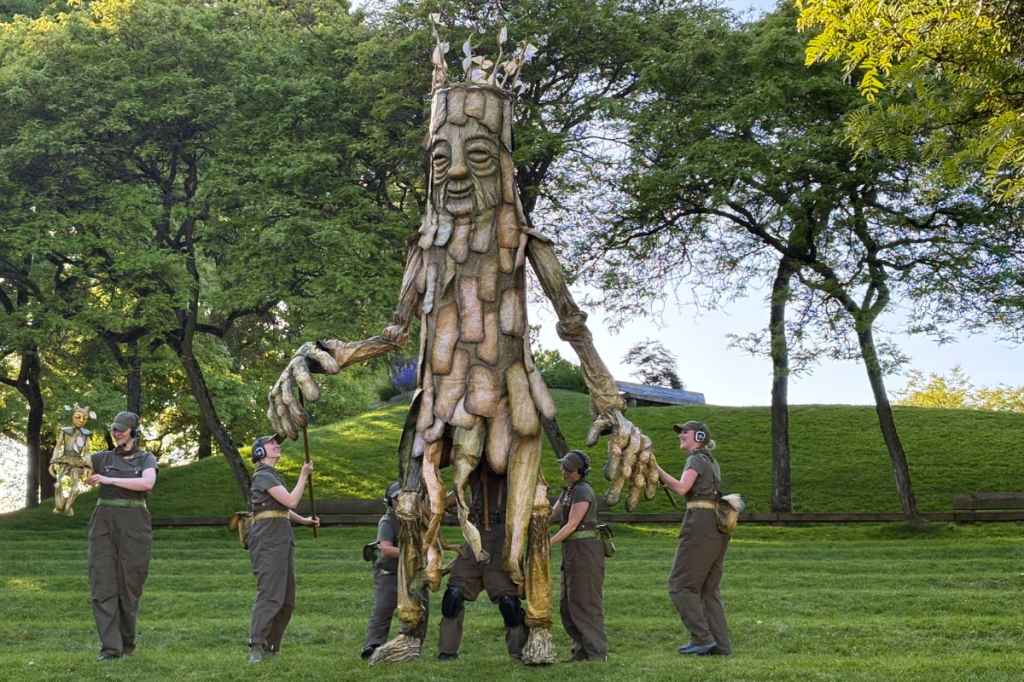
    Hi! If you’re new here, this is a thing I do every month, where I provide a roundup of all (or at least most) of my writing that has been published in the preceding month. An exciting bonus this month is that I get to share a photo of mine that was published as well. That’s the image above, from the world premiere performance of Boca del Lupo and ArtstageSAN’s remarkable Me and the Forest, which I also reviewed.

    It’s all Stir content this time around, but I am working on some other pieces for other publications as well. And, as always, I remain open to freelance assignments.

    Theatre review: Me & the Forest prefers profound pondering to straight-ahead storytelling

    (Stir, June 1, 2026)

    YOU SEE HIS HEAD first, appearing just past the rise of the hill at Ron Basford Park. Well, his top, at any rate; being a tree, Mitig doesn’t have a head, although he does have a face, one that’s as ancient and inscrutable as you might expect a tree’s face to be.

    Soon enough, the rest of Mitig appears as he crests the hill and heads ponderously down toward the audience. At some five metres tall, he cuts an impressive, even awe-inspiring figure, and as he ambles about, you hardly notice that his every movement is controlled by a team of five talented puppeteers working in seamless union.

    Actually, there was one moment during the opening performance of Me & the Forest—a coproduction of Vancouver’s Boca del Lupo and South Korea’s ArtstageSAN—when the illusion was broken…

    Read the rest.


    Composer celebrates natural wonders at Cascade Peaks ChamberFest

    (Stir, June 3, 2026)

    AT THE RISK of understating things, Imant Raminsh has written a lot of music. The Canadian Music Centre has 263 works by the composer in its catalogue, dating back to the early 1970s, and these include violin concertos, orchestral pieces, and the choral works for which he is best known.

    All that work has not gone unrecognized. In 2018, Raminsh was made a Member of the Order of Canada, and in 2024, he was made a Member of the Order of British Columbia. The composer is also an officer in the Order of the Three Stars of the Republic of Latvia, the highest civilian honour in the country of his birth.

    Like most creative people, Raminsh no doubt feels a connection with everything in his catalogue, but his latest composition has a deeper meaning than most…

    Read the rest.


    Merry Wives of Windsor star is an old hand at bringing Sir John Falstaff to the stage

    (Stir, June 5, 2026)

    NO LESS THAN Orson Welles once declared the character Sir John Falstaff to be William Shakespeare’s greatest creation. This remains a controversial take, and Welles certainly had a vested interest, having cast himself as the dissolute knight in his film Chimes at Midnight. The truth is, though, that Falstaff was one of Shakespeare’s most celebrated characters during the Bard of Avon’s own lifetime. After providing the comic relief in Henry IV, Part 1 and Henry IV, Part 2, Prince Hal’s erstwhile companion proved so popular with audiences that Shakespeare wrote a spinoff, The Merry Wives of Windsor, giving Sir John top billing.

    It’s a credit to Shakespeare’s deft hand with characterization that a man who on paper should be irredeemably repugnant—Falstaff is a gluttonous, licentious schemer, and a drunkard to boot—is generally accepted as an endearing rogue.

    “Falstaff is such a lovable, likeable character that even his faults, people sort of look over,” actor Ashley Wright tells Stir. “He’s one of those bumbling fools that everyone loves…”

    Read the rest.


    For Vancouver’s Missy D, music is a way to communicate, no matter what the language

    (Stir, June 15, 2026)

    FOR ANY ARTIST, realizing that there’s a whole new audience just waiting to discover your work can be one of the most gratifying parts of living the creative life. Rapper and singer Missy D, for instance, has spent much of the past two years bringing her songs to a fan base that she never foresaw. The Vancouver-based performer has been touring the country, playing to school groups and children’s festival crowds. 

    “I’m sharing a little bit of my story about learning English through music, and how I’m how bilingual now,” explains the emcee, who was born in Rwanda and lived in Côte d’Ivoire and Zimbabwe before coming to Canada. “Sometimes music can do things to help you learn something new.”

    Missy D, whose first language was French, certainly never set out to be a children’s entertainer—or a professional musician of any kind, really…

    Read the rest.


    Josh Epstein’s job is to ensure everything goes right in The Play That Goes Wrong

    (Stir, June 17, 2026)

    YES, IT’S CALLED The Play That Goes Wrong, but for it to truly live up to its title, everything needs to go just right. In the smash-hit comedy—which was created by the U.K.’s  Mischief Theatre Company in 2012 and has since seen numerous touring and local productions—doors get stuck, props malfunction, and floors collapse.

    Josh Epstein, who’s directing the Arts Club’s mounting of the play, tells Stir that the key to making it all work is to have it appear to the audience that the show is flying off the rails, all while keeping a tight rein on the apparent chaos.

    “Let me tell you, as we work through it, trying to get everything to go wrong right is incredibly technically difficult,” Epstein says in a telephone interview. “I think the result you’re going to see is effortless, but it’s one of the most technically demanding comedies ever written…”

    Read the rest.


    Vancouver International Jazz Festival artist-in-residence Wendy Eisenberg got in touch with her 13-year-old self to craft self-titled album

    (Stir, June 19, 2026)

    MANY MUSICIANS AND BANDS make their recorded debuts with a self-titled release. It’s a logical choice, since a first album is like an introduction—and it’s an easy solution to the conundrum of thinking up a title.
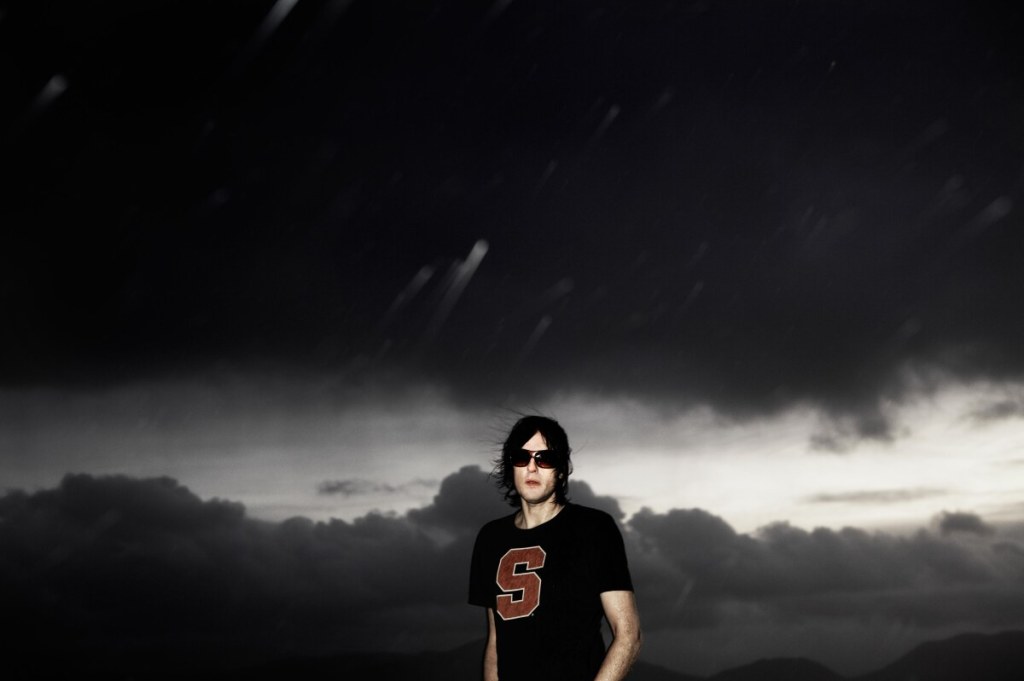
    But when someone with a discography that’s several albums deep releases a self-titled LP, it seems to signal something more profound—such as a reinvention or a renewed sense of purpose. 

    When singer and guitarist Wendy Eisenberg calls Stir from the home in Brooklyn she shares with her partner and frequent musical collaborator Mari Rubio, she offers an explanation for giving her eighth solo album, released earlier this year, the title Wendy Eisenberg.

    “I think in part it was genuinely a statement of intent and resolution, but also the writing of this one was simultaneous with a personal, private process of understanding who I was…”

    Read the rest.


    Vancouver’s Uncle Strut is doing its part to make guitar solos, and moustaches, cool again

    (Stir, June 26, 2026)

    THERE’S SOMETHING TO be said about a band with a distinctive image. Think of the Beatles in their marching-band uniforms circa Sgt. Pepper’s Lonely Hearts Club Band, or the guys in Devo with their matching jumpsuits and red “energy dome” hats.

    Uncle Strut hasn’t gone to quite those lengths, but as Jasper Matthias learned, there are certain elements that go into the band’s look. Matthias—also known as “Raspy Shreds”—now plays lead guitar in Uncle Strut, but he started out as a fan.

    “Before I joined the band, I saw these guys play at the Hollywood Theatre,” he tells Stir during a slightly chaotic five-way Zoom call alongside his bandmates. “I was in line to get in, and the security guard comes out with a bunch of fake moustaches. And I was like, ‘Uh, what the hell is this? What are you giving me a fake moustache for…?’”

    Read the rest.


  • Come see my band live on June 20

    As you may already know, I perform in a band called the Starling Effect. Once a mighty wall-of-sound quintet and currently a tight power trio, we play exactly the sort of music you might expect from a bunch of guys who lived through the alternative explosion of the 1980s and ’90s. It’s a bit shoegaze with a dash of postpunk, possibly a little grunge, but mostly just good old-fashioned indie rock.

    If there were a prize for “Vancouver band most likely to play a My Bloody Valentine song”, we would win it. (We might also win the title of “Only Vancouver band likely to play a My Bloody Valentine song”.) We have been led to understand that there is an eager young audience rediscovering the sort of music we play, but they must be getting lost on their way to our shows.

    We have been locked down in our musical bunker, working on new material for the past several months. And we will return to that, but we’re popping out for one night only to play a live set at the Princeton Pub in Vancouver on June 20. We’re playing with a couple of other local bands, Chasing Zero and Whippersnapper, and we’re up first at around 9:30 p.m.

    As is always the case at the Princeton, there is no cover charge, which means, friends, that you have absolutely nothing to lose. Join us, won’t you?

    There is a Facebook event page if you crave more information.

  • Recently published: May 2026

    Hi! If you’re new here, this is a thing I do every month, where I provide a roundup of all (or at least most) of my writing that has been published in the preceding month. For the past couple of months I have been working part time at Stir and writing for them quite a bit as well. So, most of what follows was written for Stir, with one notable exception.

    Canada and the U.S. seek choral harmony at Tapestry International Festival

    (Stir, May 1, 2026)

    A CERTAIN PRESIDENT south of the 49th parallel has dialled back his rhetoric about turning Canada into the 51st state, but the months he spent ratcheting up the tension between our two nations has had a lasting effect.

    Good luck finding a Tennessee bourbon on the shelf at your neighbourhood liquor store, for example. And good luck, for that matter, finding any Canadian who feels inclined to take their next vacation anywhere in the United States.

    Some things know no international boundaries, however, and music is one of them. In that spirit, long-running local choir Elektra is once again hosting its signature event, the border-crossing Tapestry International Festival, which gathers together adult treble choirs—those focused on the soprano and alto ranges—from different countries...

    Read the rest.


    Vancouver pianist Wenwen Du sings the praises of rock-star tenor Ian Bostridge

    (Stir, May 5, 2026)

    IF THE WORLD of art song can be said to have “rock stars”, Ian Bostridge has certainly earned that status. The 61-year-old English tenor has toured the globe, performed with the world’s great orchestras, and picked up three Grammy Awards for his recordings. Along the way he was appointed a Commander of the Order of the British Empire for his services to music, which puts him in the company of Robert Plant, Roger Daltrey, and Rod Stewart.

    Like many a rock star, Bostridge has indulged an interest in decidedly dark and esoteric topics. Before he became a professional singer at the notably late age of 27, he had an entirely different career as an academic. In fact, Bostridge (who earned a PhD in philosophy from Oxford University) even wrote a lauded and influential book called Witchcraft and Its Transformations, c. 1650–1750. See what I mean? Total rock star.

    In the admittedly rarefied art-song world, having Bostridge hand-pick you to accompany him is a bit like getting an offer to go on tour with Coldplay. That was the position Vancouver pianist Wenwen Du found herself in a few years ago…

    Read the rest.


    Mother/Land composer and librettist found contemporary relevance in ancient tale

    (Stir, May 6, 2026)

    SOMETIMES, THE OLDEST stories carry the greatest weight. They have the power to remind us that, in spite of our modernity, we’re really not so different from our forebears.

    The Book of Ruth, for example, was written by an unknown author during the time of the Persian Empire (550 to 330 BCE). In the story, which is included as a historical text in both the Hebrew and Christian bibles, a Moabite woman named Ruth and her Israelite mother-in-law, Naomi, return to Bethlehem after they are both widowed. While supporting the two of them by gathering leftover grain, Ruth meets Boaz. A relative of Naomi’s late husband, Boaz marries Ruth despite her outsider status amid ongoing tensions between Israel and Moab.

    If that strikes you as a story with operatic potential, you’re not alone. A number of composers have based pieces on the Book of Ruth. Its powerful contemporary relevance continues to inspire new works, and it’s what drew Vancouver composer Jeffrey Ryan and librettist Michael Lewis MacLennan to the story. The pair have, in fact, been working on adapting the Book of Ruth for several years, but it was thanks to a commission from the Vancouver Bach Family of Choirs that they were able to complete their opera-oratorio Mother/Land, which premieres at the Vancouver Playhouse on May 16…

    Read the rest.


    Belgian academics tackle serious topics with comedy in La Convivialité and Kevin

    (Stir, May 12, 2026)

    THEY’RE KNOWN AS the Immortals, and you’ll know them by their long black coats and bicorne hats, to say nothing of their swords. For nearly four centuries, they have been endowed with powers that no ordinary person may possess, and while they might sound like something out of an episode of Doctor Who, the Immortals are very real. In spite of the name, the flashy costumes, and the weaponry, they’re actually the members of the Académie française, a body that Cardinal Richelieu created in 1635 and tasked with being the last word (pun intended) on all matters related to the French language.

    Beyond being the gatekeepers of the one true dictionary of the language—or at least the only one formally recognized by the body that, conveniently, also publishes it—the Académie française doesn’t play as big a role in the French-speaking world as it once did. As Arnaud Hoedt tells Stir in a Zoom interview, “In truth, they don’t have a lot of influence on language policy because there is no real language policy. You know, language is a free thing that people share, and it’s very difficult to make decisions about French language politics. But symbolically they still have a lot of things to say, and people watch them as a symbolic reference, but they are totally unable to have any really smart or scientific point of view about language, because they are writers—and sometimes not even writers—but they are not linguists.”

    Hoedt, on the other hand, is a linguist…

    Read the rest.


    Me & the Forest poses big questions at Vancouver International Children’s Festival

    (Stir, May 14, 2026)

    THE GREAT AUSTRIAN philosopher Ludwig Wittgenstein once wrote that “if a lion could speak, we could not understand him.” In Wittgenstein’s view, the lived experience of a lion is so far removed from the human world that even if it tried to express it to us, that experience would remain beyond our ability to grasp it.

    Mind you, Wittgenstein died in 1951, long before the advent of artificial intelligence, or what passes for it in 2026. No, we’re not debating global politics with lions just yet, but—as Boca del Lupo cofounder Jay Dodge learned from a newspaper report—various researchers are engaged in using acoustic analysis and machine learning in an attempt to interpret whalesong.

    “In this article they were saying that we were between six months and 24 months away from having conversations with whales,” Dodge says in a telephone interview with Stir. “And that just blew my mind. I started to imagine—if that is in fact the case and whales are half as intelligent as we think they probably are—if we can talk to them, what does that mean? Do they start intersecting with our laws? Do they start voting in our elections?”

    Dodge found himself pondering these questions at a fortuitous time…

    Read the rest.


    Vancouver Alt-Rock Band Meltt Loves the Album⁠—Even in the Age of Streaming

    (MONTECRISTO, May 15, 2026)

    On this warm afternoon in late April, Meltt is about six weeks away from the release of its third album, Pathways, out June 12 via Nettwerk Music Group. Gathered around a makeshift coffee table (it’s actually an old wooden cable spool “upcycled” with the addition of a plastic fern), singer-guitarist Chris Smith, guitarist James Porter, drummer Jamie Turner, and bassist-keyboardist Ian Winkler are all dressed down in T-shirts and jeans, as befits a group of guys who have just unloaded a full band’s worth of gear from their van. They acknowledge that their approach to releasing music is definitely not how the lads from Liverpool did it.

    For the most part, The Beatles put out standalone singles—classic cuts such as “I Want to Hold Your Hand,” “Day Tripper,” “Penny Lane,” and “All You Need Is Love” didn’t appear on albums. This meant that when an LP did drop, the music-hungry public hadn’t heard any of it yet.

    Meltt has taken a different tack altogether… 

    Read the rest.


    Lukas Malkowski’s Microphone Controller is a rock ’n’ roll show with a difference

    (Stir, May 29, 2026)

    ANYONE WHO HAS ever felt the pyrotechnic heat at a Rammstein show, experienced the bowel-rumbling bass vibrations of a Skrillex set, or been dazzled by one of Coldplay’s arena-sized confetti drops could tell you that the most memorable concerts are about more than just the music. 

    That multisensory reality is one of the driving forces behind Microphone Controller, a 55-minute solo piece by choreographer and performer Lukas Malkowski. “The concept is that it’s a rock ’n’ roll concert that’s supposed to rock all your senses,” Malkowski tells Stir over the phone from Toronto. “Music is not just experienced through your ears. It’s experienced through your eyes, through your skin, through vibrations, lights, and movement.”

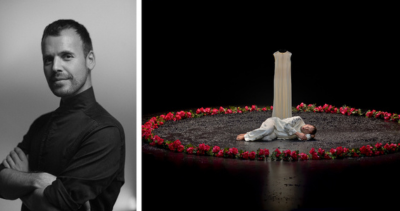
    Although Malkowski can hear, he spends a lot of time considering how the Deaf experience various types of performances…

    Read the rest.


  • From the Archives: Spiritualized (2012)

    On this day in 2012, Spiritualized played at the Rickshaw Theatre in Vancouver. I interviewed the band’s frontman, Jason Pierce, a few times back in my Georgia Straight days, and I always found him to be quite a chatty and gregarious fellow. Which, admittedly, is not the impression one would get from his music or press photos.

    Spiritualized prefers the long way home

    Sweet Heart Sweet Light started out as a pop album, but ended up as something else entirely

    (This article originally appeared in the Georgia Straight)

    No one has ever accused Jason Pierce of taking shortcuts. The Spiritualized mastermind has been known to take as long as a year to mix an album, even though he admits he doesn’t especially enjoy the painstaking process. He’d rather be on-stage than in the studio. Being detail-oriented usually pays off for Pierce, though, and there may be no better example of this than “Hey Jane”.

    The song starts as a jangly pop number that builds to a psychedelic rave-up before crashing into a wall of dissonance and petering out. Then things pick up again, cruising along to a krautrock beat topped by heaven-sent gospel harmonies. The structure of “Hey Jane” seems to mirror the life of its title character, a journey from desperation and squalor to ultimate redemption. The song takes almost nine minutes to play out. It’s nearly matched by a couple of other tracks (“Headin’ for the Top Now” and “So Long You Pretty Thing”) on the new Spiritualized album Sweet Heart Sweet Light. But “Hey Jane” ultimately takes longest-song honours, so, naturally, Pierce picked it to be the first single, at its full length.

    “It wouldn’t work in any other way,” the 46-year-old Englishman says, reached at a tour stop in Austin, Texas. “I mean, people play it on the radio—the first three minutes. I think it’s kind of ludicrous. It doesn’t really make sense like that. That’s what’s weird about music. Everything’s relative. The end of ‘So Long You Pretty Thing’, where that lyric comes out—‘So long you pretty thing/Save your little soul’—they tried to edit that down into a single, so it’s just round the end section. And it’s not that ecstatic; it’s not that great a sound. But it is, comparative to the intro and the way the middle section pans out. It’s a little bit like that with ‘Hey Jane’. No part of it is great, in a kind of pop way, but it makes sense in its entirety. So there’s no way of releasing it any other way.”

    That Pierce thinks of his work in pop terms at all is somewhat surprising, given that the oeuvre of Spiritualized ranges from drone-rock bliss-fests (“Electric Mainline”) to 17-minute avant-jazz freakouts (“Cop Shoot Cop”) to lush, symphonic ballads (“Stop Your Crying”). He says, however, that his initial impulse with Sweet Heart Sweet Light—Spiritualized’s seventh studio album and its first since 2008’s Songs in A&E—was to make it a pop record in the vein of the Beatles. When it dawned on him that he wasn’t really all that interested in the Fab Four, his reference points shifted to more esoteric fare, such as albums by Charlie Feathers and Neu!, Captain Beefheart’s Clear Spot, and Kill City by Iggy Pop and James Williamson. Those were his touchstones, at any rate, but it’s not as if he brought a stack of LPs into the studio with him.

    “I didn’t listen to them once when I was making this record,” Pierce says. “I wasn’t after copying the sounds or the sonic of those records. It’s just the idea of those records: that they weren’t records that reached for the stars, or that they weren’t written about like pinnacles of rock ’n’ roll history, but they were beautiful collections of songs by people that had soaked up a bit of musical wisdom. They didn’t have that kind of arrogance of youth, where the width of your music is actually very slim.”

    Mind you, Sweet Heart Sweet Light does contain some of the most immature songwriting to be found on any Spiritualized effort. That’s not meant as a slight, either; the writing in question came courtesy not of Pierce himself, but of his daughter, Poppy. Nine years old at the time the album was recorded, Poppy contributed lyrics to the intro of “So Long You Pretty Thing”, and she sings the following lines with her father: “If you feel lonely/And the world’s against you/Take the long way home/Past the scary Jesus/And you’ll find my door/With your name in diamonds/And you’ll feel lonely/No more.”

    The verse doesn’t make a whole lot of sense, but its naiveté is charming, which somehow makes it perfect. That’s a quality that Pierce, who says his best work often emerges from failed attempts at doing something else entirely, relishes.

    “It’s like when I write orchestrations,” he says. “I don’t think I’m great at writing orchestrations, but I write orchestrations that kind of horrify the string players that come in to do it, like it’s so wrong. It’s like art, isn’t it? You have to unlearn to be able to find the line that works. You could learn things like a talent, but you have to be able to unlearn how to do it to find something that isn’t just a product of that learning.”

    In other words, there’s no shortcut.

  • From the Archives: The Jesus and Mary Chain (concert review, 2015)

    On May 13, 2015, the Jesus and Mary Chain brought the Psychocandy 30th anniversary tour to Vancouver. The Georgia Straight sent lucky ol’ me to review it. In retrospect, I had a lot of nerve calling William Reid “doughy and bespectacled”, given that this is now a very accurate description of myself. I would put it down to the hubris of youth, but I was 42 at the time.

    The Jesus and Mary Chain makes Psychocandy sound loud and powerful at Vancouver’s Vogue Theatre

    At the Vogue Theatre on Wednesday, May 13

    (This review ws originally published by the Georgia Straight.)

    According to contemporary reviews, a Jesus and Mary Chain show during the Scottish band’s ascendance was more of a spectacle than a performance. Brothers Jim and William Reid, backed in those days by bassist Douglas Hart and drummer Bobby Gillespie, would shamble through a set, sometimes striking upon moments of sheer brilliance and sometimes falling apart utterly. Amplifiers would be overturned, feedback would squall, and some not-predetermined number of minutes later—maybe 35, maybe 20, maybe 15—it would be over, leaving the audience to stage a halfhearted, ritualistic semblance of a riot.

    It was all very thrilling, if slightly dangerous. At $49.50 a ticket, there was little chance that last night’s sold-out Jesus and Mary Chain concert at the Vogue Theatre was going to be an event fraught with risk for either performer or audience. This crowd, which leaned heavily toward those old enough to be first-generation JAMC fans, had paid their money to watch a group of middle-aged men play all the songs from an album released 30 years ago.
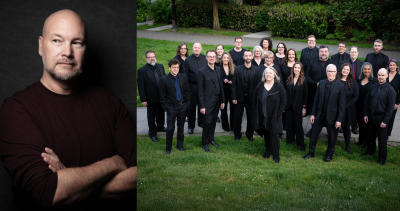
    And that’s exactly what they got: a run-through of the Mary Chain’s 1985 debut LP, Psychocandy. Well, they got more than that; they also got, as singer Jim Reid announced matter-of-factly at the start, “a short set of songs that weren’t on Psychocandy“. This included “Some Candy Talking”, which felt a bit like cheating, but that number wasn’t on the original issue of the album, so fair enough. The seven-song preamble hit most of the expected highlights, from “April Skies” to “Upside Down”, but the best bit of it was certainly “Reverence”, throughout which guitarist William Reid unleashed acid-etched, edge-of-chaos lead lines over an unstoppable swaggering shuffle laid down by the current rhythm section of Phil King (bass), Mark Crozier (guitar), and Brian Young (drums).

    Then, after a brief retreat, the band came back for the main part of the evening. Three decades later, with so many acts (including the Raveonettes and Wednesday night’s opener, the Black Ryder) owing so much to the basic formula of Psychocandy, it can be easy to forget why it sounded so revolutionary in 1985. To get some perspective on the world into which the Reids were unleashing their music, consider that the biggest hits in Britain the week Psychocandy came out included Feargal Sharkey’s “A Good Heart”, “I’m Your Man” by Wham!, and some execrable crap by UB40 and Level 42. The Jesus and Mary Chain was arguably not aiming for the charts, but their pop lineage is undeniable. Slathered in reverb and feedback they may be, but the melodies of “You Trip Me Up” and “Never Understand” are straight out of the Phillies Records songbook. The Psychocandy aesthetic was the Wall of Sound as built by the Velvet Underground and deconstructed by Einstürzende Neubauten. 

    As the 2015 edition of the group ran through the songs, in order, at the Vogue, we got a big tip-off to that effect right at the start, when Young tapped out the beat of “Just Like Honey”—a pattern arguably copped from Hal Blaine’s drumming on the Ronettes’ “Be My Baby”, or any of the countless songs it inspired. A member of the Black Ryder added a vocal harmony to that one, but after that the Chain didn’t need any help.

    It was loud and squealing and the songs were far more full and powerful than the (let’s not kid ourselves) thin and tinny recorded versions. William Reid is now doughy and bespectacled, but he brought the noise with conviction. His brother has never exactly been Mr. Show Biz, and his repertoire of moves was limited to occasionally lifting the microphone stand a few centimetres off the stage and then letting it drop. But his studious lack of stage presence is as much a part of his willfully constructed anti-charisma as his laconic but tuneful singing.

    And that’s all there was to it. No risk of the whole gig spiralling into a shambolic mess, just some grey-haired dudes playing some of the greatest fucking noise-pop ever written. And if you missed it, well, maybe they’ll do a Darklands tour in 2017. If we’re lucky.

  • Recently published: April 2026

    Hi! If you’re new here, this is a thing I do every month, where I provide a roundup of all (or at least most) of my writing that has been published in the preceding month. For most of April I have been working part time at Stir and writing for them quite a bit as well. I have a couple of other irons in the fire, but otherwise it was a bit of a light month on the non-Stir front. As always, I continue to actively pitch, and I would also be eternally grateful for any freelance work that just happens to fall into my lap, like so many pennies from heaven.

    Listening as Activism explores the power of sound, vision, and a decolonized conception of time

    (Stir, April 1, 2026)

    THE TITLE SEEMS paradoxical at first. As part of its On Curation Mentorship Project, Vancouver New Music is hosting an event called Listening as Activism. We tend to think of listening as a passive thing, as opposed to activism, which is, well, active.

    The event’s curator, Freya Zinovieff, doesn’t see things that way. “I would suggest that listening is actually an active thing,” she tells Stir. “I think that we hear passively, but if we really engage our listening, we can choose what we listen to and what we don’t listen to. A big context for this over the last few years for me has been the genocide in Palestine, and Canada’s active involvement in that, and the media’s obfuscation of the genocide, and obfuscation of our involvement. I think a lot about how we need to tune our listening to listen through propaganda, and actively engage with the world around us through our senses—one of those senses being the ears…”

    Read the rest.


    All-female Solidaridad Tango showcases the many sides of Argentina’s national art form

    (Stir, April 10, 2026)

    All-female combos aren’t uncommon across various spheres of music—think of the unapologetic badasses in L7, for example, or Vancouver’s own Allegra Chamber Orchestra—but in tango it is very much a rarity. In fact, Solidaridad Tango is the only one in North America.

    The group’s founder, Aparna Halpé, tells Stir that a COVID-imposed break in 2021 got her thinking of the behind-the-scenes misogyny that is unfortunately still prevalent in the music industry, where a woman may shine in the spotlight but face disrespect from male peers backstage.

    “In the pandemic, when we lost all our gigs and everything shut down, women started talking to each other and we started sharing our stories,” Halpé says over the phone from her home base of Toronto. “It’s the kind of stuff that sets your hair on fire. Someone said, ‘You know, Aparna, you’re really good at putting people together and organizing things, so why don’t you start a band?’ So I did…”

    Read the rest.


    Surrey Art Gallery probes Expo 86’s artistic legacy with In the Shadow of the Pavilions

    (Stir, April 15, 2026)

    Running between May 2 and October 13, 1986, Expo drew 22 million visitors and changed the face of the city in ways that are still visible. It brought us the SkyTrain and BC Place, for example, as well as Canada Place and Science World. 

    The world’s fair boosted the region’s profile in an unprecedented way, sparking a tourism boom that has never really slowed down, economic downturns and global pandemics notwithstanding. It also put an international spotlight on some important British Columbia artists.

    As with all such things, however, there were only so many golden tickets…

    Read the rest.


    Vancouver Cantata Singers concert is a sort of homecoming for Tyler Duncan

    (Stir, April 17, 2026)

    IT’S EASY TO dismiss the creative endeavours of one’s own youth. As anyone who has ever stumbled upon an especially earnest bit of prose scrawled in a Grade 9 notebook or a VHS recording of a rushed and clumsy piano recital can tell you, it can be somewhat mortifying to be reminded of those awkward learning stages.

    The great Russian writer Vladimir Nabokov, for example, didn’t take much pride in his early work. “The kind of poem I produced in those days was hardly anything more than a sign I made of being alive, of passing or having passed, or hoping to pass, through certain intense human emotions,” he wrote.

    Tyler Duncan is kinder to his younger self than many of us. “Sometimes I hear old recordings of myself and I think, ‘Oh, if only I knew the things that I know now,’” the baritone tells Stir in a telephone interview. “But also, I’m sometimes pleasantly surprised…

    Read the rest.


    At DOXA, təm kʷaθ nan Namesake confronts the painful legacy of colonialism

    (Stir, April 24, 2026)

    YOU KNOW HIS name, even if your knowledge of exactly who he was is a little hazy, or even non-existent. As they have with countless other prominent white men of his generation, the people in charge of deciding what to call places in British Columbia put Israel Wood Powell’s name on a few things.

    Think of Powell Street here in Vancouver and, a few hours’ drive northwest of here on the Sunshine Coast, Powell River (both the river itself and the city). Among the myriad reasons Powell is remembered today is the fact that he was the first chancellor of UBC, and the first president of the Medical Council of British Columbia. 

    More significantly, Powell was the province’s first superintendent of Indian Affairs, from 1872 to 1889. As history shows, during his tenure he pushed the provincial government to grant Indigenous peoples land and water rights, but his general view was that they needed to be “civilized” according to the white, Christian standards of the day…

    Read the rest.


    Silent classic The Passion of Joan of Arc gave Beautiful Violence a sonic challenge

    (Stir, April 27, 2026)

    Dreyer chose to focus on the trial and execution, and the director’s extraordinary depiction of these events, Dobbs says, meant that he and McGovern couldn’t approach their task in a formulaic fashion.

    “Usually, we think of the three-act structure,” he says. “You know the language of cinema—without trying to sound pretentious—and you can feel where something’s ramping up or when you need to hold back, and that’s how we would write to it.”

    The Passion of Joan of Arc utterly defied this approach. The first half hour of the film is a trial scene in which Dreyer shows us almost nothing of the courtroom itself, favouring tight close-up shots of the mocking expressions of the prosecutors and the judge, French Catholic bishop Pierre Cauchon (played with implacable cruelty by Eugène Silvain). Most remarkable of all is the title character’s portrayal by Renée Jeanne Falconetti, who could convey entire worlds of meaning with just an upward tilt of her pleading face…

    Read the rest.


    A Voynich Manifesto probes the unsolved mysteries of a medieval manuscript

    (Stir, April 29, 2026)

    AS FAR AS UNSOLVED mysteries go, they don’t get much more enigmatic than the Voynich Manuscript. It’s a book—a medieval codex, to be precise—but it’s written in a language that has defied interpretation by even the world’s most accomplished codebreakers. Its abundantly illustrated pages are made of calfskin vellum that has been carbon-dated to the early 1400s, but the earliest known mention of the manuscript dates from more than 200 years after that.


    Modern fascination with the inscrutable codex began when Polish book dealer Wilfrid Voynich purchased it in Italy in 1912 and presented it in public three years later. In spite of the best efforts of cryptographers and medievalists since then, the book’s provenance and its meaning remain unknown.

    “This manuscript would most likely fall under the category of herbarium—so, something that describes plants, even though the plants that are described in the manuscript don’t actually exist on this planet,” musician and multimedia artist Terri Hron says when Stir meets up with her for an interview at a Strathcona café…

    Read the rest.