• Recently published: May 2026

    Hi! If you’re new here, this is a thing I do every month, where I provide a roundup of all (or at least most) of my writing that has been published in the preceding month. For the past couple of months I have been working part time at Stir and writing for them quite a bit as well. So, most of what follows was written for Stir, with one notable exception.

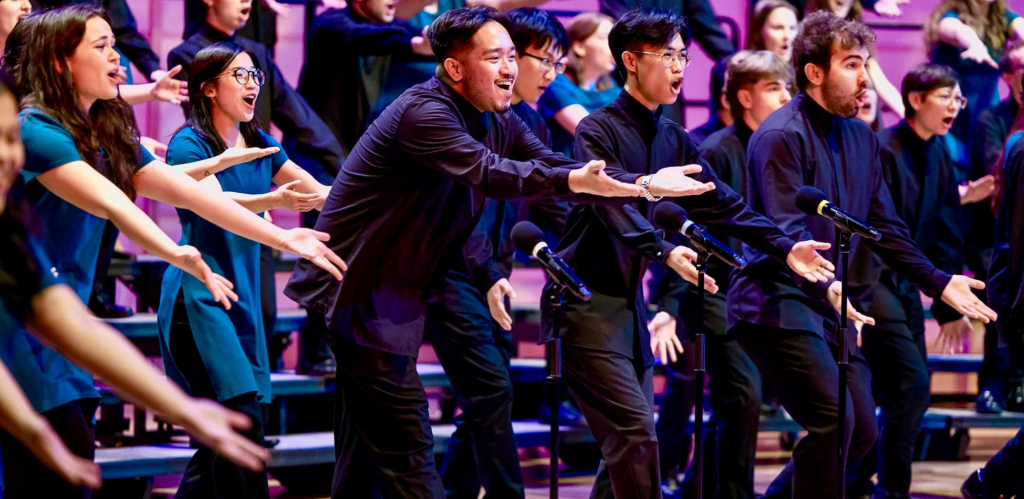
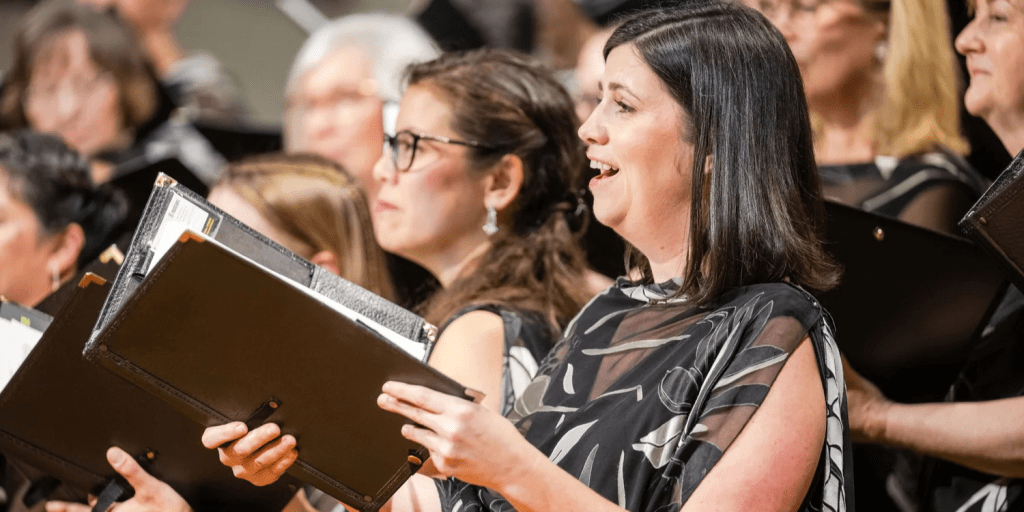
    Canada and the U.S. seek choral harmony at Tapestry International Festival

    (Stir, May 1, 2026)

    A CERTAIN PRESIDENT south of the 49th parallel has dialled back his rhetoric about turning Canada into the 51st state, but the months he spent ratcheting up the tension between our two nations has had a lasting effect.

    Good luck finding a Tennessee bourbon on the shelf at your neighbourhood liquor store, for example. And good luck, for that matter, finding any Canadian who feels inclined to take their next vacation anywhere in the United States.

    Some things know no international boundaries, however, and music is one of them. In that spirit, long-running local choir Elektra is once again hosting its signature event, the border-crossing Tapestry International Festival, which gathers together adult treble choirs—those focused on the soprano and alto ranges—from different countries...

    Read the rest.


    Vancouver pianist Wenwen Du sings the praises of rock-star tenor Ian Bostridge

    (Stir, May 5, 2026)

    IF THE WORLD of art song can be said to have “rock stars”, Ian Bostridge has certainly earned that status. The 61-year-old English tenor has toured the globe, performed with the world’s great orchestras, and picked up three Grammy Awards for his recordings. Along the way he was appointed a Commander of the Order of the British Empire for his services to music, which puts him in the company of Robert Plant, Roger Daltrey, and Rod Stewart.

    Like many a rock star, Bostridge has indulged an interest in decidedly dark and esoteric topics. Before he became a professional singer at the notably late age of 27, he had an entirely different career as an academic. In fact, Bostridge (who earned a PhD in philosophy from Oxford University) even wrote a lauded and influential book called Witchcraft and Its Transformations, c. 1650–1750. See what I mean? Total rock star.

    In the admittedly rarefied art-song world, having Bostridge hand-pick you to accompany him is a bit like getting an offer to go on tour with Coldplay. That was the position Vancouver pianist Wenwen Du found herself in a few years ago…

    Read the rest.


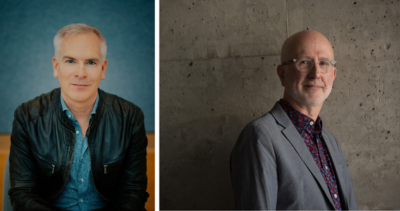
    Mother/Land composer and librettist found contemporary relevance in ancient tale

    (Stir, May 6, 2026)

    SOMETIMES, THE OLDEST stories carry the greatest weight. They have the power to remind us that, in spite of our modernity, we’re really not so different from our forebears.

    The Book of Ruth, for example, was written by an unknown author during the time of the Persian Empire (550 to 330 BCE). In the story, which is included as a historical text in both the Hebrew and Christian bibles, a Moabite woman named Ruth and her Israelite mother-in-law, Naomi, return to Bethlehem after they are both widowed. While supporting the two of them by gathering leftover grain, Ruth meets Boaz. A relative of Naomi’s late husband, Boaz marries Ruth despite her outsider status amid ongoing tensions between Israel and Moab.

    If that strikes you as a story with operatic potential, you’re not alone. A number of composers have based pieces on the Book of Ruth. Its powerful contemporary relevance continues to inspire new works, and it’s what drew Vancouver composer Jeffrey Ryan and librettist Michael Lewis MacLennan to the story. The pair have, in fact, been working on adapting the Book of Ruth for several years, but it was thanks to a commission from the Vancouver Bach Family of Choirs that they were able to complete their opera-oratorio Mother/Land, which premieres at the Vancouver Playhouse on May 16…

    Read the rest.


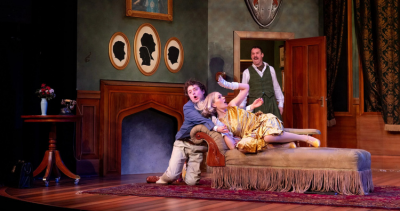
    Belgian academics tackle serious topics with comedy in La Convivialité and Kevin

    (Stir, May 12, 2026)

    THEY’RE KNOWN AS the Immortals, and you’ll know them by their long black coats and bicorne hats, to say nothing of their swords. For nearly four centuries, they have been endowed with powers that no ordinary person may possess, and while they might sound like something out of an episode of Doctor Who, the Immortals are very real. In spite of the name, the flashy costumes, and the weaponry, they’re actually the members of the Académie française, a body that Cardinal Richelieu created in 1635 and tasked with being the last word (pun intended) on all matters related to the French language.

    Beyond being the gatekeepers of the one true dictionary of the language—or at least the only one formally recognized by the body that, conveniently, also publishes it—the Académie française doesn’t play as big a role in the French-speaking world as it once did. As Arnaud Hoedt tells Stir in a Zoom interview, “In truth, they don’t have a lot of influence on language policy because there is no real language policy. You know, language is a free thing that people share, and it’s very difficult to make decisions about French language politics. But symbolically they still have a lot of things to say, and people watch them as a symbolic reference, but they are totally unable to have any really smart or scientific point of view about language, because they are writers—and sometimes not even writers—but they are not linguists.”

    Hoedt, on the other hand, is a linguist…

    Read the rest.


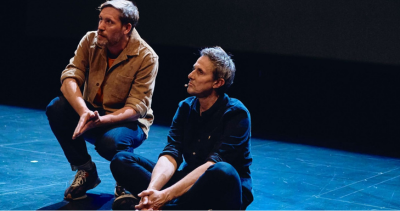
    Me & the Forest poses big questions at Vancouver International Children’s Festival

    (Stir, May 14, 2026)

    THE GREAT AUSTRIAN philosopher Ludwig Wittgenstein once wrote that “if a lion could speak, we could not understand him.” In Wittgenstein’s view, the lived experience of a lion is so far removed from the human world that even if it tried to express it to us, that experience would remain beyond our ability to grasp it.

    Mind you, Wittgenstein died in 1951, long before the advent of artificial intelligence, or what passes for it in 2026. No, we’re not debating global politics with lions just yet, but—as Boca del Lupo cofounder Jay Dodge learned from a newspaper report—various researchers are engaged in using acoustic analysis and machine learning in an attempt to interpret whalesong.

    “In this article they were saying that we were between six months and 24 months away from having conversations with whales,” Dodge says in a telephone interview with Stir. “And that just blew my mind. I started to imagine—if that is in fact the case and whales are half as intelligent as we think they probably are—if we can talk to them, what does that mean? Do they start intersecting with our laws? Do they start voting in our elections?”

    Dodge found himself pondering these questions at a fortuitous time…

    Read the rest.


    Vancouver Alt-Rock Band Meltt Loves the Album⁠—Even in the Age of Streaming

    (MONTECRISTO, May 15, 2026)

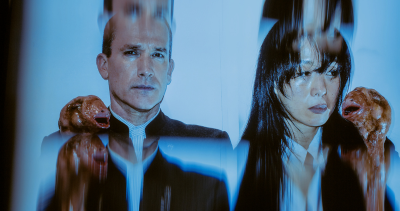
    On this warm afternoon in late April, Meltt is about six weeks away from the release of its third album, Pathways, out June 12 via Nettwerk Music Group. Gathered around a makeshift coffee table (it’s actually an old wooden cable spool “upcycled” with the addition of a plastic fern), singer-guitarist Chris Smith, guitarist James Porter, drummer Jamie Turner, and bassist-keyboardist Ian Winkler are all dressed down in T-shirts and jeans, as befits a group of guys who have just unloaded a full band’s worth of gear from their van. They acknowledge that their approach to releasing music is definitely not how the lads from Liverpool did it.

    For the most part, The Beatles put out standalone singles—classic cuts such as “I Want to Hold Your Hand,” “Day Tripper,” “Penny Lane,” and “All You Need Is Love” didn’t appear on albums. This meant that when an LP did drop, the music-hungry public hadn’t heard any of it yet.

    Meltt has taken a different tack altogether… 

    Read the rest.


    Lukas Malkowski’s Microphone Controller is a rock ’n’ roll show with a difference

    (Stir, May 29, 2026)

    ANYONE WHO HAS ever felt the pyrotechnic heat at a Rammstein show, experienced the bowel-rumbling bass vibrations of a Skrillex set, or been dazzled by one of Coldplay’s arena-sized confetti drops could tell you that the most memorable concerts are about more than just the music. 

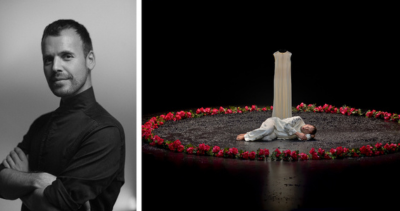
    That multisensory reality is one of the driving forces behind Microphone Controller, a 55-minute solo piece by choreographer and performer Lukas Malkowski. “The concept is that it’s a rock ’n’ roll concert that’s supposed to rock all your senses,” Malkowski tells Stir over the phone from Toronto. “Music is not just experienced through your ears. It’s experienced through your eyes, through your skin, through vibrations, lights, and movement.”

    Although Malkowski can hear, he spends a lot of time considering how the Deaf experience various types of performances…

    Read the rest.


  • From the Archives: Spiritualized (2012)

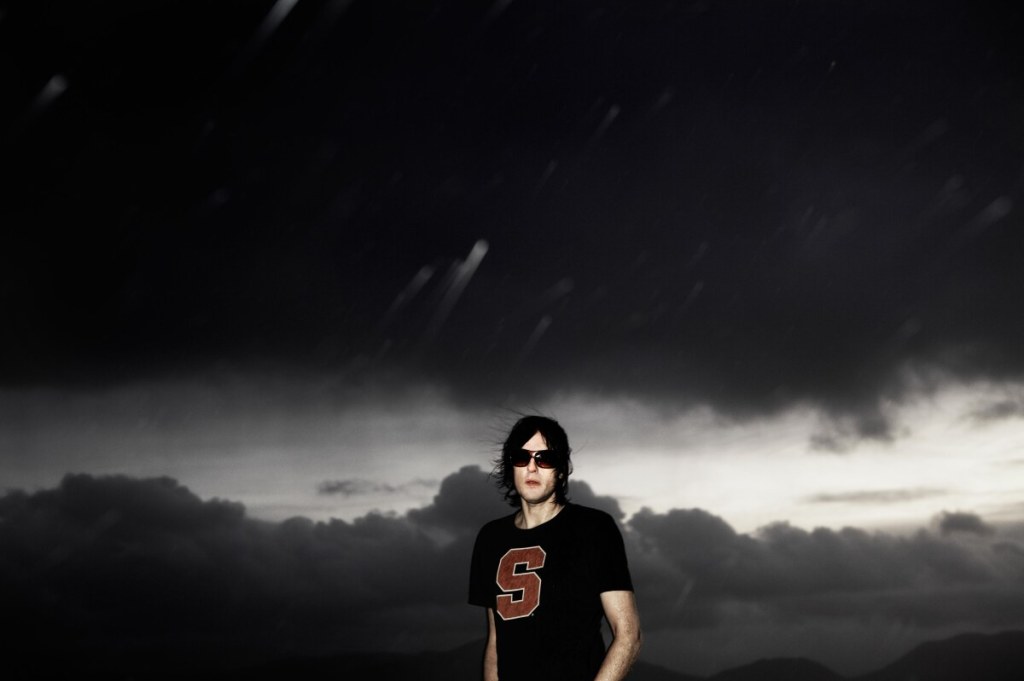
    On this day in 2012, Spiritualized played at the Rickshaw Theatre in Vancouver. I interviewed the band’s frontman, Jason Pierce, a few times back in my Georgia Straight days, and I always found him to be quite a chatty and gregarious fellow. Which, admittedly, is not the impression one would get from his music or press photos.

    Spiritualized prefers the long way home

    Sweet Heart Sweet Light started out as a pop album, but ended up as something else entirely

    (This article originally appeared in the Georgia Straight)

    No one has ever accused Jason Pierce of taking shortcuts. The Spiritualized mastermind has been known to take as long as a year to mix an album, even though he admits he doesn’t especially enjoy the painstaking process. He’d rather be on-stage than in the studio. Being detail-oriented usually pays off for Pierce, though, and there may be no better example of this than “Hey Jane”.

    The song starts as a jangly pop number that builds to a psychedelic rave-up before crashing into a wall of dissonance and petering out. Then things pick up again, cruising along to a krautrock beat topped by heaven-sent gospel harmonies. The structure of “Hey Jane” seems to mirror the life of its title character, a journey from desperation and squalor to ultimate redemption. The song takes almost nine minutes to play out. It’s nearly matched by a couple of other tracks (“Headin’ for the Top Now” and “So Long You Pretty Thing”) on the new Spiritualized album Sweet Heart Sweet Light. But “Hey Jane” ultimately takes longest-song honours, so, naturally, Pierce picked it to be the first single, at its full length.

    “It wouldn’t work in any other way,” the 46-year-old Englishman says, reached at a tour stop in Austin, Texas. “I mean, people play it on the radio—the first three minutes. I think it’s kind of ludicrous. It doesn’t really make sense like that. That’s what’s weird about music. Everything’s relative. The end of ‘So Long You Pretty Thing’, where that lyric comes out—‘So long you pretty thing/Save your little soul’—they tried to edit that down into a single, so it’s just round the end section. And it’s not that ecstatic; it’s not that great a sound. But it is, comparative to the intro and the way the middle section pans out. It’s a little bit like that with ‘Hey Jane’. No part of it is great, in a kind of pop way, but it makes sense in its entirety. So there’s no way of releasing it any other way.”

    That Pierce thinks of his work in pop terms at all is somewhat surprising, given that the oeuvre of Spiritualized ranges from drone-rock bliss-fests (“Electric Mainline”) to 17-minute avant-jazz freakouts (“Cop Shoot Cop”) to lush, symphonic ballads (“Stop Your Crying”). He says, however, that his initial impulse with Sweet Heart Sweet Light—Spiritualized’s seventh studio album and its first since 2008’s Songs in A&E—was to make it a pop record in the vein of the Beatles. When it dawned on him that he wasn’t really all that interested in the Fab Four, his reference points shifted to more esoteric fare, such as albums by Charlie Feathers and Neu!, Captain Beefheart’s Clear Spot, and Kill City by Iggy Pop and James Williamson. Those were his touchstones, at any rate, but it’s not as if he brought a stack of LPs into the studio with him.

    “I didn’t listen to them once when I was making this record,” Pierce says. “I wasn’t after copying the sounds or the sonic of those records. It’s just the idea of those records: that they weren’t records that reached for the stars, or that they weren’t written about like pinnacles of rock ’n’ roll history, but they were beautiful collections of songs by people that had soaked up a bit of musical wisdom. They didn’t have that kind of arrogance of youth, where the width of your music is actually very slim.”

    Mind you, Sweet Heart Sweet Light does contain some of the most immature songwriting to be found on any Spiritualized effort. That’s not meant as a slight, either; the writing in question came courtesy not of Pierce himself, but of his daughter, Poppy. Nine years old at the time the album was recorded, Poppy contributed lyrics to the intro of “So Long You Pretty Thing”, and she sings the following lines with her father: “If you feel lonely/And the world’s against you/Take the long way home/Past the scary Jesus/And you’ll find my door/With your name in diamonds/And you’ll feel lonely/No more.”

    The verse doesn’t make a whole lot of sense, but its naiveté is charming, which somehow makes it perfect. That’s a quality that Pierce, who says his best work often emerges from failed attempts at doing something else entirely, relishes.

    “It’s like when I write orchestrations,” he says. “I don’t think I’m great at writing orchestrations, but I write orchestrations that kind of horrify the string players that come in to do it, like it’s so wrong. It’s like art, isn’t it? You have to unlearn to be able to find the line that works. You could learn things like a talent, but you have to be able to unlearn how to do it to find something that isn’t just a product of that learning.”

    In other words, there’s no shortcut.

  • From the Archives: The Jesus and Mary Chain (concert review, 2015)

    On May 13, 2015, the Jesus and Mary Chain brought the Psychocandy 30th anniversary tour to Vancouver. The Georgia Straight sent lucky ol’ me to review it. In retrospect, I had a lot of nerve calling William Reid “doughy and bespectacled”, given that this is now a very accurate description of myself. I would put it down to the hubris of youth, but I was 42 at the time.

    The Jesus and Mary Chain makes Psychocandy sound loud and powerful at Vancouver’s Vogue Theatre

    At the Vogue Theatre on Wednesday, May 13

    (This review ws originally published by the Georgia Straight.)

    According to contemporary reviews, a Jesus and Mary Chain show during the Scottish band’s ascendance was more of a spectacle than a performance. Brothers Jim and William Reid, backed in those days by bassist Douglas Hart and drummer Bobby Gillespie, would shamble through a set, sometimes striking upon moments of sheer brilliance and sometimes falling apart utterly. Amplifiers would be overturned, feedback would squall, and some not-predetermined number of minutes later—maybe 35, maybe 20, maybe 15—it would be over, leaving the audience to stage a halfhearted, ritualistic semblance of a riot.

    It was all very thrilling, if slightly dangerous. At $49.50 a ticket, there was little chance that last night’s sold-out Jesus and Mary Chain concert at the Vogue Theatre was going to be an event fraught with risk for either performer or audience. This crowd, which leaned heavily toward those old enough to be first-generation JAMC fans, had paid their money to watch a group of middle-aged men play all the songs from an album released 30 years ago.
    And that’s exactly what they got: a run-through of the Mary Chain’s 1985 debut LP, Psychocandy. Well, they got more than that; they also got, as singer Jim Reid announced matter-of-factly at the start, “a short set of songs that weren’t on Psychocandy“. This included “Some Candy Talking”, which felt a bit like cheating, but that number wasn’t on the original issue of the album, so fair enough. The seven-song preamble hit most of the expected highlights, from “April Skies” to “Upside Down”, but the best bit of it was certainly “Reverence”, throughout which guitarist William Reid unleashed acid-etched, edge-of-chaos lead lines over an unstoppable swaggering shuffle laid down by the current rhythm section of Phil King (bass), Mark Crozier (guitar), and Brian Young (drums).

    Then, after a brief retreat, the band came back for the main part of the evening. Three decades later, with so many acts (including the Raveonettes and Wednesday night’s opener, the Black Ryder) owing so much to the basic formula of Psychocandy, it can be easy to forget why it sounded so revolutionary in 1985. To get some perspective on the world into which the Reids were unleashing their music, consider that the biggest hits in Britain the week Psychocandy came out included Feargal Sharkey’s “A Good Heart”, “I’m Your Man” by Wham!, and some execrable crap by UB40 and Level 42. The Jesus and Mary Chain was arguably not aiming for the charts, but their pop lineage is undeniable. Slathered in reverb and feedback they may be, but the melodies of “You Trip Me Up” and “Never Understand” are straight out of the Phillies Records songbook. The Psychocandy aesthetic was the Wall of Sound as built by the Velvet Underground and deconstructed by Einstürzende Neubauten. 

    As the 2015 edition of the group ran through the songs, in order, at the Vogue, we got a big tip-off to that effect right at the start, when Young tapped out the beat of “Just Like Honey”—a pattern arguably copped from Hal Blaine’s drumming on the Ronettes’ “Be My Baby”, or any of the countless songs it inspired. A member of the Black Ryder added a vocal harmony to that one, but after that the Chain didn’t need any help.

    It was loud and squealing and the songs were far more full and powerful than the (let’s not kid ourselves) thin and tinny recorded versions. William Reid is now doughy and bespectacled, but he brought the noise with conviction. His brother has never exactly been Mr. Show Biz, and his repertoire of moves was limited to occasionally lifting the microphone stand a few centimetres off the stage and then letting it drop. But his studious lack of stage presence is as much a part of his willfully constructed anti-charisma as his laconic but tuneful singing.

    And that’s all there was to it. No risk of the whole gig spiralling into a shambolic mess, just some grey-haired dudes playing some of the greatest fucking noise-pop ever written. And if you missed it, well, maybe they’ll do a Darklands tour in 2017. If we’re lucky.

  • Recently published: April 2026

    Hi! If you’re new here, this is a thing I do every month, where I provide a roundup of all (or at least most) of my writing that has been published in the preceding month. For most of April I have been working part time at Stir and writing for them quite a bit as well. I have a couple of other irons in the fire, but otherwise it was a bit of a light month on the non-Stir front. As always, I continue to actively pitch, and I would also be eternally grateful for any freelance work that just happens to fall into my lap, like so many pennies from heaven.

    Listening as Activism explores the power of sound, vision, and a decolonized conception of time

    (Stir, April 1, 2026)

    THE TITLE SEEMS paradoxical at first. As part of its On Curation Mentorship Project, Vancouver New Music is hosting an event called Listening as Activism. We tend to think of listening as a passive thing, as opposed to activism, which is, well, active.

    The event’s curator, Freya Zinovieff, doesn’t see things that way. “I would suggest that listening is actually an active thing,” she tells Stir. “I think that we hear passively, but if we really engage our listening, we can choose what we listen to and what we don’t listen to. A big context for this over the last few years for me has been the genocide in Palestine, and Canada’s active involvement in that, and the media’s obfuscation of the genocide, and obfuscation of our involvement. I think a lot about how we need to tune our listening to listen through propaganda, and actively engage with the world around us through our senses—one of those senses being the ears…”

    Read the rest.


    All-female Solidaridad Tango showcases the many sides of Argentina’s national art form

    (Stir, April 10, 2026)

    All-female combos aren’t uncommon across various spheres of music—think of the unapologetic badasses in L7, for example, or Vancouver’s own Allegra Chamber Orchestra—but in tango it is very much a rarity. In fact, Solidaridad Tango is the only one in North America.

    The group’s founder, Aparna Halpé, tells Stir that a COVID-imposed break in 2021 got her thinking of the behind-the-scenes misogyny that is unfortunately still prevalent in the music industry, where a woman may shine in the spotlight but face disrespect from male peers backstage.

    “In the pandemic, when we lost all our gigs and everything shut down, women started talking to each other and we started sharing our stories,” Halpé says over the phone from her home base of Toronto. “It’s the kind of stuff that sets your hair on fire. Someone said, ‘You know, Aparna, you’re really good at putting people together and organizing things, so why don’t you start a band?’ So I did…”

    Read the rest.


    Surrey Art Gallery probes Expo 86’s artistic legacy with In the Shadow of the Pavilions

    (Stir, April 15, 2026)

    Running between May 2 and October 13, 1986, Expo drew 22 million visitors and changed the face of the city in ways that are still visible. It brought us the SkyTrain and BC Place, for example, as well as Canada Place and Science World. 

    The world’s fair boosted the region’s profile in an unprecedented way, sparking a tourism boom that has never really slowed down, economic downturns and global pandemics notwithstanding. It also put an international spotlight on some important British Columbia artists.

    As with all such things, however, there were only so many golden tickets…

    Read the rest.


    Vancouver Cantata Singers concert is a sort of homecoming for Tyler Duncan

    (Stir, April 17, 2026)

    IT’S EASY TO dismiss the creative endeavours of one’s own youth. As anyone who has ever stumbled upon an especially earnest bit of prose scrawled in a Grade 9 notebook or a VHS recording of a rushed and clumsy piano recital can tell you, it can be somewhat mortifying to be reminded of those awkward learning stages.

    The great Russian writer Vladimir Nabokov, for example, didn’t take much pride in his early work. “The kind of poem I produced in those days was hardly anything more than a sign I made of being alive, of passing or having passed, or hoping to pass, through certain intense human emotions,” he wrote.

    Tyler Duncan is kinder to his younger self than many of us. “Sometimes I hear old recordings of myself and I think, ‘Oh, if only I knew the things that I know now,’” the baritone tells Stir in a telephone interview. “But also, I’m sometimes pleasantly surprised…

    Read the rest.


    At DOXA, təm kʷaθ nan Namesake confronts the painful legacy of colonialism

    (Stir, April 24, 2026)

    YOU KNOW HIS name, even if your knowledge of exactly who he was is a little hazy, or even non-existent. As they have with countless other prominent white men of his generation, the people in charge of deciding what to call places in British Columbia put Israel Wood Powell’s name on a few things.

    Think of Powell Street here in Vancouver and, a few hours’ drive northwest of here on the Sunshine Coast, Powell River (both the river itself and the city). Among the myriad reasons Powell is remembered today is the fact that he was the first chancellor of UBC, and the first president of the Medical Council of British Columbia. 

    More significantly, Powell was the province’s first superintendent of Indian Affairs, from 1872 to 1889. As history shows, during his tenure he pushed the provincial government to grant Indigenous peoples land and water rights, but his general view was that they needed to be “civilized” according to the white, Christian standards of the day…

    Read the rest.


    Silent classic The Passion of Joan of Arc gave Beautiful Violence a sonic challenge

    (Stir, April 27, 2026)

    Dreyer chose to focus on the trial and execution, and the director’s extraordinary depiction of these events, Dobbs says, meant that he and McGovern couldn’t approach their task in a formulaic fashion.

    “Usually, we think of the three-act structure,” he says. “You know the language of cinema—without trying to sound pretentious—and you can feel where something’s ramping up or when you need to hold back, and that’s how we would write to it.”

    The Passion of Joan of Arc utterly defied this approach. The first half hour of the film is a trial scene in which Dreyer shows us almost nothing of the courtroom itself, favouring tight close-up shots of the mocking expressions of the prosecutors and the judge, French Catholic bishop Pierre Cauchon (played with implacable cruelty by Eugène Silvain). Most remarkable of all is the title character’s portrayal by Renée Jeanne Falconetti, who could convey entire worlds of meaning with just an upward tilt of her pleading face…

    Read the rest.


    A Voynich Manifesto probes the unsolved mysteries of a medieval manuscript

    (Stir, April 29, 2026)

    AS FAR AS UNSOLVED mysteries go, they don’t get much more enigmatic than the Voynich Manuscript. It’s a book—a medieval codex, to be precise—but it’s written in a language that has defied interpretation by even the world’s most accomplished codebreakers. Its abundantly illustrated pages are made of calfskin vellum that has been carbon-dated to the early 1400s, but the earliest known mention of the manuscript dates from more than 200 years after that.


    Modern fascination with the inscrutable codex began when Polish book dealer Wilfrid Voynich purchased it in Italy in 1912 and presented it in public three years later. In spite of the best efforts of cryptographers and medievalists since then, the book’s provenance and its meaning remain unknown.

    “This manuscript would most likely fall under the category of herbarium—so, something that describes plants, even though the plants that are described in the manuscript don’t actually exist on this planet,” musician and multimedia artist Terri Hron says when Stir meets up with her for an interview at a Strathcona café…

    Read the rest.


  • From the Archive: Crooked Fingers (2005)

    Twenty-one years ago to this day, Crooked Fingers played a show at the long-gone and sorely missed Richard’s on Richards in Vancouver. A few days before that, I had the opportunity to interview Eric Bachmann about his project’s latest album, Dignity and Shame.

    Crooked Fingers singer wants to move somebody

    (This article originally appeared in the Georgia Straight.)

    Depending on whose opinion you choose to heed, the latest Crooked Fingers record, Dignity and Shame, is either veteran tunesmith Eric Bachmann’s masterpiece or a serious misstep. Reviews in SPIN and Billboard have pegged the disc as the finest entry to date in the band’s catalogue, but Pitchfork’s Marc Hogan was less charitable. Comparing the album’s relatively lighter selections with past triumphs such as “New Drink for the Old Drunk” and “Angelina”, Hogan opined that “At a bar, those tracks would be ordering whiskey shot-for-shot with W.C. Fields while most of Dignity and Shame was in the bathroom spewing its second sangria.”

    Bachmann isn’t particularly interested in what Hogan and his ilk have to say. You won’t catch the former Archers of Loaf frontman visiting Pitchfork, or any other music sites, in search of his own name. “It doesn’t seem beneficial to go places on-line that are discussing your reputation,” the Seattle-based musician says, reached at a tour stop in Philadelphia. “It just doesn’t do me any good. It makes me feel self- conscious and weird. I always feel like it’s not my business what anybody thinks of me. I just feel like if I read that stuff it gives me a bad energy or makes me overly self-aware. I have more fun when I don’t know that stuff’s going on.”

    The album that’s dividing the critics is Crooked Fingers’ fourth, and it is certainly the most diverse effort yet from Bachmann and his rotating cast of coconspirators. Dignity and Shame opens with “Islero”, a flamenco-flavoured instrumental, and returns to Spain for the matador anthem “Andalucia”. Throughout the disc, Bachmann introduces a parade of memorable characters—the usual assortment of jaded girls, drunken wastrels, and heartbroken lovers—and works in a number of musical styles, from weepy country (“Sleep All Summer”) to piano balladry (“Dignity and Shame”). Most surprising are those numbers that boast a hitherto unexplored accessibility, especially the radio-ready “Twilight Creeps” and “Call to Love”, on which Bachmann’s creaky voice is joined by that of the dulcet-toned Lara Meyerratken.

    Bachmann won’t go so far as to admit that he’s making a bid for mainstream acceptance. “Nothing I do musically is on purpose,” he insists, but he does acknowledge that he has given more thought lately to communicating with people. Before, he claims, he took the same attitude toward potential listeners that he takes to music critics: he didn’t spend much time pondering how they might respond to his work. “Now I almost feel that it should be some sort of service,” he says. “Not in an arrogant way or a self-important way, but just like, ‘Well, gee, if I write this song and somebody gets something out of it, that’s pretty great,’ you know? I would love to move somebody in the way that Roberta Flack’s First Take moved me or a Townes Van Zandt song moves me or a Leonard Cohen song moves me. I’d love to do that. I’m not saying I can or I have done that, but I sure do want to try. That to me is the most rewarding thing.”

  • From the Archives: The Presets (2009)

    On this day in 2009, the Georgia Straight published my interview with Kim Moyes of the Australian electronica duo the Presets. Moyes had a few choice words for the Smashing Pumpkins’ Billy Corgan, who he desribed as “a sour Sally”, among other choice epithets.

    The Presets are burning up Down Under

    (This article was originally published in the Georgia Straight.)

    For the benefit of those who stopped paying attention to Billy Corgan a decade ago, the shiny-headed singer-guitarist is actively looking for someone to fill the recently vacated drum stool of the glorified solo act he still pigheadedly insists on calling the Smashing Pumpkins. That news probably has a lot of stickmen salivating, but Kim Moyes isn’t among them. The drummer and keyboardist for Australian electronica duo the Presets says that after an incident that occurred last March, he has little use for Corgan, whom he describes as “a miserable prick”.

    At the V Festival on Australia’s Gold Coast, the Smashing Pumpkins and the Presets performed simultaneously on separate stages. Corgan moaned that the Sydney-based pair’s thunderous dance beats were distracting (“I can barely hear myself think with that kick drum in my head,” he can be heard complaining on a YouTube video), but Moyes figures the once-mighty Pumpkin king had other reasons to be peeved.

    “He was just pissed off because we had bigger crowds than him, and they were having more fun than his crowd,” Moyes says, reached during a sound check at Washington, D.C.’s 9:30 Club. “And also, I guess he’s just sad generally, and a miserable cunt. So, it’s not a feud. He kind of got the shits because we were playing and it was going really well, and he wanted to play an acoustic number. And it happened to be at the peak of our set. He’s the one who started throwing shit on us, telling his crowd to go and bash our crowd and stuff, and then went and complained to the promoter of the festival. I couldn’t give a fuck about him. I used to like the Smashing Pumpkins, you know? I mean, I don’t know him personally or anything like that, and I certainly have never spoken to him, but he just sounds like a sour Sally to me.”

    Well, if there’s one thing a Presets show could do without, it’s a wet blanket like old Uncle Fester. With storm-the-nightclub singles such as the throbbing fuzz-disco stomper “Are You the One?” and the droid-factory funk number “Yippiyo-Ay”, Moyes and singer-keyboardist Julian Hamilton have established themselves as the go-to guys for guilty-pleasure dance tracks. The duo is still building a buzz on these shores, but has taken its sassy blend of rock, techno, and industrial-lite to the top of the charts Down Under. The Presets took home plenty of hardware from the 2008 Australian Recording Industry Association Music Awards, including album-of-the-year honours for Apocalypso, the band’s most recent release. The pair was also named best group, and its song “My People”—which sounds a little like the Rapture being tasered by Trent Reznor—won single of the year.

    Bona fide stars in Sydney, the Presets pack stadiums on their home turf but have yet to graduate from the club circuit in North America. Moyes insists it’s all the same to him, noting that the dimensions of the venue and the scale of the audience have no bearing on how he and Hamilton play.

    “We still try to bring a pretty full, high-octane energy to the performance, no matter what the size, I think,” Moyes says. “We want to give everybody the same experience at any show, so we just do our one dumb thing.”

    In order to perform live as a two-piece, Moyes and Hamilton rely heavily on recorded material, which is a modus operandi that the drummer admits leaves little room for spontaneity. “We have a backing track that we play along with that’s got, like, bass and some synths on it and stuff, and then I’ll play drums live and Julian sings and plays other keyboards live, and there’s a little bit of samples in there,” Moyes says. “We build a live set with the tunes, and we sort of blend the tunes in with each other, almost like a DJ set. It takes about a month to build the backing for every live set, and rehearsing and whatever. When we take it on the road there’s not really any variation. We can only drop songs, we can’t really change the order of the songs or anything like that.”

    In other words, the Presets won’t be taking requests at their sold-out Commodore show on Monday, so all you smart-asses can keep your pleas for “Cherub Rock” or “Bullet With Butterfly Wings” to yourselves.


    IN + OUT

    Kim Moyes sounds off on the things enquiring minds want to know.

    On the upside of playing scaled-down venues: “When you play in a smaller club or whatever, sometimes you can have the crowd really close to you, and even over you, and it can be so fun because the energy is, like, inches away and you really feel quite interactive with it.”

    On the Presets’ level of fame in Australia: “If people see us at a bar or something, they can get quite annoying and yell at us and go, ‘Oh my God, you don’t understand how much it means to me.’ I don’t know. We’re popular. I don’t know how to say it without sounding like a wanker.”

    On whether or not he would try out for the Smashing Pumpkins: “Oh, yeah, for sure. I really get along with Billy Corgan, so I think that would be a perfect match.”

  • From the Archives: Esben and the Witch (2011 & 2013)

    On this day in 2013, the underrated British alt-rock trio Esben and the Witch played at the long-gone and much-missed Media Club in Vancouver. A couple of years before that, the gothic-leaning band also played Vancouver in March (at the Waldorf on the 26th), so I thought it made sense to revisit both of my interviews with the group’s drummer (and former guitarist), Daniel Copeman.

    Esben and the Witch has no interest in labelling its sound (2011)

    (This article was first published by the Georgia Straight.)

    In the Danish fairy tale “Esben and the Witch”, the youngest and smallest of a farmer’s 12 sons saves his brothers from losing their heads to an evil, bearded old hag by tricking the witch into beheading her own daughters instead. And that’s at the beginning of the story!

    English musician Daniel Copeman plays in a band named after the grim tale. Reached at a tour stop in Toronto, the guitarist says, “It’s your classic sort of underdog fairy tale, but with a few sort of malevolent twists, where people get their heads chopped off and people get burned in ovens and stuff like that. It’s quite macabre, but we’re drawn to the imagery and everything of it.”

    Indeed, the music of Esben and the Witch, as heard on the Brighton-based trio’s debut LP, Violet Cries, is dark and foreboding, shot through with a threat of imminent sonic violence that never quite materializes, lending the whole affair an air of unresolved tension. The focal point is singer Rachel Davies’s plaintive voice, saturated in reverb and surrounded by alternately crashing and ebbing waves of delay- and chorus-treated guitar and electronics, courtesy of Copeman and multi-instrumentalist Thomas Fisher.

    You could call it gothic rock (as many already have), but not if you’re hoping to get on Copeman’s good side. He’s heard all the Siouxsie and the Banshees comparisons he wants to hear, thank you. “It feels very glib for someone to say to a band, ‘You haven’t made something new; you’ve just made something that sounds like it was made 20 years ago,’ every time the band does something,” he says. “From a journalistic point of view, it seems strange that journalists wouldn’t want to describe what they’re hearing in a new way.”

    In fact, Copeman has no interest in labelling what Esben and the Witch does at all. “People seem to have to put a genre on something, otherwise they don’t feel like other people will be able to understand what they’re talking about,” he says. “I’d like to give people more credit than that.”

    Copeman and his bandmates probably don’t have much time to ponder what their music should be called in any case. Things have moved pretty quickly for Esben and the Witch since it put out a self-released EP called 33 in late 2009. The trio’s audience expanded immeasurably when Pitchfork posted one of its tracks, the incendiary “Marching Song”, the following January. Tours with the likes of the Big Pink, School of Seven Bells, and Deerhunter followed, as did the inking of a deal with Matador Records.

    All very awesome, and Copeman insists he isn’t taking any of it for granted. “It never gets any less exciting,” he says. “Touring North America as a headline band is something that none of us ever expected to have the opportunity to do, and it feels bizarre but wonderful at the same time. Being able to come to Vancouver and play a gig—I didn’t think I’d ever get to go to Vancouver, let alone go do something that I loved.”


    Esben and the Witch takes a more organic approach (2013)

    (This article was first published by the Georgia Straight.)

    If you were one of the few who caught Esben and the Witch at its first Vancouver show two years ago, consider yourself lucky, because it was an experience that will never be re-created. This is true in part because it took place at the Waldorf (R.I.P.), but also because the English band has reconfigured itself since then, as Daniel Copeman explains. Reached on the road somewhere between Montreal and Toronto, Copeman says that, although Thomas Fisher remains on guitar, he and singer Rachel Davies have switched up their duties for the tour in support of the new Esben and the Witch LP, Wash the Sins Not Only the Face.

    “I’m kind of trying to learn the drums as we play shows, which I’m sure is wonderful for audiences who watch me miss beats all the time, but I’m getting there,” Copeman says. “We wanted it to have a bit more of a groove, and a bit more of a live feel to this record, so I’ve stopped playing guitar. And Rachel’s playing more guitar and bass, and I’m doing all the percussive stuff and the synth stuff. Hopefully, it gives it a bit more of an aggressive live feel than it used to have.”

    A more organic approach is in keeping with the overall vibe of Wash the Sins. The album retains some of the into-the-black gothic menace of the trio’s first full-length, Violet Cries, but adds in brush strokes of pastel-hued dreaminess, as on the aptly titled “Shimmering” and “Deathwaltz”, which enchants with ethereal melodies but verges on postrock thanks to its dynamic shifts and unorthodox chord changes.

    Even more impressive is “When That Head Splits”, which begins with a full minute of slowly building drones before bursting into what, in the world of Esben and the Witch, counts as a pop tune. In the song’s striking video, a woman wanders through, and slowly melds into, a surreal forest landscape. The video’s director, Rafael Bonilla Jr., is heavily under the influence of science fiction, while the song itself was inspired by Salvador Dalí’s painting Metamorphosis of Narcissus, which in turn was based on Greek mythology. Layers upon layers!

    “That’s what fascinates us about a lot of our favourite bands and artists,” Copeman notes. “Invariably, everybody’s referencing or is influenced by something.…It’s odd how there’s a lot of circular processes there, where you’ll be influenced by something that someone else has done, and their influences go back to something else, and their influences go to something else, and then you end up almost back where you started. There’s kind of an Ouroboros-like element to the way people are so inspired, where the snake is eating its own tail.”

    If you’re getting the idea that Wash the Sins is sort of a cerebral listen, you’re right—Copeman points out with pride that copious research helped shape Davies’s lyrics—but that doesn’t mean it isn’t also an accessible one. That’s one of the things that set it apart from the bleak-yet-cathartic Violet Cries, which Copeman admits was “difficult to listen to”, and deliberately so.

    “From my point of view, there was a bit of a mentality, an us-against-them idea, where I wanted to make something that was quite aggressive and oppressive and intense,” he says. “Maybe being more confident, and having toured, and feeling more comfortable with being in a band who are releasing records on Matador, the second one, to me, was supposed to be much more of an inclusive experience. People could get inside the record and could actually enjoy it. But, yeah, oppressive is the word for the first one, unfortunately. I don’t know if many people set out to write oppressive records anymore.”

  • Your ideas + my words = ?

    I get it. You have great ideas to express and expertise to share, but you don’t have the time to distill them into just the right words.

    And, let’s face it, you’re not a professional writer.

    Fortunately, I am, and I have a lot of experience transforming clients into thought leaders by helping them turn their insights into engaging and accessible copy. Working with industry leaders in hospitality tech, AI, and HR (among other fields), I have ghostwritten pieces that have been published by Forbes, Entrepreneur, Healthcare Business Today, and a variety of trade publications.

    Click here for more examples.

    Your ideas. My words. It’s a winning combination.

    Reach out for a quote today.

  • Recently published: March 2026

    Hi! If you’re new here, this is a thing I do every month, where I provide a roundup of all (or at least most) of my writing that has been published in the preceding month. March was a bit of a light month, to be honest, and while I continue to actively pitch, I would also be eternally grateful for any freelance work that just happens to fall into my lap.

    Franklinland takes an irreverent look at one of the Founding Fathers of the United States

    (Stir, March 10, 2026)

    Considered the greatest polymath since Leonardo da Vinci, Franklin was a prolific writer, a publisher, an inventor, a statesman, and—perhaps most crucial to his sacrosanct status in the U.S.—a staunch proponent of American independence from Great Britain.

    He was also, if playwright Lloyd Suh’s Franklinland is to be believed, an insufferable egotist and kind of a shitty dad to his first-born son, William.

    U.S.–born actor Brian Markinson plays Ben Franklin in the Arts Club’s upcoming production of Franklinland. He acknowledges that Suh’s script is not especially flattering to the man who has been called “the first American”. “This Benjamin Franklin, as written, is myopic, narcissistic, driven—those things that seem to translate to the country of my birth rather well, and certainly these days it has a different resonance,” says Markinson…

    Read the rest here.


    Brahms X Radiohead finds common ground between classical music and alternative rock

    (Stir, March 12, 2026)

    On paper, an orchestral work of the mid-Romantic period wouldn’t appear to have much in common with a dystopian-themed alternative-rock record, but in Hackman’s mind, they make a natural pairing.

    “They’re both pieces that have a lot of anxiety, and this brooding feeling; this tense, unsettled feeling,” he tells Stir in a telephone interview. “So, from a macro level, I thought to explore that emotional similarity. And then on the micro level, there are certainly lots of musical devices or key signatures or time signatures or chord progressions that they have in common—but you could say that for a lot of music. Just because things are in C minor doesn’t mean you have to combine them, of course…”

    Read the rest here.

    (I also reviewed this show, and you can read my review here.)


    For Black Gardenia’s Daphne Roubini, the artist’s life is one of constant evolution

    (Stir, March 16, 2026)

    THERE WAS A TIME when you almost never saw Vancouver jazz musician Daphne Roubini without a ukulele in her hands. In 2009, the transplanted Londoner started Ruby’s Ukes, which grew into what was possibly the largest ukulele school outside Hawaii, spawning a festival and a 70-member uke orchestra.

    Ruby’s Ukes scraped through the COVID-19 pandemic by pivoting to online classes, but by 2024, Roubini decided to wind things down. These days, Roubini, who fronts the band Black Gardenia, hasn’t forsaken the little four-stringed instrument that many associate her with, but playing the ukulele has taken a back seat to writing songs as her creative vehicle of choice.

    When she meets up with Stir at a busy Strathcona cafe, Roubini admits that the instrument initially served as something of a security blanket or a shield. “I was a very, very shy singer, so when I started playing the ukulele, I felt like it kind of protected me in some ways,” she says. “It was between me and the audience…”

    Read the rest here.


    Vancouver’s Revived Park Theatre Is an Investment in a Cinephile Future

    (MONTECRISTO Magazine, Spring 2026 issue; posted online March 23)

    There’s a white rectangle on the floor of the Park Theatre’s projection booth where a high-resolution, large-format film projector used to be—specifically, a Cinemeccanica Victoria 8. The Italian-made 70mm projector is now lodging at Cineplex Odeon International Village, but it doesn’t matter much.

    On a behind-the-scenes walkthrough of the space in January, projectionist Sarah Worden promises that a replacement Victoria 8 is on the way, one of the finishing touches to the technical upgrades that the historic cinema’s new owners say will make it any film lover’s dream. It’s less a return to a former glory than it is the start of a new era for the storied movie house.

    When the Park Theatre first opened its doors at 3440 Cambie Street on August 4, 1941, cinemas didn’t have much competition for the attention of the viewing public. Broadcast television in Canada didn’t exist until 1952, and a streaming service like Netflix would have staggered the imagination of even the most dedicated fan of science fiction. The advent of the multiplex was still several decades away, and single-screen movie theatres across Vancouver were each showing something different. 

    Read the rest here.


  • From the Archives: Of Monsters and Men (2012)

    Fourteen years ago today, Icelandic indie-folk band Of Monsters and Men played in Vancouver for the first time. A few days before that, I interviewed the band’s singer-guitarist Nanna Bryndís Hilmarsdóttir, who was then on the road somewhere in the United States.

    Of Monsters and Men: from Iceland with harmony

    (This article originally appeared in the Georgia Straight.)

    If you want to catch Of Monsters and Men on its current North American tour, be prepared to pay whatever the scalpers are charging. As of this writing, 16 of the 19 shows on the Icelandic folk-pop sextet’s schedule are sold out in advance. Not bad for a group that has never toured outside of its home country before, and whose debut album, My Head Is an Animal, won’t be released on these shores until April 3.

    “We did not expect that at all,” says singer and guitarist Nanna Bryndís Hilmarsdóttir, speaking from a tour bus heading from Texas to California. “When we put the tickets on sale and people started buying them, it was selling out in 10 minutes and we were like, ‘What? How come you’ve heard of us?’ We’re very flattered that people actually know who we are and are coming to our shows.”

    Hilmarsdóttir can thank the Internet for that. Of Monsters and Men began getting serious attention in the fall of 2010, when Seattle radio station KEXP shot the band playing two songs in a Reykjavík living room and put the videos online. Those clips illustrate how well Hilmarsdóttir and her bandmates can play in an unplugged setting, but they only hint at Of Monsters and Men’s full capabilities.

    On My Head Is an Animal, the group moves comfortably from the warm, folksy intimacy of “Love Love Love” to the Arcade Fire-esque anthem “Six Weeks” to the brassy chamber folk of “Little Talks”. That last track features Hilmarsdóttir and her cosinger and guitarist Ragnar “Raggi” þórhallsson trading lines on the verses and harmonizing beautifully on the choruses.

    It also has a video that’s virtually guaranteed to add to Of Monsters and Men’s already considerable buzz. In it, the five men in the band play adventurers who discover a lost fairy-like being (portrayed by Hilmarsdóttir) and help her find her way home through a gorgeously rendered CGI landscape filled with volcanoes and fantastical creatures. The eye-popping video was made by the Vancouver-based team We Were Monkeys, comprising director Mihai Wilson and producer Marcella Moser.

    “They came over to Iceland, and they went around the country and took some photos and some footage to work with,” Hilmarsdóttir says. “And then we went into a studio in Iceland, which has this huge green screen. And they had us in makeup chairs doing all the makeup, and then they just shot us from the chest up—just like, the facial expressions. We had seen their draft for the video, and we were so taken by the idea, but we didn’t really know what to expect….Then they went back to Canada and worked on it, and a month later they showed it to us, and we were like, ‘What?!’ We were very pleased with it.”

    Of Monsters and Men will play a series of dates in Europe soon after its North American tour ends. If audiences over there get a look at “Little Talks”, those ought to sell out as well. They do have the Internet in Europe, don’t they?