• Holiday music video countdown Day 7, featuring Bing Crosby

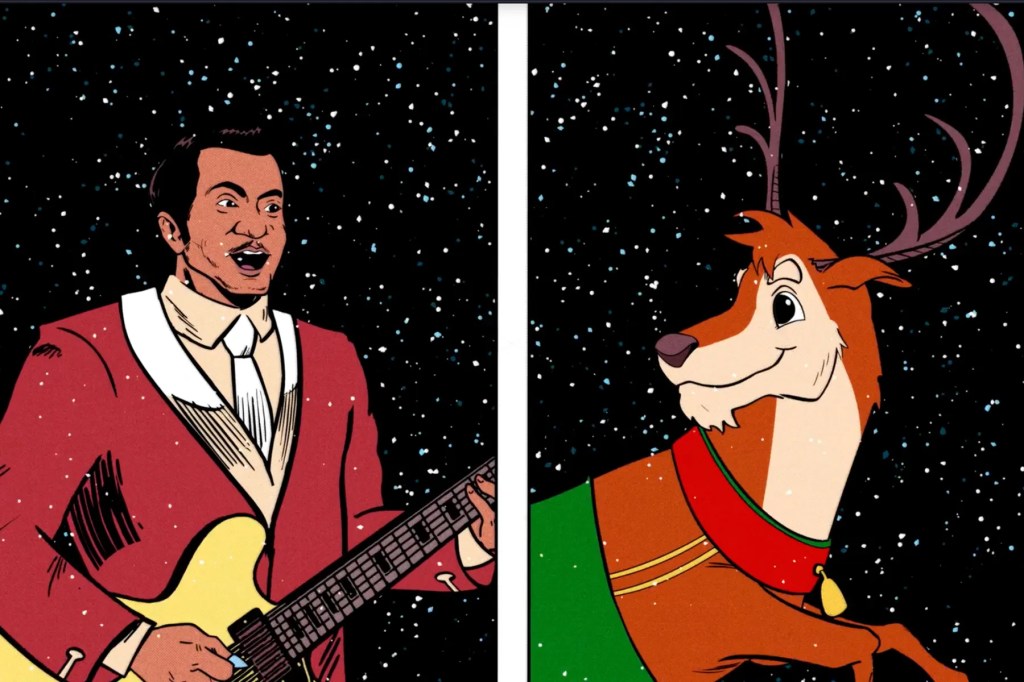
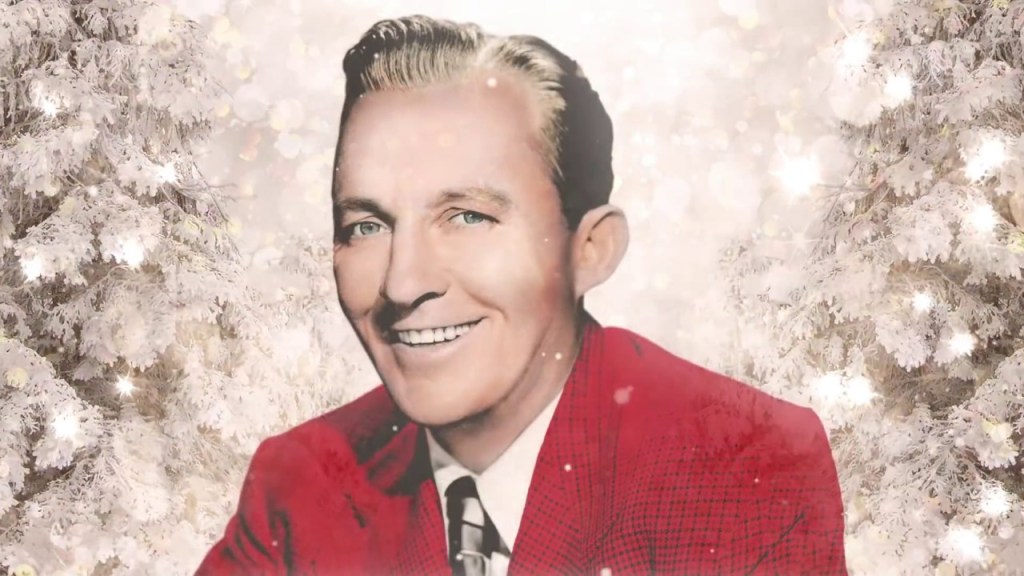
    You all knew something by Bing Crosby was coming, and I suppose I have sort of teased it out a bit, what with posting a version of “White Christmas” by some other guy and posting a clip from Happy Holidays With Bing and Frank that didn’t actually feature Bing.

    So, here he is. Well, his voice, at any rate. The video is animated and shows people of several different eras travelling homeward for the holidays.

    I’m keeping this one short because it’s Sunday and you probably have better things to do than reading my blog. Like listening to Bing Crosby sing “I’ll Be Home for Christmas”, for example.

  • Holiday music video countdown Day 6, featuring the Beach Boys

    So, if yesterday (or last night, I suppose) was Krampusnacht, that makes today… what? You get one guess, and if that guess is “The feast day of Saint Nicholas, duh,” congratulations. (There is no prize apart from the satisfaction that comes from being able to say that you knew a thing.)

    When we say “Saint Nick” these days, we’re usually referring to Santa Claus. Who, for the benefit of any children reading this, is definitely real. But who exactly was the original Saint Nicholas? He was an early Christian bishop born in what is now Turkey in the late third century. As is the case with most historical figures who lived that long ago, we don’t know that much about him, and most of we do think we know was probably made up (or at least heavily embellished) in the intervening centuries. Suffice to say that he worked wonders and miracles, which is the proper path to sainthood.

    Well, that or being martyred. Which Saint Nicholas was not, having lived until the age of 73, which was considered very, very old in those days.

    What does any of this have to do with Santa Claus? Well, Nicholas is the patron saint of children and toymakers, for a start. And one of the most famous stories told about him involves him secretly delivering gifts under the cover of night. Just like Santa!

    (The gifts were sacks of money, and the recipient was a father of three daughters. Nick thought that the man could use the money for the girls’ dowries—rather than force the girls into prostitution, which might have been dear old dad’s original plan.)

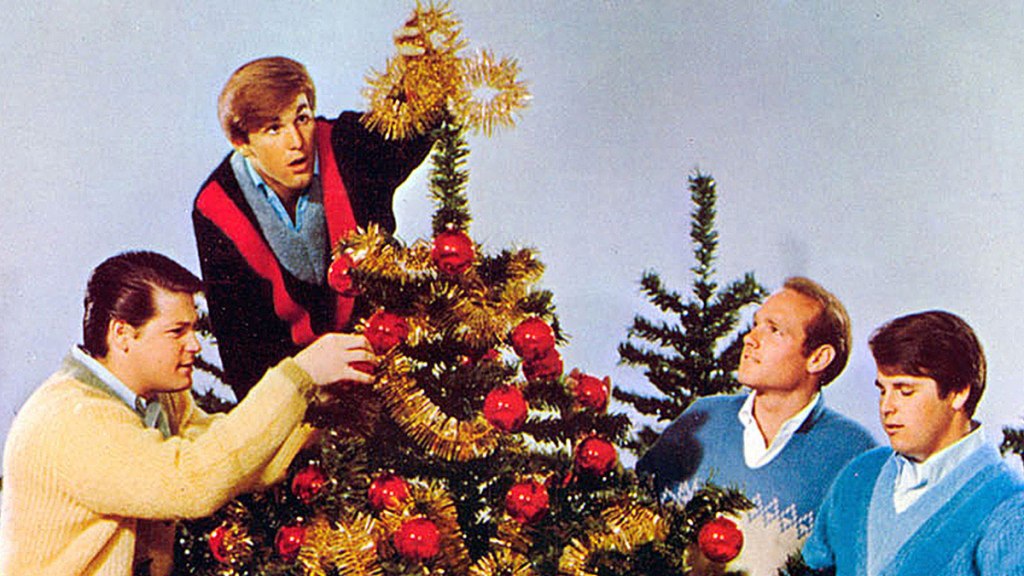
    Dutch settlers in the Americas brought their folkloric version of a gift-giving Saint Nicholas (Sinterklaas) with them, which eventually gave rise to the Santa Claus we all know and love today. Who is, of course, completely real and who, according to the Beach Boys, drives a rockin’ toboggan with a four-speed stick. Or words to that effect.

    This song’s authors, Brian Wilson and Mike Love, also helpfully tell us that “Christmas comes this time each year.” For the benefit of those who needed reminding.

  • Holiday music video countdown Day 5, featuring Krampus

    Is it really Krampusnacht already? Why, yes. Yes, it is.

    At the risk of sounding like a holiday hipster, but I was into this dude before anybody.

    Okay, that’s clearly not true. The Alpine folklore surrounding Krampus, the demonic companion of Saint Nicholas whose job it is to punish naughty kids, dates back centuries. It has really only started to gain popularity in North America in the past 10 to 15 years, though.

    When I first stumbled upon articles about Krampus online years ago, I thought it would be a fun thing to incorporate into my own holiday traditions. (Hey, I was born in Germany, so I almost sort of have kind of a connection to all that stuff, even though to the best of my knowledge no one in my family is actually German.) The trouble was, this turned out to be rather challenging, since anything to do with Krampus was devilishly hard to come by.

    This is where I prove (I hope) that I am in fact not a holiday hipster. I am actually delighted that Krampus has, in the words of Charlie Brown, “gone commercial” and has entered the mainstream of popular culture at least a little bit. If nothing else, it has now become a lot easier to find Krampusnacht greeting cards and tree ornaments.

    Heck, there was even a Hollywood movie about Krampus, which I finally got around to trying to watch this year, only to remember why I never bothered before. Lest you be tempted to seek it out, heed my warning. It’s just plain bad, and not even Adam Scott and Toni Collette can save it.

    The fact is, of course, that Krampus is never going to be all that mainstream. I mean, can you imagine John Legend debuting his new Krampus song on Good Morning America? Not gonna happen.

    There are precious few Krampus songs, in fact, but I did manage to find a couple. You will be shocked to learn that the video for the first one, by the Chardon Polka Band, is animated in stop-motion claymation style. It’s a whole thing.

    Oh, and there’s also… whatever this is. I have no clue what this song is about, but the video does feature some authentic Krampus costumes, complete with carved wooden masks. So, that’s cool.

  • Holiday music video countdown Day 4, featuring Danny Elfman

    I’m not going to promise that this is the last stop-motion animated video I will post, because I can virtually guarantee that it won’t be. But at least this one isn’t paying homage to Rankin/Bass Productions.

    On the off chance that you’ve never seen The Nightmare Before Christmas, the premise of this scene is that Jack Skellington, the hero of Halloween Town, has rallied his ooky-spooky fellow citizens around the idea of taking over Christmas and remaking it in their style. Which is to say, ooky-spooky.

    Henry Selick (James and the Giant Peach, Coraline) directed The Nightmare Before Christmas based on a poem by Tim Burton, who also co-produced. Frequent Burton collaborator Caroline Thompson (Edward Scissorhands, Corpse Bride) wrote the screenplay and Danny Elfman wrote the songs and composed the score because of course he did. Elfman also provided the singing voice of Jack.

    No spoilers, but let’s just say that taking over Christmas doesn’t quite work out the way Jack hoped it would. The moral of the story is “stay in your lane”, I guess. Oh, and also “don’t kidnap people”. That’s a good one too.

  • Holiday music video countdown Day 3, featuring Frank Sinatra

    Confession time: I don’t generally enjoy listening to Frank Sinatra. I think it’s because, to my ears, he invariably sounds as if he doesn’t actually believe a word he’s singing. And that makes his occasional half-assed attempts at sincerity feel forced and smarmy.

    I will make an exception at Christmas, however, because if I wasn’t willing to put up with a certain degree of forced sincerity and smarminess, I wouldn’t be able to enjoy and Christmas music at all. (And I know many people who don’t.)

    Having said all that, I was very happy to randomly discover a few years ago, on YouTube, a 1957 episode of The Frank Sinatra Show in which Bing Crosby pops by and the two crooners either do a very good job at acting shitfaced or actually are not just pretending to drink wassail. And, let’s face it, this is Bing Crosby we’re talking about, so you just know something was being smoked off-screen.

    We have since made an annual tradition of watching “Happy Holidays With Bing and Frank”. I almost had a panic attack one year when it disappeared from YouTube; fortunately, I was able to find it on Vimeo and have since invested in a DVD, just in case.

    The show begins as it means to carry on, even before Crosby shows up, with Old Blue Eyes decorating his Christmas tree with candy canes (apparently very sticky ones) and other ornaments, missing the tree altogether at least once, and singing his latest single, “Mistletoe and Holly”, in a way that makes it sound as if his very soul is shrugging.

    I’m being slightly facetious, of course. I do actually love this particular piece of pop-culture ephemera unironically, and it’s certainly much less depressing than the Christmas episode of The Judy Garland Show (which we also watch every year against our better judgment).

    But in the hell has pheasant for Christmas dinner?

  • Holiday music video countdown Day 2, featuring Michael Bublé

    Okay, let’s keep that retro stop-motion vibe going, this time with some local content from Mr. Christmas himself, Michael Bublé. (Well, local to me, anyway; Bublé was born in Burnaby, which borders on my beloved East Vancouver.)

    As it turns out, Irving Berlin’s “White Christmas” is the pivotal song in Bublé’s singing career. The story goes that no one in his family even knew he could sing until one fateful car trip when Bublé was 13. Or maybe he was 15; accounts vary. The point is, he began belting out “May your days be merry and bright…” and the rest , as they say, is history.

    In 2011, Bublé released his first (and to date, only) Christmas album, the imaginatively titled Christmas. You’ve probably heard of it. We won’t get into specific sales figures (because who actually buys albums anymore?), but Christmas is one of the best-selling LPs of the 21st century and also one of the best-selling Christmas albums of all time. It perennially tops the Billboard Top Holiday Albums chart, and is in fact in the number-one spot on that list as I write these words.

    Here’s the video for “White Christmas”, featuring all the classic Rankin/Bass elements, including a living snowperson and pointy-hatted elves assembling toys in Santa’s workshop. Here’s hoping they got paid extra for being in this video.

    Fun fact! This was directed by Lior Molcho, who also made the Sia video I posted yesterday.

  • Holiday music video countdown Day 1, featuring Sia

    Welcome to December! Each day until the 25th, I will be posting a festive music video. They will mostly be Christmas-themed, but there are other holidays this month, too, so why not get them all in? (I would carry this on right up to New Year’s Eve, but even I deserve a holiday break, arguably.)

    There’s just something about stop-motion animation that evokes that Christmas feeling. And when I say “something”, I of course mean “memories of Rankin/Bass TV specials from the 1960s and ’70s”. I’m talking about Rudolph the Red-Nosed Reindeer, Santa Claus Is Comin’ to Town, and The Year Without a Santa Claus. Yes, they’re dated and corny and quite honestly not all that good, but that’s all part of their charm.

    That Rankin/Bass style continues to inspire filmmakers looking to trigger instant nostalgia in sentimental viewers. Think of Leon the Snowman and Mr. Narwhal from Jon Favreau’s Elf, for example.

    Pop singer Sia borrowed some of the Rankin/Bass vibe when she tapped Lior Molcho to direct animated videos for some of the songs on her 2017 album Everyday Is Christmas, including the two chapters of “Snowman” and “Candy Cane Lane” (which you can watch below), in which a mischievous living snow creature wreaks all kinds of holiday havoc.

    Fun fact: Molcho is an Israeli Jew and Sia is from Australia, where December 25 falls in the middle of the blazing-hot summer. Which just goes to show, I suppose, that the holiday spirit knows no cultural or geographic boundaries.

  • Recently published: November 2025

    Here’s what I’ve been up to lately. Mostly writing for Stir, but there are other exciting things in the works.

    Chor Leoni sings of healing and hope in The Songs Will Remain

    (Stir, November 4, 2025)

    IT’S NOT OFTEN that a choral performance goes viral, but that’s precisely what happened when Chor Leoni released a video for its version of the Kate Bush song “Army Dreamers”. Recorded live at St. Andrew’s–Wesley United Church, the video captures the Vancouver men’s choir singing Ken Cormier’s arrangement of the song, which poignantly portrays a mother’s anguish over a son lost to an unspecified war: “Should have been a father/But he never even made it to his twenties.”

    As of this writing, that video has racked up 1,058,845 views on YouTube.

    Chor Leoni’s timing could not have been better. The choir uploaded its video in April 2022; a month later, the fourth season of Stranger Things sparked a resurgence of interest in Bush’s music with the inclusion of “Running Up That Hill”. Then, in 2024, the TikTok generation discovered “Army Dreamers”.

    “What is interesting is that this viewership for our video was clearly driven by young people, most completely new to what choral music is,” Chor Leoni artistic director Erick Lichte tells Stir. “So, just hearing a choir sing a song which is trending opened a new listening world for some of these folks…”

    Read the rest here


    Eastside Culture Crawl artists are drawn to wildly divergent approaches to image-making

    (Stir, November 14, 2025)

    ROGER MAHLER’S DRAWINGS likewise benefit from the perceptions of individual viewers. By design, his work is entirely free of narrative or figurative elements.

    While this might seem like a radical departure from the pictures Mahler produces in his day job as a corporate photographer—think C-suite head shots, product photos, and advertising images—he contends that his approach isn’t really all that different.

    “In photography, you’ll always take things out to simplify a picture,” Mahler says while giving Stir a tour of the Parker Street Studios space he shares with his wife, business partner, and fellow Culture Crawl exhibiting artist Holly Truchan. “And this is almost a version of that—taking everything out and just dealing with one line and one colour…”

    Read the rest here


    54-40 artist biography

    (5440.com, November 20, 2025; commissioned by Divine Industries)

    Sometimes a creative endeavour seems to take on a life of its own, with the artist merely acting as the conduit through which the art finds its way into the world. That was the case when 54-40 began to create its 16th studio album, Porto, with producer Warne Livesey. According to singer-guitarist Neil Osborne, everything just sort of clicked into place. “It seemed like it was writing itself, in terms of the whole making of the album,” Osborne recalls.“Everything was very quick and instant and immediate. And maybe that’s based on our experience of learning how to not overthink things, I don’t know, but it just seemed like there was a wind in our sails right from the get-go, from the lyrics to the music to getting Warne on-board to pre-production.”

    When it came time to record, the long-running B.C.-based band decamped to the Portuguese city of Porto, from which the new album takes its title. Setting up shop at Arda Recorders for a couple of weeks, Osborne and his bandmates—guitarist Dave Genn, bassist Brad Merritt, drummer Matt Johnson—maintained their forward momentum, in spite of a massive power blackout that took the entire Iberian Peninsula off the grid for a day. “Recording in Porto was an amazing experience,” Merritt says. “The studio and staff were superb. It was nice to be able to make another recording with the great Warne Livesey, and it was a bonding experience that won’t soon be forgotten…”

    Read the rest here

    (Please note that my work begins at the second paragraph on the page linked above; the first paragraph was written by someone else, presumably the band’s publicist. I would also like to take this opportunity to note that writing artist bios is one of the services I offer, and one that I particularly enjoy.)


    Chapel Sound’s Notebook Season showcases experimental electronic music from around the world

    (November 21, 2025)

    ON PAPER, UNDERGROUND club music from the Netherlands might not seem to have that much in common with traditional Arabic instrumentation and Southeast Asian martial arts. To Veron Xio, however, it all hangs together, and in some ways it’s the differences that make it work.

    Xio, a Vancouver-based music producer, is the founder of Notebook Platform, an electronic-music and artist-development initiative. In collaboration with other likeminded creatives (including Nancy Lee of Chapel Sound Art Foundation and Mada Phiri of Made By We), Xio curates Notebook Season, which they describe as “a miniature festival of artist talks, workshops, and experimental music performances”.

    While the prospect of “experimental music” might seem daunting to some potential audience members, Notebook Season’s mission is not to alienate anyone.

    “I think we see experimental as a very loose term in the sense of just, how do we stretch things that we know in ways that we’ve haven’t seen before?” Xio tells Stir in a video call…

    Read more here


    The Improv Centre mines classic TV-comedy tropes for yuletide yuks in ’Tis the Sitcom

    (Stir, November 18, 2025)

    The holiday episode is a TV sitcom staple, and everyone has their personal favourite. For The Improv Centre’s artistic director, Alan Pavlakovic, it’s “Secret Santa”, a 2009 episode of 30 Rock—especially the scene in which Danny (guest star Cheyenne Jackson) intentionally sings off-key to make Jenna feel more confident in her own vocal abilities.

    On a joint call with Pavlakovic, Jacki Gunn tells Stir that her perennial pick is “The One With the Holiday Armadillo”, a 2000 episode of Friends. “The moment where Ross is forced to wear an armadillo costume is pretty iconic,” Gunn says.

    The Improv Centre is mounting its very own holiday special this year, in the form of’Tis the Sitcom, which lovingly satirizes the sort of TV comedies that focus on groups of friends, roommates, and/or co-workers in urban settings. Think all of the aforementioned shows, plus The Big Bang Theory, How I Met Your Mother, et al...

    Read the rest here


  • From the Archives: The Soft Moon (2013)

    On this day 15 years ago (November 16, 2010), American indie label capture Tracks released the self-titled debut album by the Soft Moon, which was actually a solo project by L.A.-based musician Luis Vazquez. In 2013, I interviewed Vazquez during my stint as the “Sound Check” columnist for Concrete Skateboarding magazine.

    Vazquez and I discussed the making of the second Soft Moon album, Zeros, and he also shared that he had been experiencing recurring dreams about the end of the world since his childhood.

    This would be my one and only interview with the Soft Moon. Tragically, Vazquez died in 2024 of an accidental overdose of fentanyl, cocaine, ketamine, and ethanol.

    Sound Check: The Soft Moon

    Needless to say, the Mayan apocalypse didn’t happen back in December like a few wing nuts predicted it would. If it had, however, Luis Vasquez would have been ready for it. You might say the San Francisco-based musician has been preparing for the end times all his life, albeit not consciously.

    “Since I was little, I’ve had over a hundred recurring dreams of the world ending,” says the frontman for The Soft Moon. “And they all end differently every time. It’s pretty crazy. I’m kind of fascinated by it, and every time it happens to me in my dream, I accept it. It’s very overwhelming and scary, but necessary, in the way I feel in the dream. I just sit down, and as it’s happening—as the world’s kind of crumbling—I close my eyes and let it happen. I like to interpret that through my music, so it’s kind of like re-creating my dreams sometimes. I like to create what it looks like in my head through music.” 

    It probably goes without saying that The Soft Moon’s songs aren’t all sunshine and lollipops. On the project’s most recent long-player, Zeros, Vasquez (who records solo but plays with a full band live) paints the world in 10 shades of black. From the churning industrial noise and motorik pulse of “Machines” to the haunted-man atmospherics of “Insides” and the bass-driven tribal minimalism of “Remembering the Future,” the album is an oddly exhilarating descent into the depths of one man’s end-of-all-things anxiety. 

    There aren’t a lot of hooks to be found, and it’s pretty much impossible to make out anything Vasquez is singing. He admits that he obscures his vocals on purpose. “I like to treat my voice more as an extra instrument, on top of all the other layers of instrumentation,” he says. “But there’s also another reason. My whole life, I’ve always struggled with words to communicate my feelings. So there’s frustration in that. Thankfully I have music to express myself, but that frustration comes out in my music, where you can’t tell if the vocals are another instrument or if I’m actually singing—I’m either screaming, yelping, or I’m burying my vocals in the mix. And that’s just to represent the frustration I have with communicating through words.”

    The Soft Moon invariably garners comparisons to first-wave British post-punk groups, and there’s a good reason for that. Listening to Zeros, it’s hard not to be reminded of the fire-dance intensity of Killing Joke, the encircling gloom of Joy Division, or the claustrophobic moping of 1982’s Pornography by The Cure. Ask Vasquez to name his influences, however, and he’s more likely to list Prince, Slayer, and Duran Duran.

    “A lot of the comparisons I get with my music are to bands I never really got into as much, so I always kind of sit back and wonder why I happen to sound like these bands, because I don’t disagree,” he notes. “But it’s weird. It’s almost like there’s this kindred-spirit thing, or like I live in the same world as bands like Bauhaus, or the musicians that were in Joy Division, or things like that.” 

    Those bands also stuck to the dark side of the street, and found themselves labelled “gothic rock” by the music press of the day, much to their horror. Vasquez doesn’t recoil at the sound of “the G word”, but that might be due to the fact that he’s not sure exactly what it means. 

    “I don’t know if I’ve ever really met a true goth person,” he says, then quickly reconsiders. “I think I met one, this one guy in Leeds. He proudly considered himself a real goth, and he was a lot older. My stereotype on goths is what I know from high school, and I don’t even know if those are real. You know: they dressed in black and kind of looked like Robert Smith a little bit.” 

    “I am open to whatever people consider my music, because I don’t know what I’m doing. honestly,” Vasquez concludes. “So if people out there know what it’s called, then they can call it whatever it’s called.”

  • From the Archives: Nelly Furtado (2006 & 2013)

    With Nelly Furtado’s recent announcement that she will be retiring from live performance “for the foreseeable future”, it seemed timely to repost these two interviews I did with her for the Georgia Straight back in the day.

    Nelly Furtado: Selling the sizzle (2006)

    (This article originally appeared in The Georgia Straight.)

    THE NELLY FURTADO who gazes out from the cover of Inside Entertainment‘s April issue looks calm but intense. Her dark-brown hair is frozen in the grip of some impossibly perfect indoor breeze, and the strap of her red Nicole Miller cocktail dress hangs off a bare shoulder. Ice-blue eyes peer from below pink-frosted lids, and Furtado’s golden skin appears Barbie-doll smooth.

    When the Georgia Straight shows the singer the magazine, she says she remembers doing the shoot some months ago but admits that she hasn’t seen the cover yet. When she does, her bemused reaction carries an undertone of familiar resignation. “Wow,” she says, casting an eye at the photo. “That doesn’t even look like me.” By this point, three albums into her career as a global pop sensation, the Victoria-born and now Toronto-based single mom has grown accustomed to the digital manipulation of her features, but it still has the power to surprise her by pointing out her supposed deficiencies. “I didn’t know there was something wrong with my nose until I saw it retouched,” she says.

    Sitting for interviews at a downtown Vancouver hotel, the 27-year-old Furtado looks positively radiant, ever-so-slightly asymmetrical nose and all. That’s worth noting, because whether she likes it or not, her image is the centre of much discussion at the moment. This is hardly a recent development; Furtado herself addressed the topic on her 2003 song “Powerless (Say What You Want)”, in which the performer, who is of Portuguese descent, sings “Paint my face in your magazines/Make it look whiter than it seems/Paint me over with your dreams/Shove away my ethnicity”.

    What has tongues wagging these days is sex. First there was the interview with European gay-lifestyle magazine GUS, in which Furtado said she believes all people are inherently bisexual. People have also been abuzz about the sexually frank lyrics on Furtado’s recently released third CD, Loose, not to mention the midriff-baring libertine she seems to have become, if the video for the hit single “Promiscuous” is any indication. “After I had a baby, my body changed a lot,” Furtado says by way of explanation. “I got more curvy and felt more like a woman, and I think I’m just more proud of my body now. I think I’m a late bloomer. You know, I was a tomboy for a while, and I kind of all of a sudden went, ‘Wow.’ I started celebrating my femininity a little bit more.”

    Recorded in Miami with Tim “Timbaland” Mosley cowriting and producing most of its tracks, Loose is a heavily beat-driven outlet for that celebration. The aforementioned “Promiscuous” is a hot-blooded hip-hop duet between a flirtatious Furtado and Mosley, while the thumping, synth-tastic new wave of “Maneater” scans like the female-perspective answer to the old Hall & Oates number. The latter song finds Furtado encouraging the listener to “move your body around like a nympho”, which goes a long way toward explaining why Rolling Stone opined that the singer has gotten in touch with her “inner slut”. That’s a charge Furtado denies, but she does acknowledge that in marked contrast to her comparatively more cerebral last record, FolkloreLoose is all about the body, not the mind.

    “I really think something happened to me in Miami when I was down there,” she states. “It’s a really sexy city. I’m like a sponge. I kind of become my environment sometimes. That’s the way I experience life.”

    Furtado insists that her apparent transformation into a libidinous reveller is not a self-conscious attempt at changing her image. Rather, she says it’s merely a revelation of a hitherto-unexplored aspect of a complex whole. “I like the idea of the funny, sexy, and smart woman; the three-dimensional sort of thing,” she says. “I think more than anything, more than the clothing, it’s my attitude that people are noticing, because I’m a lot more confident as a performer, and I think I’m able to express myself more completely on-stage and in my TV performances and my videos. So I think that’s what’s really turning heads.”

    The singer credits her producer’s unpremeditated approach to music-making with giving her the confidence to trust her instincts. “The way Timbaland makes music is he makes it from the gut,” she reveals. “He’s really impulsive, and he dances while he makes beats. His body’s always moving, and so I had no choice but to jump right in and let go of thinking and follow my impulses too. So it’s a much more impulsive album; it’s much more raw. It comes from the gut. It has musical errors. That was important for me, and that’s why I called it Loose, because I wanted it to be reality audio. Now that reality TV’s so popular. I wanted to make it less precious. And that came from listening to rock music, like indie rock.”

    Furtado gives particular kudos to Controller.Controller and Death From Above 1979, two Toronto acts that take a visceral, eminently danceable approach to their post-punk aesthetic. Furtado caught a double bill of these bands and was impressed. “I noticed how sexually assertive the singers were on-stage, and I got influenced by that. One person described it as like a ‘sexual menacing’, and I think some of the songs [on Loose] have that weight to them.”

    Loose never comes close to Controller.Controller’s brand of indie death-disco, but the disc offers a slice of percussive reggaeton (the Spanish-language “No Hay Igual”), a dash of sparkling Latin pop (“Te Busque”, featuring Colombian superstar Juanes), and a slather of sunset-rubdown R&B (“Showtime”). “I’m a person who listens to all kinds of music, and I channel it into my own music in a way where you can’t even hear the influence at the end of the day,” Furtado says. “I guess it’s like a computer: you just kind of input information and then you process it your own way.”

    The results of that processing have met with generally favourable reviews, although a few dissenting critics have noted that the one thing that seems to be absent from the new album, with all its floor-filling beats and genre-splicing hedonism, is Furtado herself. E! Online said that on Loose, Furtado “mysteriously trims away her individuality and morphs into a J.Lo imitator”. Vibe accused the artist of losing herself in “Gwen Stefani–like posturing”, while Pitchfork stated that “the strangest thing about Loose isn’t its irregularity, but the simple fact that this doesn’t sound like Nelly Furtado at all.”

    The singer deftly sidesteps the question of where exactly her identity can be found on the album, but she is quick to point out that elements of R&B, dance music, and especially hip-hop have been present in her work since even before her debut CD, Whoa, Nelly!, came out in 2000. “I think the thread that holds this album together, and holds my musical history together, is the technology thread,” she says. “I really love urban music, whether it’s hip-hop or electronic trance, drum ‘n’ bass, or whatever it is. I like it all, and I’ve dabbled in all of it. My first recording gig was for a hip-hop group [Plains of Fascination] when I was 16, and then I did the trip-hop thing for a year when I was 17, and then I jammed with a techno DJ from Victoria called Matt Johnson. We used to jam together when I was going to college. I would even dabble on the keyboards and drum machines. Even when I was eight years old, I was asking my parents for Casio keyboards so I could jam.”

    Anyhow, naysayers be damned: Loose is a hit. As of this writing, the record holds the No. 4 spot on Billboard‘s album rankings, with “Promiscuous” sitting atop the same publication’s Hot 100 singles chart. Locally, Loose is No. 1 on the Straight‘s own Top 50. All of which must seem like vindication for Furtado. Prior to the new disc’s release, she was an artist with something to prove. Whoa, Nelly! was a Grammy-winning, six-times-platinum success story, but its follow-up, Folklore, was a commercial letdown, thanks to a complex web of bad timing. It could be argued that the CD–buying masses simply didn’t know what to make of the serious-minded record, which addressed themes of cultural identity and boasted performances from such decidedly non-pop guests as Bela Fleck, Caetano Veloso, and the Kronos Quartet. Moreover, Folklore was released right as Furtado’s then-label, DreamWorks, was collapsing, which meant the album didn’t get the push it warranted. A new mom at the time, Furtado couldn’t tour much in support of Folkore, which didn’t help matters. The disc sold well and charted respectably, cracking the Top 40 in both the U.S. and Canada, but it failed to attain the dizzying heights of its predecessor.

    For that reason, Furtado was determined to stage her return to the spotlight with an unashamedly populist, world-conquering effort. “I have a bit of that fighting spirit,” she admits. “I think Timbaland brought that out in me more than anybody, because he’s such a good producer, and he really pushes you as an artist. You always feel like he’s throwing you a fastball and you have to hit a home run. He’s the one producer who truly makes me feel challenged on every level as a musician, as an artist, and conceptually too. He kind of challenges me to think in a more universal way about what pop music is and what it means to people. I think, just elementally, he brings out my more passionate and powerful side of myself as an artist. So I think he aided in giving me that kick-ass mentality.”

    Then, of course, there was the matter of making sure the suits were satisfied. Furtado claims she received more encouragement than pressure from the overseers at Interscope, which owns Geffen, the label she records for.

    “They were challenging me a lot,” she says. “They were pushing me in a positive way, the label. Jimmy Iovine, the president of Interscope, said, ‘You know, you and Timbaland made a promise to people when you put out that “Get Ur Freak On” remix [a 2001 collaboration with Missy Elliott]. You have that urban side of you that you’ve never explored. You’ve only given people a taste of it, so I think it’s time for you to deliver on that promise.’ And that’s what I did.”

    Indeed she did. And that’s a good thing, even if it does mean that Furtado will have to look at barely recognizable reconstructions of herself for some time to come.

    Nelly Furtado lives out a teenage dream (2013)

    (This article originally appeared in The Georgia Straight.)

    NELLY FURTADO DIVIDES her time between Toronto and Miami these days, but she’ll always be a West Coast girl at heart. Furtado was born and raised in Victoria, which is where she’s set to kick off a Canadian tour this week, the night before she hits Vancouver.

    Such is the esteem our provincial capital has for the singer that in 2007, the city declared March 21 to be Nelly Furtado Day. She will surely feel the love when she steps on-stage at the Save-on-Foods Memorial Centre, but that doesn’t mean Furtado won’t also feel a little extra pressure.

    Nelly Furtado divides her time between Toronto and Miami these days, but she’ll always be a West Coast girl at heart. Furtado was born and raised in Victoria, which is where she’s set to kick off a Canadian tour this week, the night before she hits Vancouver. Such is the esteem our provincial capital has for the singer that in 2007, the city declared March 21 to be Nelly Furtado Day. She will surely feel the love when she steps on-stage at the Save-on-Foods Memorial Centre, but that doesn’t mean Furtado won’t also feel a little extra pressure.

    “It’s a little nerve-wracking,” she admits when she connects with the Straight during a break in tour rehearsals in T.O. “I find it really hard to play a show in front of my parents, for some reason. It’s not a racy show by any means. It’s just, you want to do your best, don’t you? Even as an adult you want to make your parents proud.”

    The last time Furtado played a concert in her hometown was during the tour in support of Loose. That album came out in 2006, and the singer admits she has mostly been “off the pop radar” since then. “I think I was craving some time out of the spotlight, because I’d kind of been at it for a while,” she says. “You know, my first album came out in 2000. Then, at the end of Loose, it was like, ‘Whoa, I’ve been doing this for a while. Maybe I should take a break.’ And I took some time off, did some passion projects, started my own independent label, Nelstar Records, had some fun signing a band [Fritz Helder & the Phantoms], and then putting my Spanish album out on Nelstar, which was really cool—just having complete creative freedom that you can only have when you’re completely independent—and then signing the artist that’s opening for me on this tour, Dylan Murray, and working on his album.…All that stuff took a lot of time. And I didn’t have an interest in recording in English, either, which is probably the most important point.”

    Instead, Furtado made that aforementioned Spanish-language album, Mi Plan, and toured the Latin world. Needless to say, however, she felt compelled to sing in English again, with the result being her latest LP, The Spirit Indestructible. As exemplified by singles such as “Big Hoops (Bigger the Better)” and “Waiting for the Night”, the album is largely characterized by exuberant dance-floor beats wrapped around pop melodies. Like much of The Spirit Indestructible, those tracks were cowritten and produced by Rodney “Darkchild” Jerkins.

    “Every time we were in the studio it felt like we were kids in the sandbox,” Furtado notes—and it didn’t hurt that she was working with the man who helped make major hits for the likes of Aaliyah, Mary J. Blige, and Brandy back in the ’90s.

    “He produced a lot of the music that I was really into as a young teenager, and I think that’s why there’s a nostalgia vibe when you hear the album,” Furtado says. “I was kind of living out my 14-year-old dreams working with him in the studio. It was just a really heightened, inspired time that we shared together in the studio. It’s so precious, as a songwriter, when you can feel that inspired and passionate. It’s such a wonderful thing. It’s just so rare. You can’t really plan for that.”