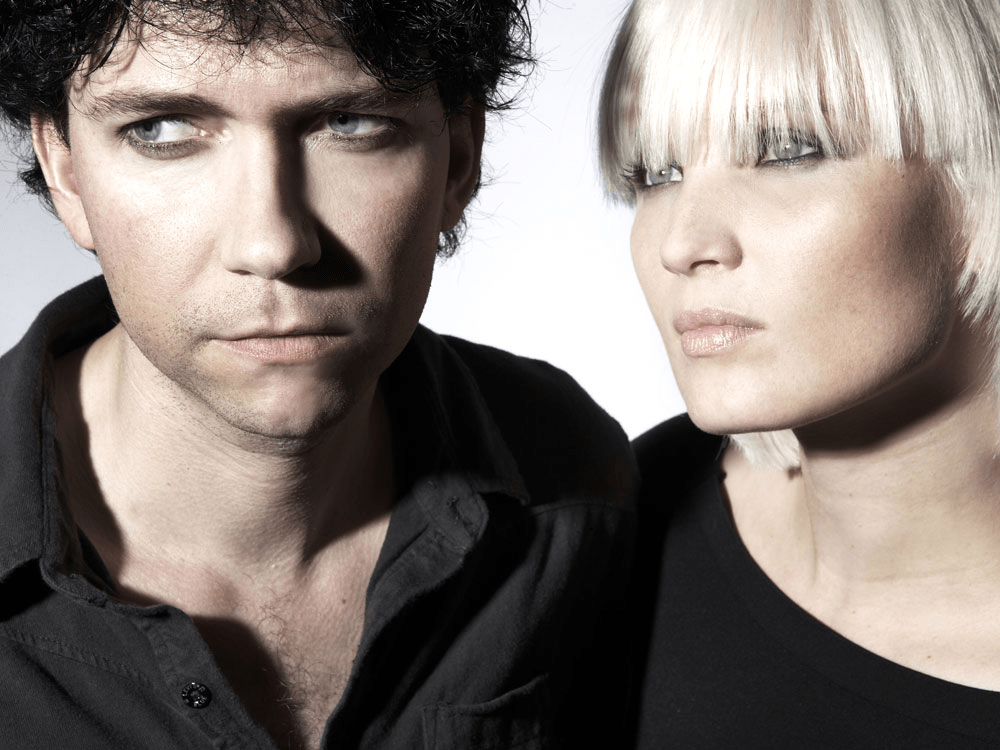
On this day in 2008, the Georgia Straight published this article about the Raveonettes, for which I interviewed singer-guitarist Sune Rose Wagner about the Danish band’s then-new album In and Out of Control. The Raveonettes played at Venue in Vancouver a week later, and that’s a show I remember well.
I mean, I kind of remember parts of it. What I’m trying to say is that it stands out for me because I attended the performance in spite of having just thrown my back out and experiencing the worst, most immobilizing pain of my life. Bolstered by a prescription to a very powerful painkiller that will go unnamed, I managed to trundle myself out to the gig. Which was probably excellent.
A look at the titles of the songs on the new Raveonettes album, In and Out of Control, reveals a rather grim selection of topics, among them suicide, addiction, and sexual assault. Why the apparent obsession with the dark side of human existence?
“I guess I just write about real life,” singer-guitarist Sune Rose Wagner says, reached just as he’s crossing the border between Ontario and Michigan. “I think it’s something that’s close to a lot of people. It certainly is for me. I just write about my acquaintances and my friends and family and stuff.”
That might sound like the recipe for a world-class drag, but the duo of Wagner and Sharin Foo has a fixation on bubble-gum hooks that shines through even the bleakest of themes. “Boys Who Rape (Should All Be Destroyed)”, for example, combines girl-group melodies and buzz-saw guitars with programmed beats, for a fuzz-pop number whose summer-sunshine feel belies its vengeful title.
“It’s a nice contrast in the music that I find appealing,” Wagner says. “Because sometimes things can get almost too dark or it can get too happy or whatever. I think it’s a nice little mixture in there, with some poppiness and a dose of real life. I think we’ve always been really attracted to that contrast.”
In and Out of Control was by necessity a quickly assembled collection. Wagner lives in New York City and Foo resides in Los Angeles, but the pair decamped to their native Denmark to make the record with Copenhagen-based producer Thomas Troelsen.
They wrote and recorded the whole thing in just six weeks. “That was an interesting way of doing it,” says Wagner, “to just be very spontaneous about it, and whip out songs really fast, and record them really fast, and just keep adding and adding and adding.”
He’s not kidding about that “adding and adding and adding” bit. He and Foo are the only two musicians who played on the album, but that doesn’t mean In and Out of Control is a stripped-down affair. “On each song there was, like, 20 different drum tracks and loads of guitars and synths and vocals, and just crazy layering stuff, like a big old production. That was a lot of fun.”
The fun continues on tour, with Wagner and Foo borrowing the rhythm section from Danish band Mellemblond to fill out the sound. The Raveonettes are booked to play at licensed venues in most cities, but Wagner encourages minors to get in touch with him through the group’s MySpace page and arrange a meet-and-greet.
“I just think it’s a shame, because we have a lot of underage fans who really want to hear us play, and it’s just impossible,” he says. “I would totally be very upset if I couldn’t go see my favourite band. So I think it’s something that everyone should do. It’s great to have these kids come out—sometimes they bring their parents and stuff, and we play four or five songs for them at sound check, and they go home very happy.”
See? Wagner really is a dedicated spreader of good cheer, even if he did write a song called “Oh, I Buried You Today”.
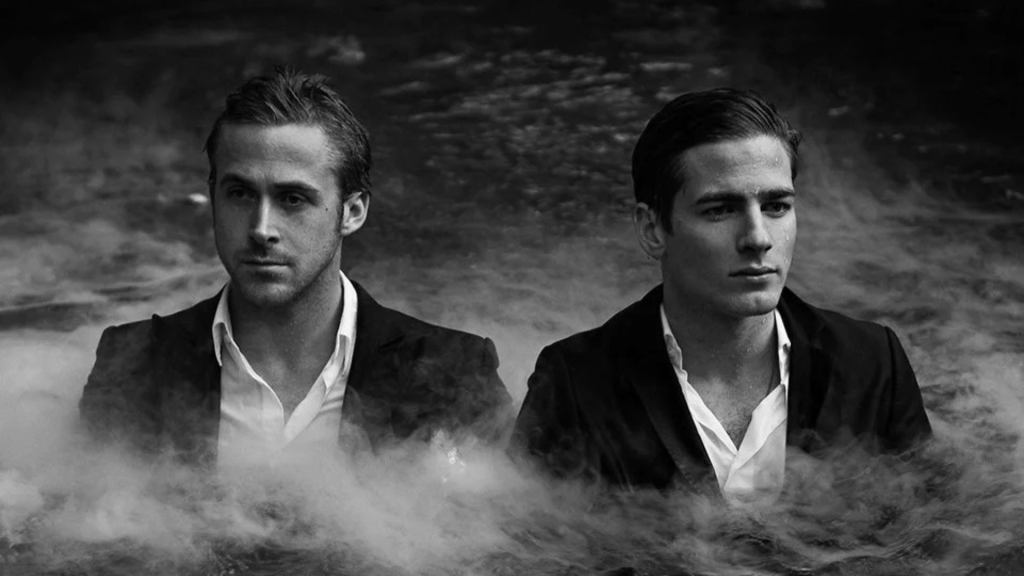
The coming of the Halloween season (and, admittedly, this article by my erstwhile colleague Mike Usinger) put me in mind of Dead Man’s Bones. I interviewed the duo back in 2009 and their self-titled album has been an October staple for me ever since.
The back cover of the self-titled debut by the Los Angeles-based duo Dead Man’s Bones is emblazoned with the sentence “Never let a lack of talent get you down.” That might seem a little disingenuous coming from an act whose talent got it signed to Epitaph Records’ Anti- imprint, and it seems even odder when you consider that one member of Dead Man’s Bones is Oscar-nominated actor Ryan Gosling. The Half Nelson star explains that, for him and his musical partner Zach Shields, the motto is a reminder not to get paralyzed by self-doubt.
“We were adults making a record for the first time, and we kind of felt like kids trying to figure out something for the first time,” Gosling explains in a three-way conference call with Shields and the Straight. “If we had listened to that part of ourselves that said, ‘You know, you’re not very good at this’ or ‘You shouldn’t bother’ or ‘People aren’t going to like it,’ then we would have never made the record.”
And that would have been a shame, because Dead Man’s Bones is one hell of a record. Accompanied by the Silverlake Conservatory of Music Children’s Choir, Gosling and Shields spin curiously romantic ballads about zombies and werewolves. There are exceptions to the rule—the keyboard-driven “Pa Pa Power” sounds like a new-wave version of the Arcade Fire—but the presiding feel is that of a spectral sock hop at Death Valley Middle School. “That’s all we know how to do,” the London, Ontario-born Gosling says. “For some reason, when we write songs, that’s just how they turn out. They have that kind of vibe, that sound to them, and then they end up being about ghosts and monsters falling in love.”
Indeed, “Lose Your Soul” finds Gosling crooning as if he were trying out for an afterlife version of American Bandstand, while Shields’s “Paper Ships” kicks off with a dooby-doo-wah refrain straight out of the Roy Orbison catalogue. Given the pair’s often-macabre subject matter and its tendency toward the sound of mid-20th-century pop, Dead Man’s Bones sometimes seems like a less aggro version of the Misfits.
“We love the Misfits,” Shields confirms. “They were one of my favourite bands, growing up. [Glenn] Danzig had that whole kind of crooner-y ’50s thing going on. A lot of those songs, if you slowed them down and played them acoustically, they’d be kind of ballad-y like that. They’re a little bit better musicians and a lot cooler than we are, but it’s nice to be in the same genre as them.”
A less obvious touchstone is the one over which Gosling and Shields first bonded: a shared obsession with the Haunted Mansion ride at Disneyland. “There’s something about that moment when you come around into the ballroom and all those ghosts are dancing with each other,” Gosling says. “I think I was 12 when I first saw that. It was kind of a relief, for some reason. It felt like maybe dying wasn’t so bad. Maybe it could be fun, too. It didn’t have to be so scary. And I think that it left an impression on me. I know that it did on Zach.”
To capture a little of the Halloween-pageant vibe of its album, Dead Man’s Bones has recruited choral groups to perform with it at each stop on its current tour, including the one in Vancouver.
“All the different choirs have been sending us YouTube videos of them in rehearsal, which has been awesome,” Gosling says. “It’s the best part, because then you get to see all the work that these kids are putting into it. It kind of puts the pressure on. They’ll never be as bad as we are. We try not to fail them.”
Just for fun, I decided to post a list of Halloween-appropriate music videos on Medium. You might have to be logged into a Medium account to read it, but it’s worth signing up to follow yours truly, isn’t it? (With the caveat that I only post there about once a month.)
Check out this cool Instagram post by Quockerwodger Media, which is partly a profile of me and partly (mostly) a spotlight on my band, the Starling Effect.
On this day 15 years ago, the Georgia Straight published this feature about South African rap weirdos Die Antwoord. Since that time, all sorts of allegations of various kinds of misconduct and other egregious behaviour have come to light. So, while I can’t endorse Die Antwoord fandom in 2025, the fact remains that the group was doing something jaw-droppingly original in 2010, and it was exciting to be an early documenter of it.
Zef rap: Die Antwoord inspires more questions than answers
Justin Bieber is everywhere. The 16-year-old Canadian pop star and Twitter junkie has so thoroughly achieved global media saturation that he’s the unlikely first topic of conversation when the Georgia Straight connects with the members of zef-rap act Die Antwoord for a somewhat anarchic telephone interview. At the same time that MCs Ninja and Yo-Landi Vi$$er are at home in Cape Town taking calls from Canada, Bieber is also somewhere in South Africa, on holiday. According to his constant barrage of tweets, the young singer is going on safaris, petting cheetahs, jamming with marimba ensembles, and meeting “incredible” SA girls.
As fate would have it, a Bieber song is the hold music to which Die Antwoord is subjected while waiting to talk with the Straight, a fact that prompts Ninja to remember the first time he saw a picture of the fresh-faced Ontario lad.
“I thought it was a girl,” the rapper insists, “and Yo-Landi said, ‘That’s Justin Bieber.’ I was like, ‘Whoa.’ He looks exactly like a girl!”
Ninja also offers his take on Bieber’s signature hairstyle—a helmetlike affair with bangs cascading down to his eyebrows—and what might be lurking beneath it: “Maybe he has an eye on his forehead, right in the middle.”
If Ninja seems more inclined to gossip about teenage pop stars than he is to discuss his own music, it’s probably because he’s tired of answering the same questions over and over; anyone exposed to Die Antwoord tends to stagger away shell-shocked, wondering, “Are these people for real?” and “What is zef, anyway?”
As a condition of interviewing Die Antwoord, all reporters are instructed to visit the group’s website and watch a video titled “Straight From the Horse’s Piel”. In addition to offering a flash of Ninja’s tattooed penis, the eight-minute mini documentary purports to answer the above questions, and then some. Like everything else Die Antwoord does, though, it really seems designed to make you wonder what the hell you have just witnessed, with Ninja’s obfuscations taking viewers further down the rabbit hole. Addressing the band’s much-discussed authenticity, for example, the lanky rapper offers the following: “It’s actually a deep question, that question, you know. ’Cause the only real things in life is the unexpected things. Everything else is just an illusion.”
By that yardstick, Die Antwoord is as real as they come. No one outside of South Africa—and few outside of Cape Town, for that matter—knew of the group before February 1 of this year. That was the day Boing Boing co-editor Xeni Jardin posted the videos for “Zef Side” (aka “Beat Boy”) and “Enter the Ninja” to the popular U.S.–based blog. Both clips instantly went viral, with the latter racking up more than 7.6 million YouTube views to date, thanks in large part to its off-the-chart WTF quotient. It’s a safe bet that no one watching the “Enter the Ninja” video had ever seen anything like it before. While Ninja spits head-spinning rhymes about decapitating haters, Vi$$er does a Lolita routine in a bedroom plastered with pictures of her bandmate and crawling with rats. While she lip-synchs the song’s helium-voiced hook, she changes out of what looks like a school uniform and into an oversized T-shirt that hangs off of one shoulder.
“Enter the Ninja” is striking enough on a musical level, its melodramatic, synth-swept beat topped by Ninja’s rapid-fire flow of English peppered with Afrikaans slang. But it was probably the physical appearance of Die Antwoord’s frontpersons that seemed so foreign to a North American audience accustomed to picture-perfect pop stars. Impossibly long and lean, and covered with what look like homemade tattoos, Ninja is menacing in a comic-book-villain sort of way, while Vi$$er’s petite frame and postlobotomy mullet give her the look of a Skipper doll whose platinum locks have been attacked by a toddler armed with a pair of scissors and a malevolent streak. (The group’s third member, the portly DJ Hi-Tek, is absent from the video, but his place is taken by Cape Town artist Leon Botha, who, at 25, happens to be one of the world’s oldest survivors of progeria, a condition that gives him a prematurely aged appearance.)
If Die Antwoord shocked North America, the feeling was mutual. Vi$$er says the band was totally unprepared for the sudden explosion of interest. “We didn’t even know people overseas,” she tells the Straight. “We didn’t even think that Die Antwoord would ever do well there. We just did it for ourselves. It grew in America first, and that was the biggest surprise to us ever. It wasn’t something that we planned.”
The group’s newfound success is, however, the culmination of years of toil. Ninja, who has claimed to be 35 but refuses to divulge his date of birth, has been at it the longest. His real name is Watkin Tudor Jones, but he has adopted a number of different personas over the years. The most notable of these is probably the clean-cut Max Normal, who—in addition to making adorably demented stuffed animals—wore a business suit on-stage and delivered satirically instructional and motivational raps set to PowerPoint-style visuals. It was still hip-hop, but its presentation seems pretty far removed from what Jones is doing now in his Ninja guise. It certainly wasn’t zef.
WHICH BRINGS US TO the other question on everyone’s lips: “What is zef?” At the risk of oversimplifying things, let’s just say it’s South Africa’s gift to lowbrow pop culture circa now, typified by a knowing obsession with all things kitschy, equal parts ghetto-fabulous flash and mobile-home trash.
The website Wat Kyk Jy? has been documenting zef for the past decade, which makes its one-named webmaster, Griffin, something of an authority on the subject. Speaking to the Straight on his cellphone in Johannesburg, Griffin explains the zef aesthetic in automotive terms. “You take a normal car, an entry-level car—something your dad would go to university with,” he says. “Let’s say it’s a small Toyota Yaris, right? It’s got one exhaust pipe. What you do is, you go to your scrap-metal dealer, you buy the thickest sewage pipe you can get, and you put that as an exhaust. You make the car sound like the most bad-ass car on earth, and it still goes the same speed, if not lower. And you think it’s fuckin’ cool, and you’re pumping out beats in your car with a sound system that costs more than your wheels.”
Vi$$er freely admits that Die Antwoord had no part in creating the style of which it is now the leading (well, only) exporter. “It’s been around for years,” she says. “We were just the first people to rap about it and take the style and turn it into our style and present it as rappers. No one had presented it; it was always there. It was always the underdog. It was just part of a slang, you know? The same with, like, whatever slang’s floating around in New York. You maybe have some rap group who’s claimed that slang and made it their flavour. That’s kind of what we did. It was an accident. We did it because we were feeling the flavour.”
It probably goes without saying that in adopting zef as its own, Die Antwoord also took onboard considerable cultural baggage. The web has been ablaze with chatter about the group’s authenticity, with some bloggers pointing out that zef rose out of the poverty-ridden Cape Flats townships, and that Ninja’s appropriated gang tattoos could get him killed should he show his face in the wrong neighbourhood.
Others have posited that the whole thing is a brilliant piece of performance art, which would make Watkin Tudor Jones the Sacha Baron Cohen of South African rap, with Ninja his Ali G. Addressing that very question in “Straight From the Horse’s Piel”, Jones seems to be saying yes and no at the same time: “Ninja is like what Superman is to Clark Kent,” he says in the video. “The only difference is, I don’t take off this fuckin’ Superman suit.”
Whatever its back story, Die Antwoord’s skill at making records is undeniable. Its debut album, $O$, is a vulgar, crass, and ridiculous collision of thumping hip-hop beats, multilingual rhymes, and strobe-lit rave synthesizers. It also happens to be one of the best albums of 2010. $O$ is slated for release by Interscope imprint Cherrytree Records on Tuesday (October 12), which is also when the group plays a show in Vancouver, kicking off a 14-date North American tour. Controversial as it might be at home, Die Antwoord is bringing global attention to South Africa just as surely as District 9 and the FIFA World Cup did. With its history of institutionalized racism and deeply troubling recent statistics regarding rape, violence, and unemployment, the republic of nearly 50 million people isn’t always regarded favourably from the vantage point of more privileged nations.
“When people think of South Africa, they used to think of apartheid,” Vi$$er agrees. “There was a stigma attached to it, but no one had ever looked for the flavour of South Africa. Every place has its own funk, and the funk of South Africa is the zef fokken style. There’s a lot of zef people here.”
“I think everything you hear about South Africa is true, except for lions running in the streets and that kind of thing,” Griffin wryly notes. “We do drive nice cars, and we do live in houses. Everything is fine here and everything is not fine here. Things are cool, things are fucked up; it’s a rough place, but it’s also a beautiful place.
“You really have to come here and experience the country for yourself,” the webmaster concludes. “It’s four seasons in any given day. Just choose a province to go to—there’s wildlife, there’s city life, there’s everything. I don’t think there’s a country I would trade for South Africa. This country’s got a lot to offer, and I would say don’t judge until you’ve been here.”
As for Ninja, he seems comfortable in the role of cultural ambassador for his oft-troubled homeland, even while admitting that the place he lives is far from perfect. “It’s pretty much fucked, but we like it here; it’s fine,” he says. “We’re from here, and we represent South Africa. If you think of Die Antwoord, that’s South Africa. Zef is a perfect representation of South Africa. They should feel proud of us.”
No doubt they do, at least as much as Justin Bieber’s fellow Canadians feel proud of our little homegrown pop sensation. Well, maybe not quite that much.
It’s time for another roundup of some of my most recent written output. I am particularly proud of this batch of articles, all of which have to do with anniversaries, from a Canadian rock classic to a trip-hop/dub landmark to a milestone in the development of television.
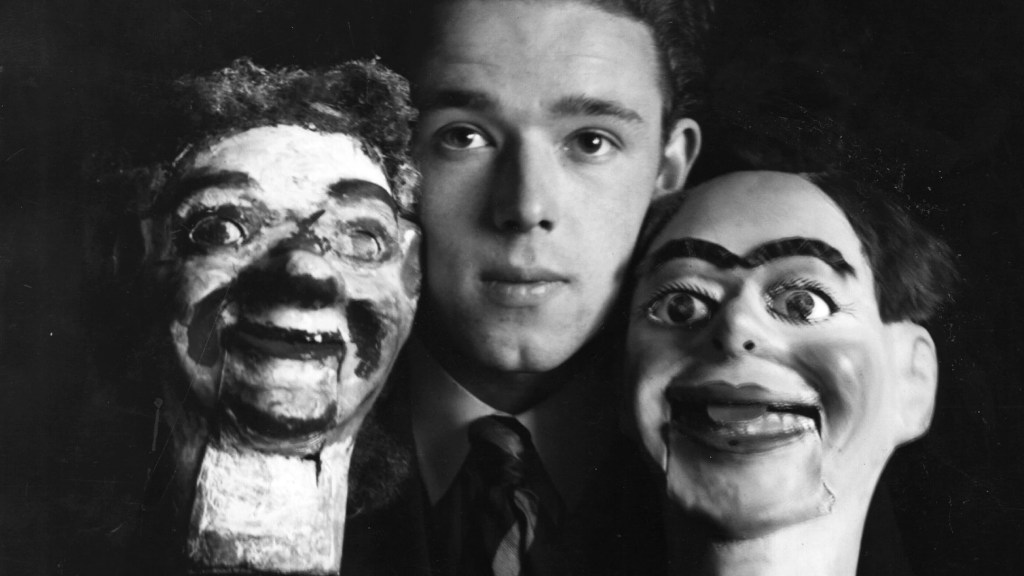
Stooky Bill, the Ventriloquist’s Dummy Who Became the First TV Star
(Mental Floss, September 18, 2025)
John Logie Baird made history by transmitting the first television picture with a grayscale image on October 2, 1925. He couldn’t have done it without a little help from an uncanny source—namely, the disembodied head of one Stooky Bill.
Television wasn’t the invention of a solitary genius toiling in a laboratory strewn with gears and schematics. As with most paradigm-altering technologies, TV wasn’t so much invented as it was developed, with a number of individuals making their own crucial contributions.
At the beginning was Baird. If not for the Scotsman’s unswerving dedication, the world would never have been able to watch in awe—and in real time—as Neil Armstrong took his first steps on the moon in 1969. We never would have had 60 Minutes or Monty Python’s Flying Circus or Breaking Bad.
And without a ventriloquist dummy named Stooky (sometimes spelled “Stookie”) Bill, Baird’s wild dreams of a televised world might never have come true.
45 Years Ago, Vancouver Rock Legends Loverboy Bet Big on Themselves
(Montecristo, September 24, 2025)
It takes a hell of a lot of chutzpah to watch the top rock acts of the day perform and then announce, “I could do that.”
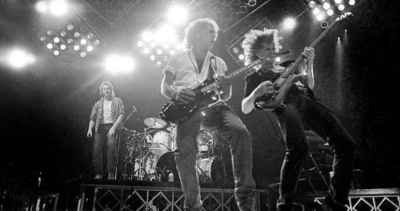
According to Loverboy guitarist Paul Dean, that was precisely the reaction he and bandmate Mike Reno had when their manager took them to Los Angeles in 1979 for a two-day rock-music festival featuring the likes of Aerosmith, Ted Nugent, and AC/DC.
Not that the fledgling Loverboy seemed likely to join their rarefied ranks any time soon. Having already tasted some success as a member of Streetheart, the Vancouver-born Dean connected with singer Mike Reno and keyboardist Doug Johnson while living in Calgary. The trio moved to the West Coast, bringing with them a stack of songs and big-league ambitions. With drummer Matt Frenette (also formerly of Streetheart) and bassist Scott Smith rounding out the lineup, the band was complete—and itching to make a record.
“We auditioned for a bunch of labels, some of the U.S. labels,” Dean says, calling from a tour stop in Salt Lake City. “They turned us down. One guy at Capitol Records said, ‘There’s no attitude here, sorry.’ But Mike and I went down to L.A. with our late, great manager Lou Blair, a great friend of ours. We went to a big concert in the Coliseum.”
At that show—the CaliFFornia World Music Festival, which took over the Los Angeles Memorial Coliseum on April 7 and 8, 1979—Dean and Reno found their confidence renewed.
“All our favourite bands were playing: Eddie Money and Cheap Trick and Van Halen,” Dean recalls. “Halfway through the show we looked at each other and we went, ‘You know, I think we’re okay, regardless of what this guy at Capitol Records says, because this is us onstage. We’re listening to our style, our vibe.’”
Dub producer Mad Professor remains an analogue soul in a digital world
(September 24, 2025)
No Protection, Mad Professor’s landmark 1995 album of Massive Attack remixes, is quite possibly the best-selling dub record of all time, although that’s hard to determine, since no one actually maintains a chart for the genre.
What’s indisputable, however, is that the LP sparked a resurgence of interest in dub production in the mid ’90s, and was a staple of dorm rooms, chill-out lounges, and so-hip-it-hurts coffee shops for years.
There are even those who claim that they have listened to No Protection more times over the subsequent decades than they have to the source material—Massive Attack’s 1994 trip-hop release, Protection—but Mad Professor himself is skeptical on that point.
“People tell me that all the time, but I don’t really believe it,” says the producer, known to the taxman as Neil Fraser, when Stir reaches him via Zoom in Costa Rica. “Because the original is the original, and I just played around with different tracks. I’ve got a lot of respect for the band, and I thought, yeah, let me give it another twist, you know?”
Exactly 15 years ago to this day, the Georgia Straight published my interview with Benjamin Curtis of School of Seven Bells. I was really keen to talk to him, because I was a big fan of that project and also of Secret Machines, the band he was in with his brother Brandon. (Brandon is also a long-time touring member of one of my favourite bands, Interpol.) Ben was a very talented musician and (as I hope you’ll read below), an affable and thoughtful interviewee. Tragically, he died far too young, passing away from T-cell lymphoblasticlymphoma in 2013 at the age of 35.
Although it is actually derived from Brian Eno’s Oblique Strategies (a set of cards bearing phrases that, drawn randomly from the deck, can act as guiding principles in creative endeavours), it’s tempting to read shades of Buddhism into the title of the new School of Seven Bells album, Disconnect From Desire. One of the keys to achieving the state of nirvana, after all, is the transcendence of craving.
Reached at home in Brooklyn, the band’s guitarist and producer, Benjamin Curtis, says he can see the connection, but he says it was purely coincidental. “I think it was just really resonant for a million reasons,” Curtis says. “A lot of the music we were writing seemed to be about struggling against this situation that you have in your life and just trying to shake it, and realizing that you create it yourself more often than not. I mean, your bad relationships with people, and your mood and all of these things. I think Buddhists have been talking about that for 2,500 years, but so have group therapists, you know what I mean? It’s pretty universal.”
Indeed, if there’s a theme that runs through the lyrics on Disconnect From Desire (mostly written by Alejandra Deheza, who shares vocal duties with her keyboard-playing twin sister, Claudia), it’s that of letting go. “Bye Bye Bye”, for example, evocatively imagines a departed other as “A standing pile of stones I’ll skip across that ocean we knew/One by one till there’s nothing left of you”.
Curtis says that, in making the album, School of Seven Bells also let go of its former resistance to the schematics of pop songwriting. Which means that the shimmering surfaces and ethereal harmonies of these songs are anchored by hooks and danceable beats. “On this record there are elements that are much more in the foreground than before,” Curtis notes. “Like in ‘Windstorm’ and ‘Bye Bye Bye’. And ‘I L U’ is very much a song, with a beginning and a verse and a chorus and a verse and a chorus and an ending. That’s the way it came out of us. We don’t naturally write that way, usually, and suddenly we were. So I think we had to ask ourselves if we were comfortable writing a sad pop song. It’s definitely a choice you make in your career, if you’re going to be one of those bands.”
The first School of Seven Bells album, 2008’s Alpinisms, was a lovely pastel swirl of synthesized textures in which Curtis’s guitar work was something of an afterthought—“the tinsel on the tree” is how he puts it. But the new album’s riffs are integral to the songs’ structures. The best example of this is probably “Babelonia”, in which the central guitar part locks in with the looping beat in a way that faintly echoes the shoegazing shuffle of My Bloody Valentine’s “Soon”.
If pushing the guitars to the fore had the effect of making School of Seven Bells a more conventional-sounding band, Curtis has no regrets about that. He admits, however, that the trio’s drift toward pop made for some moments of artistic angst in the recording studio.
“A lot of times we had to ask ourselves, ‘Are we comfortable with doing this? Can we say that?’ Or ‘Is that melody completely putting ourselves out there too much?’ ” Curtis says. “And I think after a while we just decided to forget it, and if it made us uncomfortable, then we absolutely put it in the record. That was almost how we gauged the choices at a certain point.”
POSTSCRIPT
The final recording Ben Curtis completed was a cover of “I Got Knocked Down (But I’ll Get Up)”, written and originally recorded by Joey Ramone. The School of Seven Bells recording was released after Curtis’s death, in June 2014.
Ramone’s own version of the song was also released posthumously, in 2002. The legendary Ramones frontman had died —also of lymphoma—less than a year before.
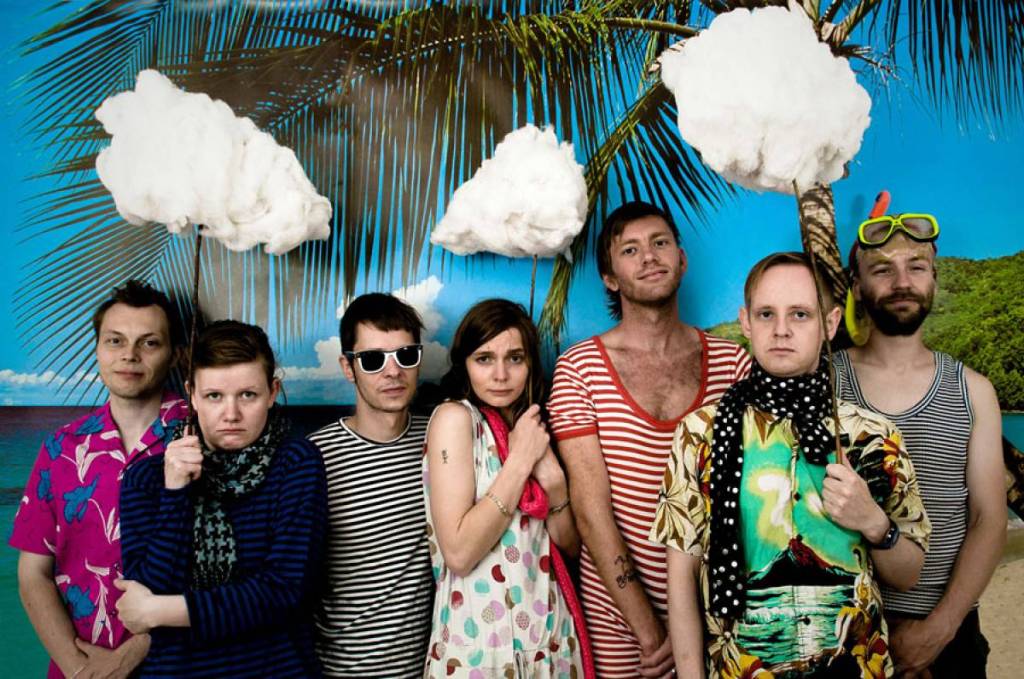
There’s a lot of interesting music coming out on Friday, September 19. I’m not just saying this because my own band, the Starling Effect, has a new single on the way (which you can read about here). Actually, an old favourite of mine, the Icelandic “weird pop” collective múm, has a new album slated for release on the same day. I interviewed founding member Örvar Þóreyjarson Smárason for the Georgia Straight back in 2009.
The song that opens the latest múm album bears a passing resemblance, if only lyrically, to a certain Bobby Darin hit from 1966. “If I were a fish/And you were a seashell,” it begins, over what sounds like prepared piano and hammered dulcimer. “Would you marry me anyway?/Would you have my babies?” “If I Were a Fish” lifts a few words from “If I Were a Carpenter”, but it’s only the most obvious example of múm’s weaving borrowed bits of pop culture into its songs.
By recontextualizing snippets of older compositions, the Icelandic collective makes the familiar unfamiliar. As “Prophecies and Reversed Memories” suggests, “You’ve sang [sic] this song before…It was just a little different, that’s all.” In that context, the album’s title, Sing Along to Songs You Don’t Know, would seem to make perfect sense.
Then again, maybe that’s reading too much into things. Reached at a Washington, D.C., tour stop, múm’s Örvar Þóreyjarson Smárason claims the long-running band had no such overarching theme in mind.
“When we create music, we let what comes in and goes out just really do its own thing,” he says. “We never actually have any special thing that we are trying to do. We let it all go pretty easily. So if some songs like that influence it, I think it’s a really, really natural thing. This is the same answer I would give you if you had asked me if waterfalls or glaciers and landscape stuff had influenced our music. I don’t really know how this all works. And I think it’s what keeps our music to be healthy, that we just let things go.”
So where did the record’s title come from? “I was sitting in a family reunion and people started sitting around in a circle,” Smárason recalls. “They were singing a song, and I was sure I had heard it sometime before, but it was really unfamiliar to me. And I just wanted to start singing, singing anything along to it. I got really sad after the song had finished, because I didn’t just join in and make my own thing out of it.”
His relatives were likely harmonizing on “Komdu inn í kofann minn”, a popular Icelandic number based on a melody by Hungarian composer Emmerich Kálmán. Smárason won’t say, but he does reveal “There’s a bit of it on the album. It’s hidden there somewhere, but I won’t tell you where.”
In fact, there are all sorts of hidden treasures on Sing Along to Songs You Don’t Know, almost-buried elements that reveal themselves only on close listening. Most of these are incidental sounds, like the creaking of a piano bench or the faint chirping of the parakeet belonging to Smárason’s parents.
Múm, a revolving-door collective based around the core duo of Smárason and Gunnar Örn Tynes, tends to record in living rooms and basements, giving its productions a homemade feel. That, combined with the acoustic instrumentation that dominates Sing Along—ukulele, piano, cello, violin—might lead some to categorize this as a folk record, but Smárason firmly disagrees.
“No, I definitely would never call it a folk album,” he says. “Folk to me means something completely different. Folk music is music that gets passed between generations. It’s music of the people. Folk to me isn’t just music played on folk guitars.
“We’re not traditional,” he continues. “This is pop music. It may be weird pop music, but it’s definitely pop music.”
Just to keep you, my faithful readers/fans/stalkers up to date, I thought I would share a roundup of my recently published work, including two arts features for Stir and a piece I wrote just for fun and posted on Medium.
Four things in Vancouver that aren’t actually called what you think they’re called
(Medium, September 2, 2025)
Canada’s third-largest city, Vancouver, British Columbia, is a popular tourist destination and one of the biggest film production centres in North America.
It is also home to many people whose favourite hobby seems to be collating lists of everything that sucks about Vancouver. These droning bores are no fun whatsoever and I advise you to avoid them and their wearying ways.
It’s fair to say that many people presume to know a lot about the city—but there are things that even locals get wrong.
Here are a few spots that the most knowledgeable Vancouverites routinely refer to incorrectly, and what they’re officially called.
Yota Kobayashi explores the nature of perception and reality in Shiki & Kū
(Stir, September 4, 2025)
TO FULLY GET A handle on the concepts at play in Yota Kobayashi’s installation Shiki & Kū, it might help to start with a definition of the title. Then again, it could be better to just let the experience wash over you, with no preconceived notions of what it all means.
In any case, when Stir connects with Kobayashi, the Vancouver-based soundscape artist is only too happy to define shiki.
“It could mean, in English, form, or tangible reality,” he explains. “Things that you can recognize—say, a chair that you can sit on, a tree that you can see, sounds that you can hear, love that you can feel, touch that you can experience. Something like that.
“And then kū, on the other hand, that means emptiness,” Kobayashi continues. “That’s the only word I could find in the English language. But it doesn’t mean nothingness or nothing. Instead, it means that those realities, like shiki, they’re all impermanent. The realities can exist only through imagination, as they are discerned.”
Portrait of stifling patriarchy in A Doll’s House retains powerful relevance
(Stir, September 8, 2025)
Theatregoers’ sensibilities have changed considerably since Ibsen’s day. A Doll’s House—which tells the story of one Norwegian woman pushing back against a stifling marriage and a broader society that offers her little opportunity of escape—retains all of its power, even as its moral ambiguity is less shocking now than it must have been in 1879.
When American playwright Amy Herzog adapted the play in 2023, her intent was not to blunt its impact, but to streamline the story and strip away the trappings of 19th-century Norway.
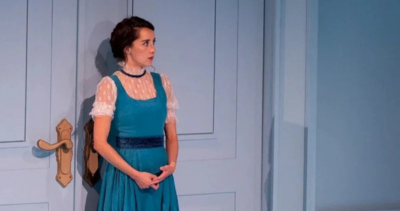
“I would say Amy stays pretty loyal to the core story and narrative and point of view of the script,” says Alexandra Lainfiesta, who plays Nora in the Arts Club production of Herzog’s adaptation. “I think what she does with this adaptation is, she really brings clarity and immediacy. She makes the language startlingly present; it feels like today. She trims away any of the ornate 19th-century language that is in Ibsen’s play, and it really gives Nora—and, I would say, all the other characters—a dialogue and speech that feels sharp and lived-in and urgent. It’s a very visceral, immediate adaptation.”